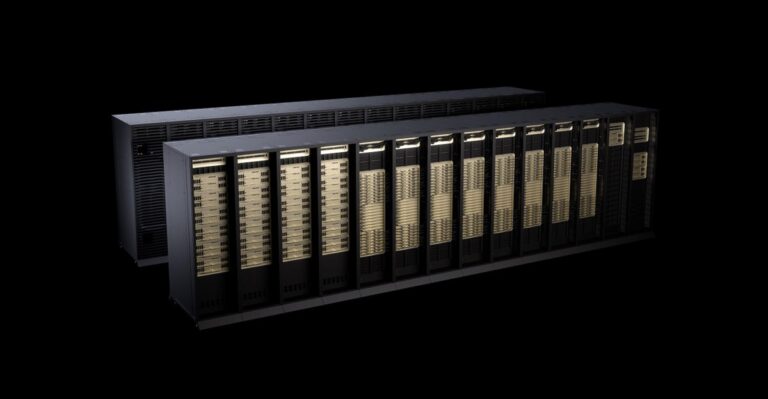
The Trump administration has tightened restrictions on Chinese companies accessing advanced AI chips through overseas data centres. Firms like Alibaba and ByteDance previously rented computing power from servers abroad to bypass physical import bans on Nvidia hardware. This method, known as remote access, is now subject to special licensing and new bureaucratic hurdles.
Rules on shipments to five countries, including Singapore and Malaysia, have also been strengthened. US officials suspect significant smuggling has occurred in these locations. These measures are not entirely new, but the timing of the announcement cannot be ignored.
The policy shift follows the resignation of Nvidia co-founder Jensen Huang. He stepped down after admitting to an affair with Alice Huang, a Chinese businesswoman accused of ties to intelligence services. Alice previously worked at Megaspeed, a Singapore-based data centre company suspected of chip smuggling.
A White House spokesperson stated the new rule would “crack down on the smuggling of advanced US SI chips” and “help ensure that America’s most advanced chips go first to US SI innovators, not Chinese shell companies.” Officials appear to have used the scandal as a catalyst to demonstrate control over the situation.
US export controls began in the fall of 2022. The Biden administration aimed to restrict China’s access to chips needed for training powerful AI models and the equipment required to manufacture them. This approach was radical. For decades, export controls targeted specific military programmes or blacklisted companies. The new strategy sought to use influence over the global semiconductor industry to stop the second-largest economy from competing at the forefront of AI.
The logic was straightforward. Training advanced AI models requires massive computing power, a market dominated by American firms like Nvidia. By limiting access, Washington hoped to maintain its technological lead.
Four years later, total victory is unlikely. Enforcement has become messy. The Bureau of Industry and Security (BIS) within the Commerce Department leads the effort. In 2026, the bureau operated with a budget of $235 million, a small sum compared to Nvidia’s weekly revenue.
Enforcement grew harder as restrictions became more complex. Chipmakers found elaborate ways to bypass rules. A major challenge was fighting a booming industry of smuggling AI chips into China.
Megaspeed has become a poster child for the problem. It is not the only company suspected of involvement, nor is it the largest, according to a person familiar with the matter. Bloomberg reported that roughly 50,000 of the estimated 136,000 AI chips Megaspeed imported into Malaysia and Indonesia in 2024 and 2025 were not accounted for in Nvidia’s initial inventory checks. Nvidia later said it had found at least some of them.
Even if all unaccounted chips ended up in China, they would represent only a fraction of smuggled semiconductors. Researchers at the Institute for Progress estimate that by the end of 2026, China could have accumulated computing power equivalent to roughly 1 million Nvidia H100 chips.
Chinese companies did not always need to smuggle hardware. They could rent computing power from data centres in other countries. This practice did not violate US export controls. Every policymaker and researcher involved in the restrictions was aware of this loophole.
Analysts argued that renting power was more expensive and cumbersome than owning chips. Some believed allowing Chinese firms to use American technology overseas kept them dependent on it. Restricting access was difficult to enforce and could hurt US technology companies.
Washington is now moving into this territory. Monday’s announcement expands US efforts to control China’s technological development. In 2022, the focus was preventing Chinese companies from acquiring certain American chips. Four years later, the goal is regulating how those companies use the hardware, even when it never enters China.
The success of this strategy depends on whether the original restrictions achieved their aims. Evidence suggests it made it harder for Chinese AI firms to match the computing power of American competitors. Assessing the precise impact remains difficult.
The approach carries risks. Forcing US chip companies to cut off Chinese customers has come at a cost. A study by the Federal Reserve Bank of New York found affected suppliers struggled to replace lost business with new customers. The restrictions wiped $130 billion from the companies’ combined market value and hurt profitability and employment.
China now has a strong incentive to compete without American technology. Huawei developed a way to link powerful chips into megachip systems. The Chinese AI lab DeepSeek proved that making training more efficient allows developers to build competitive models with fewer resources.
The Trump administration may find it has overreached. It is now trying to control not only which chips Chinese companies buy but also how they use American technology anywhere in the world. This level of responsibility seems disproportionate to the personal scandal that triggered the policy shift.
What it means
US policy has shifted from blocking chip sales to monitoring how the hardware is used globally. This expansion complicates enforcement and increases the risk of unintended economic damage to American suppliers.