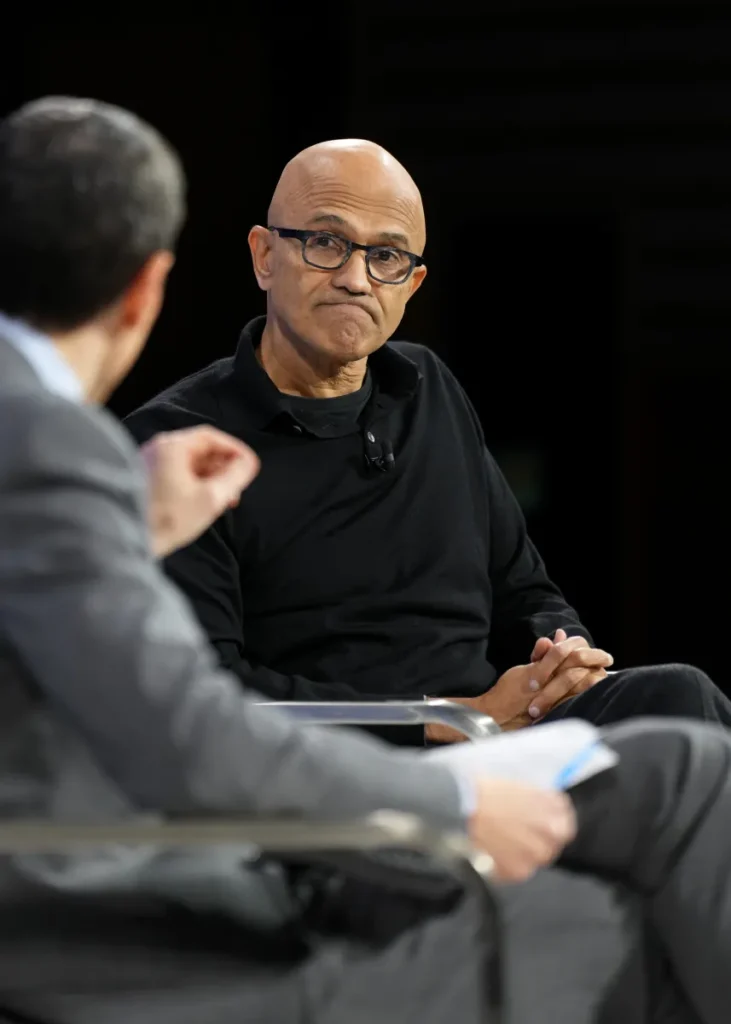
Satya Nadella told an audience at The New York Times’ DealBook Summit that much of America’s critical infrastructure contains software flaws that cannot be fixed.
The Microsoft CEO spoke on Wednesday about systems governing everyday hardware and transportation. He noted these suffer from unpatchable vulnerabilities. In an age where artificial intelligence aids cyberattacks, these flaws are simply waiting to be used.
“Remember, there is a lot of stuff in our critical infrastructure that’s unpatchable,” Nadella said. “I mean, think about all the firmware and the chillers [a cooling device often used in data centers] and the HVAC systems everywhere else. So all of that, by the way, they’re on the internet.”
Connecting the world’s older devices to the web is now causing significant problems for the economy.
This discussion followed a series of large-scale outages. These included an incident involving Microsoft Outlook. Others have affected the NSA, the FFA, and Apple. Officials have denied claims that these events were cyberattacks. Still, the reality of AI-aided attacks is forcing companies to find new ways to spot and fix weaknesses.
Nadella briefly mentioned the recent Outlook situation. He stated the global inconvenience resulted from a “latent bug” that led to a “perfect storm.”
“We put out an incident response, and we’re going to obviously take all of the learnings, both upstream architectural, as well as operational, and fix that,” he added.
“Somebody was telling me about sort of even the transportation systems and the amount of stuff that’s discoverable but with unpatchable firmware,” Nadella also added on the topic of vulnerable systems. “So we’ll have to really modernize for sure … and then we will have to assess what the threat vector looks like, what our own ability to both detect and then defend in real time looks like.”
Nadella made a broader point as well. The process of patching software vulnerabilities has sped up to match the speed of potential exploitation, but this has created more issues.
“We now have a very powerful tool that finds vulnerabilities,” he said. Companies used to have more time to test those patches, understand a situation, and deploy them. Artificial intelligence has made sophisticated cyberattacks much easier to enact.
“The patch [now] needs to go instantly from being available to being patched in production, because it’s being exploited in the wild, right? So that’s going to create instability.”
What it means
Businesses face a race against time. They must fix bugs before hackers use them, but rushing fixes can break systems. This pressure is forcing a rethink of how technology is built and maintained.