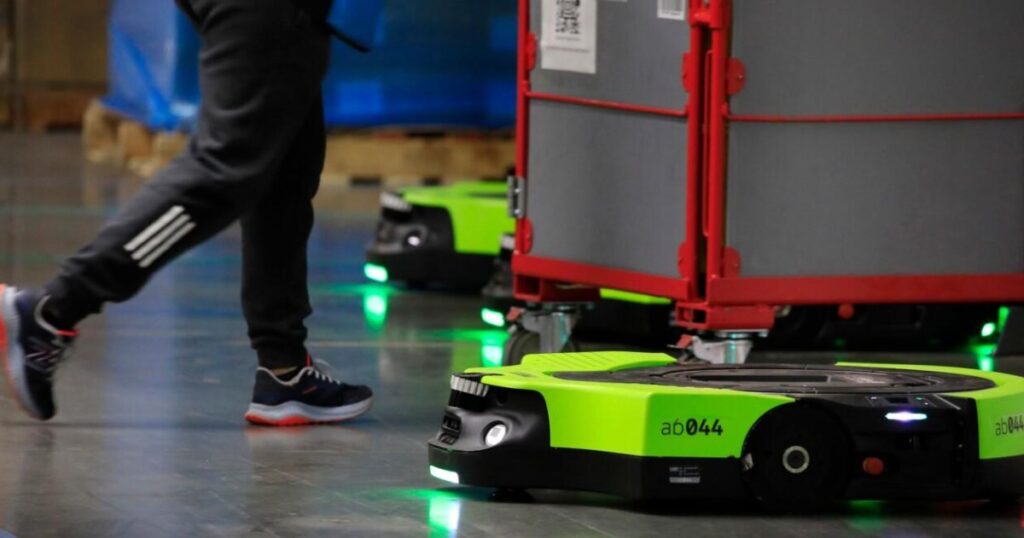
Amazon has unveiled an updated version of its Proteus warehouse robot that enables direct verbal communication with human staff. This new iteration allows employees to assign tasks using natural language rather than relying on specialised software interfaces. The floor-level units, which resemble large tortoises and are designed for heavy lifting, previously required workers to input specific codes to direct their movements. Now, operators can simply speak to the machines as if they were colleagues, issuing commands in plain English to manage logistics operations within the vast distribution centres.
This development marks a significant shift in how automation is integrated into the workplace, moving away from rigid command structures toward more fluid human-machine interaction. By reducing the technical barrier for directing autonomous equipment, Amazon aims to streamline workflows and potentially reduce the training time needed for staff to manage these systems. The change reflects a broader strategy to accelerate automation across its supply chain, replacing human workers with robots while attempting to maintain operational efficiency through more intuitive controls. As the company continues to scale its robotic fleet, this linguistic interface could set a precedent for future industrial robots that prioritise ease of use alongside physical capability.
* Natural language input replaces complex coding for task assignment on Amazon’s Proteus robots.
* The update reduces the technical skill required for workers to direct heavy-lifting machinery.
* This shift supports Amazon’s wider pivot toward replacing human labour with autonomous systems.