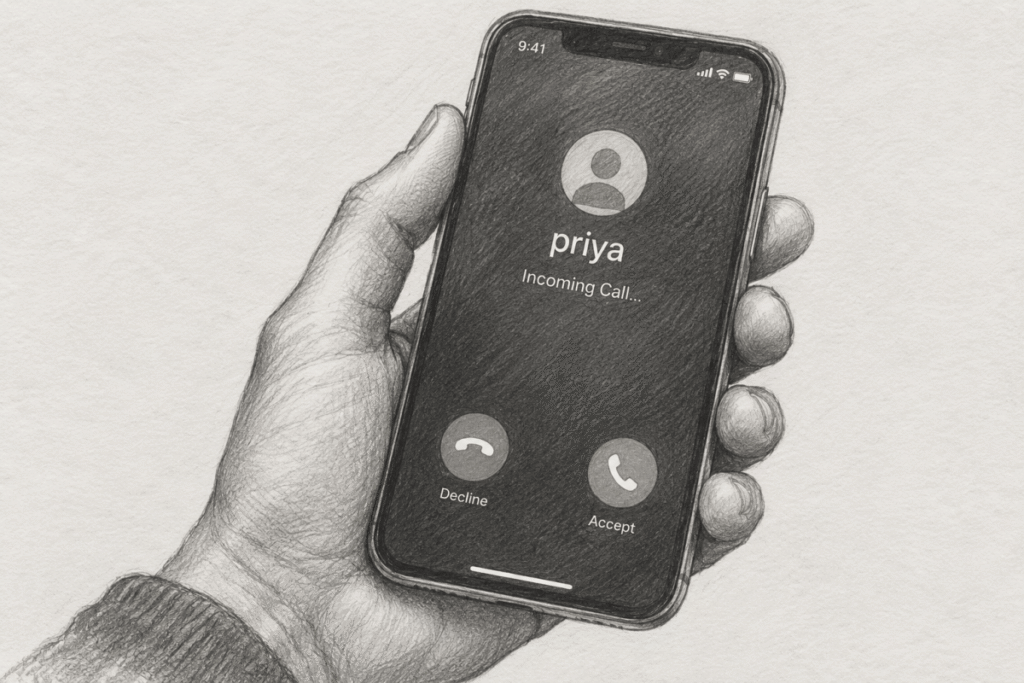
Tarini Padmanabhuni’s grandfather paid a ransom after a voice on the phone told him his brother had been kidnapped. The voice was a deepfake. The brother was safe, but the transfer went through anyway.
“What stayed with me wasn’t the money,” Padmanabhuni says. “It was that he had no way of telling.”
That incident happened two years ago. Now, Padmanabhuni runs DetectifAI, a San Francisco company. The goal is to stop people from falling for the same trick.
Scams are rising. The FBI reports Americans lost close to $900 million to AI-driven fraud last year, a 24% increase from 2024. Victims aged 60 and older lost twice as much as those aged 50 to 59.
Many firms already offer deepfake voice detection, including Reality Defender, Pindrop, Resemble AI, Microsoft Azure AI Content Safety, and Nuance. Most of these tools run in the cloud on remote servers. Phone makers cannot build them directly into the device. This leaves the person on the receiving end with little protection.
DetectifAI takes a different approach. It designs compact AI models to run inside a smartphone’s operating system. The software gives an instant verdict on whether a voice is AI-generated during calls, voice messages, and other audio. The audio never leaves the device.
The company sells its software development kit (SDK) to phone manufacturers. The aim is for detection to ship as a built-in feature of the phone’s operating system. Padmanabhuni compares this to AT&T’s role in the original iPhone launch. The first phone maker to ship DetectifAI will gain an edge over competitors. Deepfake detection could become a standard specification, like camera resolution.
Revenue streams include licensing the SDK to other companies and fraud-prevention firms. Padmanabhuni also expects income from businesses that need the technology.
The startup already has early revenue. It handles more than 100,000 calls a month for financial institutions in India. These calls come from AI voice agents handling debt collection and loan document follow-ups. Every call includes deepfake detection and speaker verification. Padmanabhuni declined to name customers due to confidentiality agreements.
Padmanabhuni began working in machine learning at age 12. She later studied cyber-physical systems at Manipal Institute of Technology in India. She became the youngest team lead of what she describes as India’s first driverless racecar division in Formula Student, an international student engineering competition.
Asked about the most rewarding moment, she points to a small WhatsApp beta test. Users forward suspicious voice notes and receive an assessment of whether they are real. One tester, whose relatives had been scammed, called to say they would pay for it without hesitation. “My grandfather didn’t have that,” she says.
DetectifAI has raised a small seed amount from Josh Constine and Manohar Kamath. Constine was formerly an editor at TechCrunch. Kamath is a principal at KM Growth. The outfit was one of the startups vetted by TechCrunch’s editorial team to compete in its Startup Battlefield competition. The event takes place October 13 to 15 in downtown San Francisco.
What it means
For the average user, the change is simple. A phone that runs DetectifAI checks incoming audio locally before the user hears it. There is no delay, no data sent to a server, and no need to install extra apps. The protection is built into the hardware.