Search engines were designed for human users who cannot spare the time to scan entire webpages, yet AI chatbots now process much larger portions of information and require infrastructure updates to handle their needs.
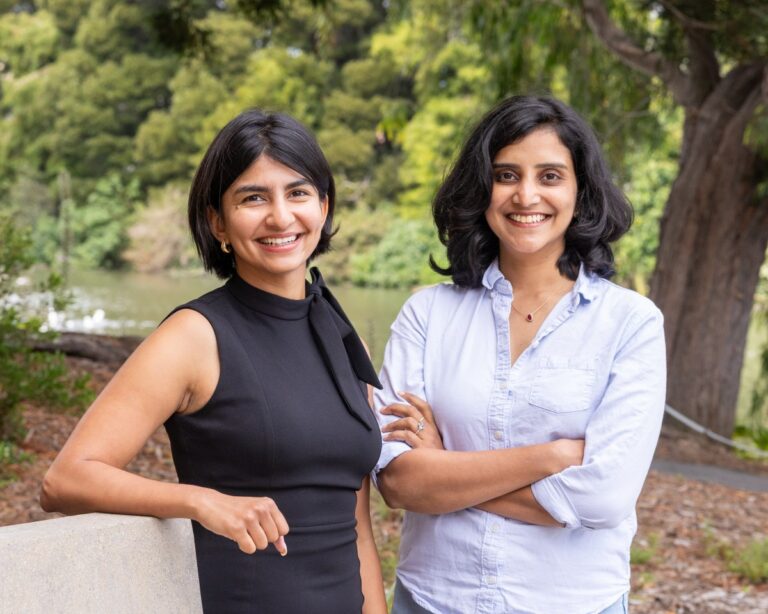
Andrey Styskin, who previously led search and AI at Yandex, and German scientist Matthias Petri are addressing this gap with Keenable. The company has raised $26 million in seed funding led by Accel, with participation from Conviction Partners and business angels.
The flywheel effect
Styskin notes that AI chatbots perform better when they can ground responses in source documents. This creates a new cycle distinct from what Google learned from human behaviour.
Keenable has built an index of more than 100 billion documents. Its API is currently used in production at several AI labs and inference providers for both training and runtime. The startup will not disclose customer names but recently partnered with Gradium for live information retrieval.
Styskin draws on 20 years of experience at Yandex and Amazon to explain why Keenable differs from enterprise search solutions. Those solutions often break down or become very costly at web scale. Without fine-tuning index structures for specific tasks, the cost of serving and scanning the whole internet is enormous due to volume. Keenable aims to narrow the search space based on queries very fast.
Why the giants are retreating
Zhenya Loginov, an Accel partner who led the investment, says AI players have few options for web-scale search infrastructure. Google and Microsoft are shutting down existing search APIs to avoid cannibalisation. Instead, the tech giants are opting for bundled approaches and being selective about partners.
To Styskin, these decisions confirm the opportunity he saw at Amazon while working with Petri on web search infrastructure for AI applications such as Alexa. He observed Cloudflare data showing AI crawlers responsible for a growing share of search volume. This led him to realise the need for web search infrastructure built with AI in mind.
Styskin hired former colleagues to build the startup, which is also developing proprietary retrieval capabilities. An upcoming product called WebQueryLanguage will help AI systems answer questions by combining information from various web sources, even when none contain the full answer.
Costs and competition
Costs will be an important part of the equation. Styskin says while it is extremely hard to convince people to move away from Google for search, the innovators’ dilemma means the US giant is potentially beatable on agentic queries. A smaller company like Keenable can innovate and offer a more cost-efficient solution to AI companies.
Still, the costs of building a giant search index are real. “Don’t ask — it is painfully expensive,” he said. The startup is doing its best to keep costs in check and pace itself. With a team of 15 engineering staff across the U.S. and Europe, the company plans to use the fresh cash to double its headcount by the end of the year to build its go-to-market motion.
What it means
There are many more steps before the startup can achieve its dream of becoming “the next Google for AI agents.” Other players have entered the space, such as Brave and Exa, and Google itself is overhauling its search experience for the AI era. This broader motion indicates that Keenable’s conviction is also shared at the Googleplex: whether it is for humans or for agents, the era of the “ten blue links” may be coming to a close.