A Stanford student reflects on his ChatGPT class and a culture of “just a little bit of fraud”

Disclosure: Some links in this article are affiliate links. AI Maestro may earn a commission if you make a purchase, at no…

By AI Maestro May 18, 2026 3 min read
A Stanford student reflects on his ChatGPT class and a culture of “just a little bit of fraud”


A Stanford student reflects on his ChatGPT class and a culture of “just a little bit of fraud”

Key Points

  • Stanford student Theo Baker argues that ChatGPT has turned an already existing culture of dishonesty at the elite university into the norm.
  • In response to rising plagiarism and cheating, Stanford brought back proctored, handwritten in-person exams in spring 2026—a practice banned for over a century.
  • Baker traces the problem to warped incentives: as AI threatens traditional entry-level jobs while billions flow into AI startups, education feels like an afterthought, and cutting corners becomes the default.

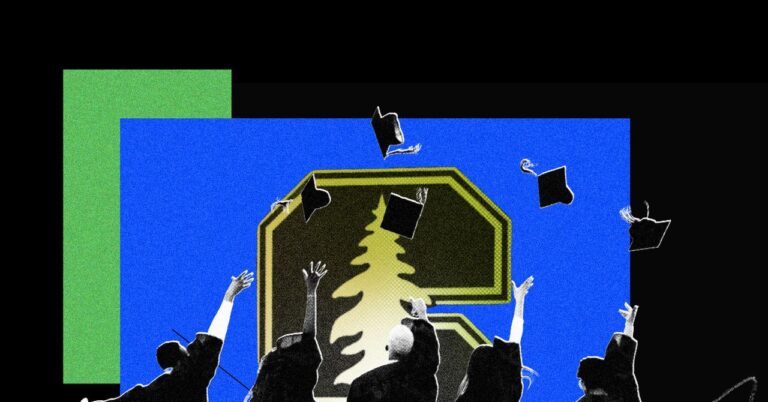
Stanford student Theo Baker describes in a guest essay for the New York Times how ChatGPT shaped his entire graduating class. His conclusion: AI turned an already existing culture of dishonesty at the elite university into the default.

Theo Baker, graduating from Stanford University in June 2026, belongs to the first class that spent its entire college career alongside ChatGPT. The chatbot launched roughly two months after he started school in fall 2022. In a guest essay for the New York Times, Baker describes how AI tipped an already fragile culture of academic integrity at the elite university past the point of no return.

“Just a little bit of fraud”

Even before Baker arrived, Stanford’s reputation was already bruised—scandals involving Theranos founder Elizabeth Holmes, crypto fraudster Do Kwon, and the Juul founders had seen to that. ChatGPT then made cheating easier and more lucrative than ever, Baker writes. A classmate summed up the campus vibe as “just a little bit of fraud” while talking about sponsor hardware her student club never returned. Baker adopts the phrase as a motif for his entire class.

What that looks like in practice, according to Baker: classmates embezzled dorm funds, faked Covid infections to score UberEats credits, and signed honor pledges swearing they hadn’t used ChatGPT while the tool was open in the next browser tab. One classmate signed such a pledge at a yacht party funded by venture capitalists. In a campus-wide survey during junior year, 49 percent of 849 computer science majors said they’d rather cheat on an exam than fail.

Baker’s most striking example is a plagiarism scandal: Stanford students published a paper claiming an AI breakthrough with Llama3-V. It was actually a stolen Chinese model (MiniCPM-Llama3-V2.5).

In April 2026, Stanford brought back proctored in-person exams—a practice the university had banned for over a century. The ban was meant to signal trust in students’ honor. Most exams are now handwritten again in so-called Blue Books.

Incentives that reward dishonesty

Baker traces the cheating culture to warped incentives. A Stanford CS degree no longer guarantees an entry-level job, because junior developers now compete with language models. At the same time, huge sums flow into so-called wrapper startups that just repackage other companies’ models: Perplexity hit a billion-dollar valuation in April 2024 and reached $20 billion by September 2025. When your roommate casually mentions she bought a house in Las Vegas for tax reasons, it’s hard to go back to your homework.

Baker’s argument boils down to a self-reinforcing cycle. Students who see the junior dev job market as closed off—while watching classmates get rich overnight with AI startups—start treating education as an afterthought. People already cutting corners cut them in school, too. “Just a little bit of fraud.” ChatGPT is the perfect tool for it. Students call OpenAI’s model Chat like it’s an old friend and consult it multiple times a day, even for personal decisions. Early research suggests this may erode people’s own cognitive resilience.

Baker’s takeaway: universities weren’t ready for the AI revolution. They’re stuck between a classical model of education and a future where humans no longer have a monopoly on intelligence.

AI News Without the Hype – Curated by Humans

Subscribe to THE DECODER for ad-free reading, a weekly AI newsletter, our exclusive “AI Radar” frontier report six times a year, full archive access, and access to our comment section.

Subscribe now


Originally published at the-decoder.com. Curated by AI Maestro.

Stay ahead of AI. Get the most important stories delivered to your inbox — no spam, no noise.

Name
Scroll to Top