“`html
9 Best AI Tools for Spec-Driven Development in 2026: Kiro, BMAD, GSD, and More Compare
AWS Kiro
Kiro is an agentic IDE built around spec-driven development, designed to take developers from concept to production with structured rigor instead of iterative prompting. It requires developers to formalize intent first by guiding them through a three-phase process: Requirements, Design, and Tasks. This results in structured artifacts like requirements.md, design.md, and tasks.md. A notable technical detail is that Kiro generates user stories using EARS notation, which produces structured acceptance criteria covering edge cases.
A major differentiator of Kiro is its agent hooks system, event-driven automations that fire when files are saved or created. These handle tasks like test updates, README refreshes, and security scans without manual prompting. For model selection, Kiro’s default is an Auto router that combines multiple frontier models including Claude Sonnet, Qwen, DeepSeek, GLM, and MiniMax. Developers can also pin a specific model for consistent behavior. Built on Code OSS, VS Code users will feel at home immediately. Kiro supports a CLI and a web interface and does not require an AWS account to use. Best for teams that need formal spec workflows in a familiar development environment.
GitHub Spec Kit
The GitHub Spec Kit is the most community-adopted open-source option for spec-driven development, a Python CLI with 93,000+ stars. It runs through four phases: Specify (captures business context and success criteria), Plan (translates specs into architectural decisions), Tasks (decomposes plans into testable, reviewable units), and Implement (runs AI agents under those constraints).
At the foundation of every Spec Kit workflow is a “constitution”, a markdown rules file containing high-level immutable principles that apply to every change across every session. This becomes the persistent contract between the developer and the agent. The GitHub philosophy emphasizes that code is now the last-mile output: intent is the source of truth, and specifications are executable.
BMAD-METHOD
BMAD-METHOD (Build More Architect Dreams) is an MIT-licensed open-source framework that orchestrates 12+ specialized AI agents across the full software development lifecycle. Version 6.6.0 shipped on April 29, 2026, with the project reaching over 46,700 GitHub stars and more than 5,500 forks.
V6 introduced the Cross Platform Agent Team, allowing the same agent configuration to operate across Claude Code, Cursor, Codex, and other hosts without reconfiguration. The V6 architecture separates concerns into three layers: BMad Core (the universal human-AI collaboration framework), BMad Method (the agile development module built on Core), and BMad Builder (which lets teams create and share custom agents and workflows).
BMAD is the go-to framework for teams that want highly structured, role-separated multi-agent workflows without vendor lock-in. The framework is entirely free with no paywalls.
Augment Code
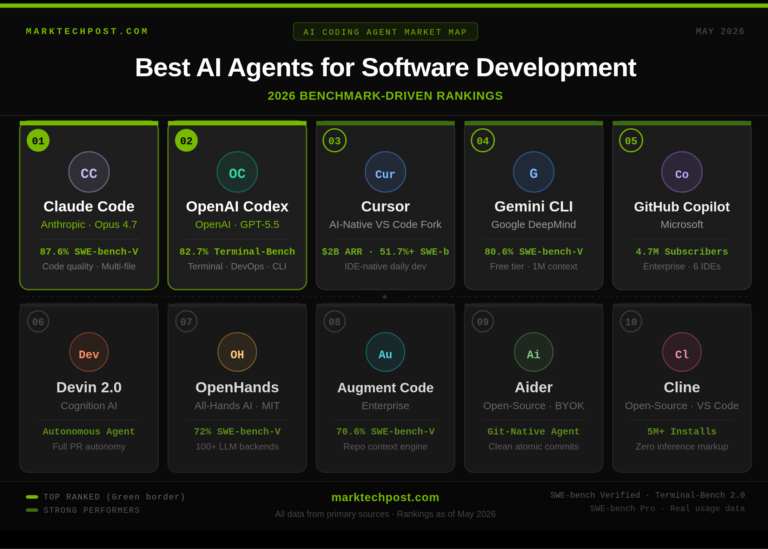
Augment Code approaches spec-driven development from the context layer rather than the spec authoring layer. Its Context Engine maintains a persistent architectural understanding across 400,000+ files, addressing the cross-repository context gap that breaks most specification workflows at scale.
The BYOA (Bring Your Own Agent) model lets teams plug in Claude Code, Codex, or OpenCode alongside its native Auggie agent. Augment Code does not author specs natively, teams still need a tool like Spec Kit or Kiro for structured spec management, but it provides the semantic foundation that makes those specs accurate across large codebases.
Best suited for enterprise teams running complex multi-service architectures where context drift, not spec creation, is the primary failure mode.
Claude Code
Claude Code is Anthropic’s agentic command-line tool designed for fully autonomous development. For spec-driven workflows, Claude Code handles large specification documents well within a single session, processing complete requirement sets and generating implementations in one coherent pass.
Developers typically use CLAUDE.md files as the spec layer, a lightweight approach that enforces persistent project context, coding standards, and architectural constraints across every session. This means many developers are already practicing a form of SDD with Claude Code without formally labeling it as such. Claude Code also serves as a commonly supported execution agent across SDD frameworks including BMAD, GSD, and GitHub Spec Kit.
GSD (Get Shit Done)
GSD is a spec-driven meta-prompting and context engineering framework built primarily for Claude Code and compatible agents. It positions itself as the lean, low-ceremony alternative to BMAD.
The project has crossed over 61,000 GitHub stars, growing from zero to that figure in under five months since its December 2025 initial commit. It installs via npx get-shit-done-cc@latest and works across Claude Code, OpenCode, Gemini CLI, Codex, Copilot, Cursor, Windsurf, Augment, and Cline.
Its multi-agent orchestration spawns parallel researchers, planners, executors, and verifiers. Each operates in a fresh context window with up to 200K tokens dedicated to implementation. The model-agnostic design, including support for OpenRouter and local models, decouples the workflow from any single LLM vendor.
Cursor (with Plan Mode + Project Rules)
Cursor remains one of the most widely used AI editors, and its Plan Mode makes it a practical entry point for teams adopting spec-first habits without switching toolchains. Plan Mode creates a detailed implementation plan before any code is written, asking clarifying questions, mapping affected files, and generating a reviewable plan that the developer approves before the agent acts.
For persistent spec-like context, Cursor’s current rules system uses project rules stored under .cursor/rules/. When combined with project rules, Cursor supports a lightweight, portable spec workflow for medium-to-large greenfield features. The tradeoff is that Cursor’s spec support is not native to its architecture the way Kiro’s is, there is no built-in spec lifecycle, drift detection, or living-spec synchronization.
For teams that want structured AI development within a familiar, high-quality editor without full SDD overhead, Cursor with Plan Mode is a capable middle ground.
OpenSpec
OpenSpec targets a specific and underserved use case: teams where change management requires explicit, auditable documentation before any implementation begins. It uses a proposal-centered workflow with structured artifacts for changes and specifically addresses brownfield iteration with delta markers (ADDED/MODIFIED/REMOVED) that track what changes relate to existing code.