What happens when AI starts building itself?
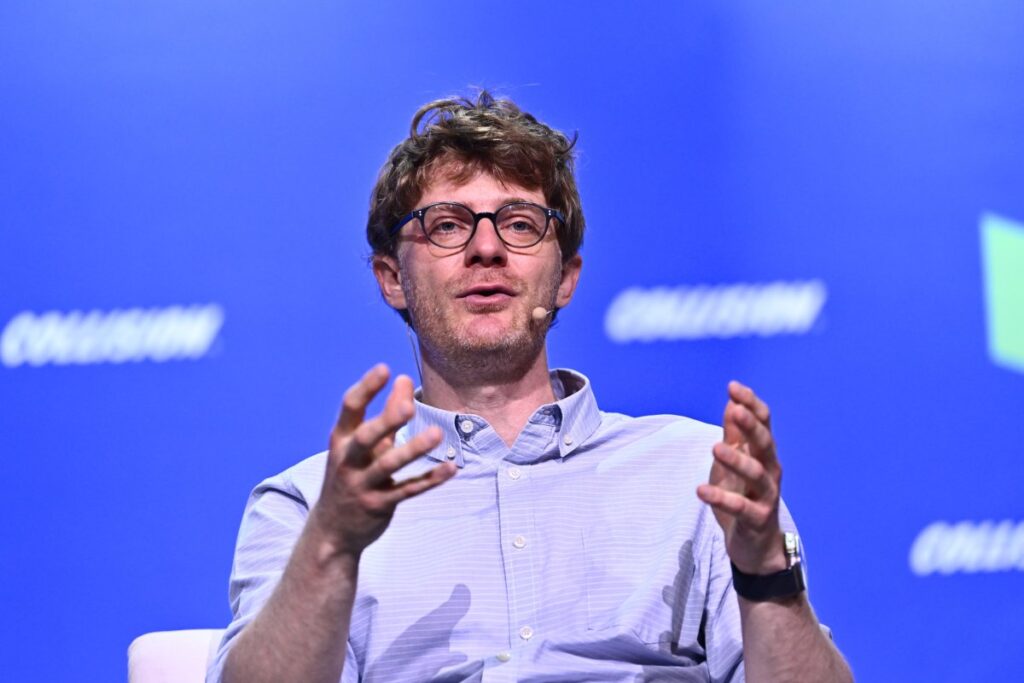
Richard Socher has been a prominent figure in the field of artificial intelligence for some time, best known for founding early chatbot startup You.com and his work on Imagenet. Now, he’s joining the current generation of research-focused AI startups with Recursive Superintelligence, a San Francisco-based company that came out of stealth mode this week with $650 million in funding.
Socher is joined by a cohort of prominent AI researchers, including Peter Norvig and Cresta co-founder Tim Shi. Together, they aim to create a recursively self-improving AI model-something no one has yet achieved-that can autonomously identify its own weaknesses and redesign itself without human intervention-a long-held goal in contemporary AI research.
I spoke with Socher on Zoom after the launch, delving into Recursive’s unique technical approach and why he doesn’t consider this a neolab, an informal term for startups that prioritize research over building products.
What sets your approach apart?
Our unique approach is to leverage open-endedness to achieve recursive self-improvement. No one has yet achieved this elusive goal. In biological evolution, animals adapt to their environment, and others counter-adapt in response. This process can evolve for billions of years, with interesting developments happening along the way.
For example, we use open-endedness to create a world model like Genie 3 from Tim Rocktäschel’s work at Google DeepMind. You can tell it any concept, and it will generate that concept interactively.
We also explore the idea of rainbow teaming: one AI tries to make another do something harmful (like building a bomb), while the second AI counters by trying to prevent such actions. This allows for co-evolution between two AIs, each learning from its interactions with the other.
How do you determine when it’s done?
Some things will never be fully achieved; there are always more intelligent ways to approach problems. There are bounds on intelligence that we’re trying to formalize-astronomical in nature. We’ve made significant progress, and our team has a track record of pushing the field forward with real products.
Is your approach different from what major labs are doing?
I can’t comment on their specific activities, but I do think we’re approaching recursive self-improvement differently. We embrace open-endedness as our core vision and have a team dedicated to this space for years now. Our team has been instrumental in advancing the field with real-world products.
When can we expect your first product?
We’ve thought about this question extensively. The team has made so much progress that our initial timelines might need to be adjusted. Yes, there will be products, but they won’t take years; it’ll likely be a matter of quarters.
Will compute become the key resource?
Compute is not to be underestimated. In the future, a crucial question will be how much compute humanity wants to allocate to solving specific problems like cancer or viruses. This becomes a matter of resource allocation and prioritization.
Key Takeaways
- Richard Socher’s Recursive Superintelligence aims for recursive self-improvement, which no one has yet achieved.
- The team uses open-endedness to create autonomous AI models that can identify and fix their own weaknesses without human intervention.
- Recursive plans to release products in the near future, with a focus on leveraging compute resources for faster improvement.