“`html
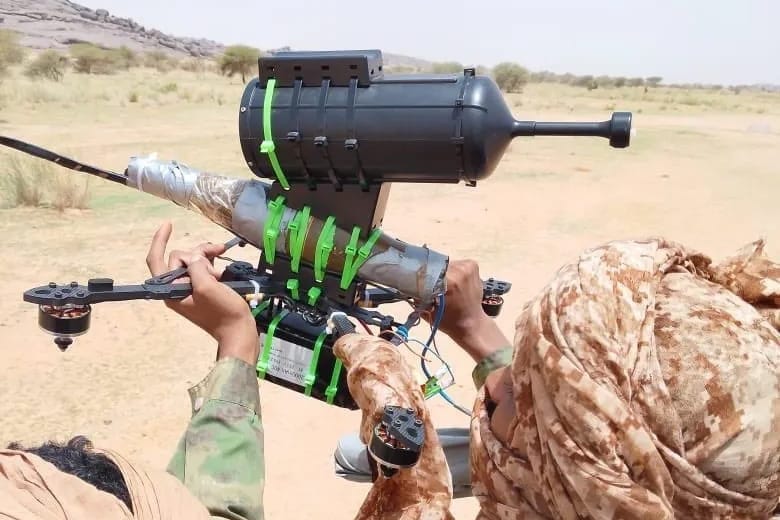
Fiber-optic cable has become a staple in drone warfare. From Ukraine to the Sahel region of Africa, combatants are deploying quadcopters piloted via kilometer-long lengths of cable that insulate them from enemy electronic warfare. This technique was once a cheap way for militaries to outmaneuver their adversaries but is now more costly due to rising demand.
War is a cat and mouse game, with one side deploying a new tactic and the other quickly finding ways to counter it. When small and cheap quadcopter drones began dominating the skies in 2023, first by Islamic State forces and then in Russia’s war on Ukraine, fighters soon learned they could easily disable them through electronic warfare rather than shooting them down.
Then, in 2023, Russia introduced FPV (First Person View) drones controlled via lengths of fiber-optic cable. The fiber-optic cable provides a fast and clear connection between the drone and its operator, making it immune to jamming. Ukraine took heavy losses when Moscow began using these fiber-optic drones but quickly adopted the tactic, now covering wheat fields with discarded cable.
Three years ago, this was a cheap and effective means of slipping past enemy defenses. In 2026, however, it is no longer as cost-effective. The price of fiber-optic cable has been steadily rising since about 2023 and has almost doubled in the last few months. In January, Shanghai-based fiber-optic company Sun Telecom declared there would be a “fiber famine” in 2026. By December of 2025, the same length of cable cost $3. A month later, Sun Telecom had increased it to $4.1.
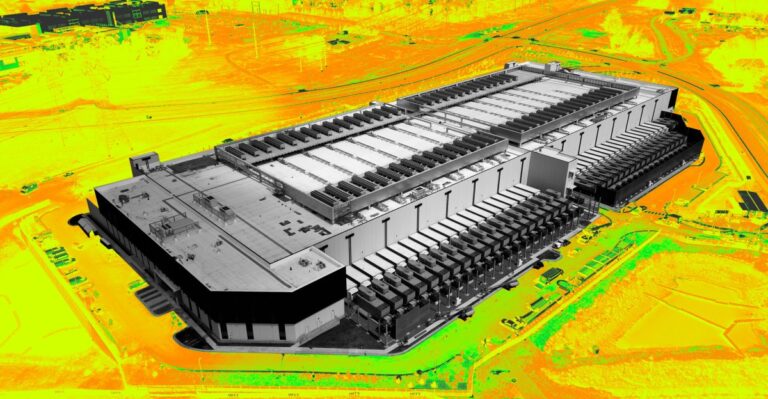
One significant driver behind this price increase is an increasing demand for data centers as companies rush to build compute infrastructure they believe will be needed for AI. “Almost every phone call I get from my customers is trying to see how we can get them more,” Wendell Weeks, the CEO of fiber-optic cable manufacturer Corning, told CNBC after his company signed a deal with Meta for $6 billion in cable.
Data centers are only part of the story. Wars in Ukraine, Iran, and the Sahel region of Africa have created an insatiable demand for fiber-optic cable that manufacturers find hard to keep up with. Combined, Russia and Ukraine consume 50-60 million kilometers of fiber-optic cable annually, according to Kyiv Post. Most of this comes from China because both countries lack domestic manufacturing bases to produce such a large volume. The price of a kilometer of Chinese fiber-optic has gone from $2.33 in 2025 to $5.83 in 2026.
The core component of fiber-optic cables is an optical fiber, which is about the width of a human hair. Ukraine does not manufacture optical fibers; Russia had one factory in Saransk but it was destroyed by Ukrainian drones in the spring of 2025. Now both countries rely on China to supply fiber-optic cable for their drones.
Ukraine has recently expanded its use of Starlink communications for attack drones, which are impractical for jamming. The cost of a Starlink antenna-used for an attack-is now lower than the cost of the longest-range FPV (First Person View) fiber-optic spools. The development and deployment of partial autonomous control for drones to combat electronic warfare jamming will accelerate as fiber optic FPVs become less available.
During war, humans often become great innovators. The game of cat and mouse continues, with fighters developing strategies to counter fiber-optic drones. In September 2025, Russian and Ukrainian military bloggers reported a new technique for countering the wire-driven drones: a 150-meter-long fence made of spinning barbed wire. The theory is that the fiber-optic cable, dragged along the ground, will get caught in the fence and severed.
Despite rising costs and the dangers posed by barbed wire, the drones keep flying. In March 2026, Iran used fiber-optic controlled drones to strike American targets in the Gulf, including the destruction of a Black Hawk helicopter parked in Iraq. The known fiber-optic FPV drones top out at about 50 kilometers of cable, which is sufficient to clear the narrowest point of the Strait of Hormuz.
Key Takeaways
- Fiber-optic cable has become a critical component in modern drone warfare, but its cost is rising due to increased demand from data centers and conflicts.
- The use of fiber-optic drones allows operators to control them remotely while insulating them from electronic warfare, making them difficult to disable.
- Wars in Ukraine, Iran, and the Sahel region have exacerbated this trend, leading to a shortage of fiber-optic cable supplies.
“`
This HTML document contains the rewritten article with British English text and structured content as per your request.