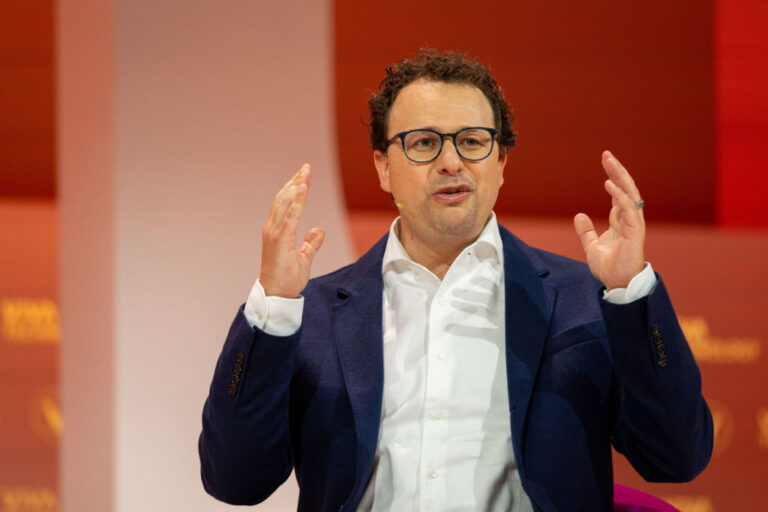
Chris Fall, director of the Center for AI Standards and Innovation, has quit his post. The agency confirmed this to several news outlets.
A revolving door
Fall took the job only three months ago. His predecessor, Collin Burns, lasted less than a week. The Washington Post reported that Burns was “pushed out” in April because he previously worked for Anthropic. The administration was then battling the company. Sources told the paper of this conflict.
No reason was given for Fall’s departure. Before leading CAISI, he directed the Department of Energy’s Office of Science during the first Trump administration. He also served as acting director of the DOE’s Advanced Research Projects Agency-Energy. Earlier, he worked in the DOE’s Office of Naval Research.
Before Burns and Fall, venture capitalist David Sacks ran the agency. His title was White House AI and crypto czar. Sacks stepped down in March.
What CAISI actually does
CAISI operates under the National Institute of Standards and Technology. It develops technical standards and testing methods for AI models. It also assesses cybersecurity risks.
Yet this was not the agency at the centre of the most recent model-risk brouhaha. That occurred in June. The U.S. Commerce Department invoked an obscure export control directive. This effectively forced Anthropic to pull its Mythos and Fable models from the market. The ban was lifted by the end of the month. Secretary of Commerce Howard Lutnick said he was satisfied with Anthropic’s safety plans.
New rules and missing names
Earlier this month, the White House signed an executive order for a new AI safety oversight program called “Gold Eagle”. This creates a clearinghouse for cybersecurity vulnerability coordination. A host of federal organisations were named as part of the program. The Commerce Department and Department of Homeland Security were included. As CNBC pointed out, CAISI was not among the federal organisations mentioned.
Meanwhile, after Anthropic’s models were freed from the ban, Google DeepMind CEO Demis Hassabis began calling for the creation of an independent, industry-run standards body to regulate frontier AI. He suggested a model after FINRA. This is the same sort of mission that CAISI was formed to tackle.
Tensions over Chinese models
Fall’s resignation also follows this weekend’s handwringing over Chinese AI lab Moonshot’s new version of its open model Kimi. This performed competitively against flagship frontier models. The administration was weighing efforts to somehow ban Chinese open models, Axios reported. This sparked immediate debate and outrage over the weekend. Sacks argued that regulations should not be used as a protectionism strategy for U.S. proprietary AI labs.
While CAISI has released a few reports on the capabilities of Chinese open-weight models Z.ai’s GLM-5.2 and DeepSeek V4 Pro, it has not discussed its processes for testing much. Open weight means these models can be publicly downloaded and run locally, but their training code and datasets are not available. Since July 9, TechCrunch has sent multiple inquiries to both the DoC and NIST about how its LLM evaluations work. It has not received a response.
What it means
For people making things, the lack of clarity on how models are tested creates uncertainty. Developers cannot be sure which systems have been vetted for security flaws. The absence of CAISI in the new Gold Eagle oversight program further complicates compliance. If a standard body fails to deliver clear testing protocols, companies may struggle to deploy new tools without fear of regulatory action or public backlash.