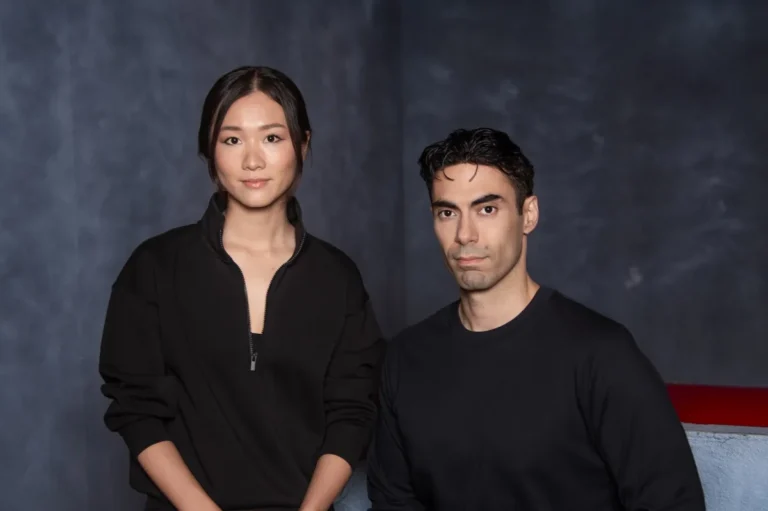
In a facility near Newark Airport, a team of roughly 30 human sniffers is cataloguing every detectable odour on Earth. Their notes, ranging from “nutty” to “marine,” are cross-referenced with chemical analysis to build training data for Osmo, an AI startup claiming to have created the world’s first foundation model for smell. Founder Alex Wiltschko says the goal is to give computers a sense of smell.
“Scent molecules are really the only language most species on this planet can speak,” Wiltschko says. “Most species can’t communicate with sound or visually, so it truly is Earth’s original language. And it’s incredibly powerful for us, from a memory and an emotional standpoint. You can smell something once and remember it for the rest of your life. You can smell something on the street and be pulled back to high school.”
Wiltschko claims Osmo’s model has reached “human-level olfactory intelligence” in recent months. The company defines this as performance matching the average person at detecting and discriminating smells, and matching a junior perfume designer at creating them. The technology is already helping fragrance brands design and manufacture new scents. Last month, Osmo’s AI model outperformed in-house perfumers at one of the world’s largest consumer goods companies. Wiltschko suggests future uses could include threat detection at airports or diagnosing diseases.
Wiltschko spun the startup out of Google Brain in 2023. He is applying a standard approach: throw large amounts of data at difficult problems. The challenge with scent, Wiltschko says, was a lack of good data. Before Osmo, existing databases contained fewer than 200,000 human descriptions of smells. Chemical sensor devices required to collect data are expensive, and the fragrance industry keeps its olfactory science secretive.
Most of the company’s work involves creating a dataset of more than 10 million human labels and 800 million “scent tokens.” These tokens describe the exact molecules and concentrations used to create specific odours. Osmo uses spectrometers and other chemical sensors running around the clock to analyse the molecular makeup of items from fruit and flowers to pantry staples and organs. A team of around 70 trained data labelers in the US and overseas spend their days sniffing items and writing down what they smell like using a standardised fragrance vocabulary.
Mapping scents this way reveals unlikely parallels. Changing the order of words changes a sentence’s meaning. Rearranging scent molecules in different proportions drastically alters what humans perceive. “The scent tokens that define the smell of a newborn baby have massive overlap with the scent tokens in a fresh plate of cooked spaghetti,” Wiltschko says. He specifies Barilla brand spaghetti, which perhaps raises questions for the pasta factory.
The company also creates its own scents using a smell-printing robot the size of a school bus. The machine mixes ingredients according to precise formulas to make samples for Osmo’s research and fragrances for paying customers. It can design and print scents to order based on a ChatGPT-style prompt. Wiltschko showed a demonstration on his laptop. He opened a text box and asked the system to generate a fragrance smelling like a Portuguese custard tart, aimed at men aged 18 to 23. The system spent a few minutes thinking, then generated three options for potential scent profiles matching the brief (creamy, coconutty, fruity) and the molecules needed. If the ordering process continued, a signature L’Eau de Custard would have been ready about a week later.
Osmo’s technology has already created retail fragrances for giants like Procter & Gamble. The Gates Foundation invested $5 million when Osmo launched. It later gave the company a $3.5 million grant to assess molecules that repel disease-carrying insects. Osmo identified eight substances that were more repellent than DEET. The company has also worked with StockX, the online clothing marketplace, on using smell to spot counterfeit sneakers by detecting differences in the chemical composition of the materials used in the shoes.
Not everyone is convinced by the technology or the company’s big claims. Avery Gilbert, a smell scientist and author of What the Nose Knows, has been sharply critical of Osmo on his Substack. He argues some marketing claims are undocumented, and patent filings still rely on human sensory panels and perfumers rather than AI. “This heavy reliance on human sensory judgments seems odd for a company premised on super-cool AI,” Gilbert wrote in March. A representative for Osmo did not respond in time for publication.
Michael Schmuker, a former professor of neural computation at the University of Hertfordshire who has consulted for Osmo, says the company’s technology is an achievement. With colleagues, he created an open-source, reverse-engineered version of Osmo’s 2023 model. It lacks the reams of data the company has collected since.
Even with all this smell data, Osmo may be missing factors that make human olfaction unique, Schmuker says. “Smell is super complex. Context is very important for smell. The same molecule may evoke a different association depending on context,” he says. “The smell of a French cheese like Camembert is partly the same molecule as in used nappies. You don’t confuse the two because of the context.”
In a controlled setting like a fragrance lab, this lack of context may not matter so much. It could have an impact if Osmo’s technology becomes the “olfactive channel” for AI world models. Imagine a machine sniffing out spoilage in food on a production line, or detecting tumors through smell the way dogs have been trained to do in pilot studies.
For that to happen, sensor technology will need to get a lot better, Schmuker says. The models will need to keep improving. Medical diagnostics is the biggest prize.
“There’s a lot of history of companies that have gone directly at that mountain peak and, unfortunately, not been successful, because it is very expensive and it is very difficult,” Wiltschko says. “So what we’re doing is building this foundation at the foothills of all these mountains. We’re sending expeditions up to the mountains, doing explorations, and basically smelling the whole world.”