A US missile strike on an Iranian school killed roughly 120 children because intelligence systems failed to flag the site as a school
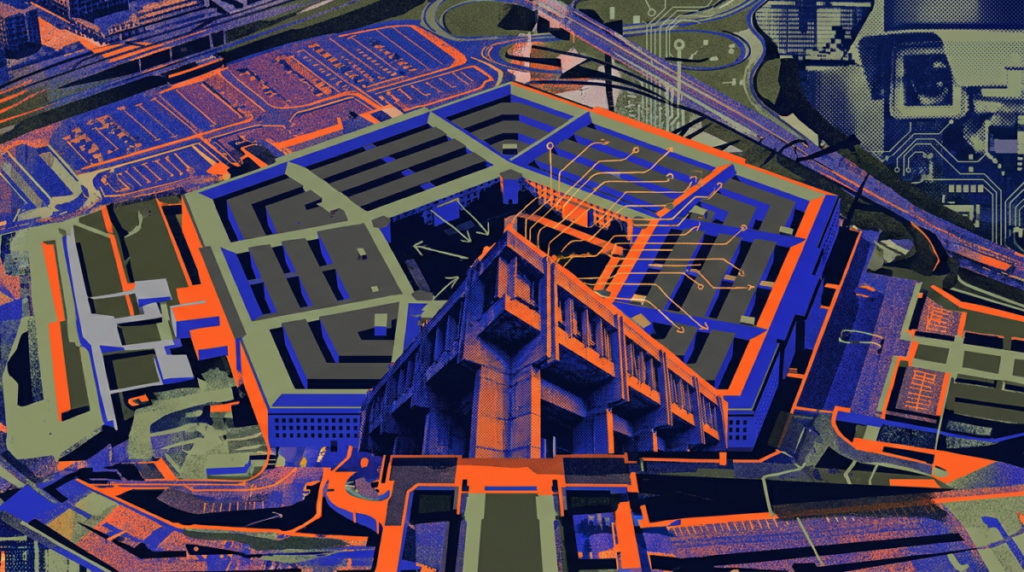
Investigators found that a note from an analyst warning of the change in building use never reached commanders. The strike occurred during a conflict where the US military deployed AI at scale for target selection for the first time. Anthropic‘s Claude model ran inside Palantir’s Maven Smart System and suggested about 1,000 targets on the first day.
Years before the attack, an analyst spotted changes at a site in Minab, southeastern Iran. The US had classified the building as a military naval facility. It had become an elementary school. The analyst flagged the shift in 2019 using a digital intelligence tool. The tool was not linked to the official target database the US military uses to develop strike targets. The information never reached commanders. The building was reviewed multiple times, but nobody updated the database. Imagery used for the assessment was seven years old.
A note nobody ever saw
At least two intelligence databases have never been connected to the authoritative target database. In Syria, target data in the mid-2010s was sometimes 10 or 20 years old. At the center sits a database called MIDB, built in the 1980s, that still relies heavily on manual input. It is supposed to be replaced by an automated system called MARS, but the transition is years behind schedule. The US Government Accountability Office flagged long-standing deficiencies in the system back in 2020.
This aging infrastructure stands in stark contrast to the speed of AI elsewhere. A WSJ report put the number of targets hit in the first days at over 3,000 and warned that oversight mechanisms for human review of lethal decisions were underfunded. Even then, US investigators considered American forces likely responsible for the school strike, a conclusion the LA Times report now backs up with specific technical failures.
AI is supposed to fix what broken databases can’t
Some targeting experts hope that connecting digital systems and adding more AI will reduce errors going forward. An automated cross-check against public services like Google Maps could flag anomalies for human review. The Pentagon moved in exactly that direction after the report, unveiling an agentic AI initiative.
The Defense Intelligence Agency, which oversees both MIDB and MARS, did not directly address the flaws or the delayed transition when contacted by Bloomberg. A spokesperson pointed broadly to the thorough analysis conducted by assigned analysts.
The Pentagon’s own AI pioneer sounds the alarm
Under current US targeting doctrine, military commanders decide whether to prioritise and strike a target. They must distinguish military from civilian objects. There is also an optional process called target vetting that checks the accuracy of the underlying intelligence. One former senior intelligence official told the LA Times it would be unthinkable for a commander to skip that step during strikes on the first day of a new campaign. Centcom reviewed targets before operations against Iran, but whether the optional vetting process was initiated remains unclear.
The sharpest criticism in the report comes from a striking source. Jack Shanahan, a retired Air Force three-star general, was the first director of the Joint Artificial Intelligence Center established in 2018. Before that, he led the AI program Project Maven. That makes him one of the architects of AI adoption in the US military, the same military now relying on that very Maven system. At the time, Shanahan predicted AI would play a central role in any potential conflict between the US and China, and that within 20 years, algorithms would compete against each other.
Shanahan told the LA Times there is no excuse for a command failing to verify the accuracy of its intelligence. He described targeting itself as a moribund career field that withered over two decades while the military focused on counterterrorism. As early as 2017, he said, he could barely find people to fill these roles.
What it means
For the personnel operating these systems, the incident highlights a dangerous gap between high-level algorithmic suggestions and ground-level intelligence verification. The expectation is that AI would handle the volume of data, but the reality shows that without a fully integrated data pipeline, human analysts cannot correct errors in the source material. The reliance on the Maven system does not absolve commanders of the duty to verify targets, even when AI suggests them.