For makers and artists in the UK, the landscape of creative tools is shifting beneath our feet. The government has unveiled a £1.47 billion strategy designed to end our reliance on imported artificial intelligence hardware, ensuring that the digital brushes and processors powering our work remain under national control rather than in the hands of foreign powers.
A National Machine for British Innovation
Announced this Monday, the plan allocates over £1 billion to construct a dedicated national AI supercomputer. The hardware budget totals £530 million, with £200 million specifically ring-fenced for specialist inference chips required to process complex generative tasks. The procurement process will prioritise emerging British firms, specifically highlighting Olix and Fractile as potential beneficiaries. Researchers and startups across the nation are expected to gain access to this machine by 2030.
Geopolitics and the End of an Era
This initiative is a direct response to a broader push for technological sovereignty, accelerated by a deteriorating relationship between the US and its European allies. Recent friction over issues ranging from Greenland to trade tariffs has led to speculation about a fracturing NATO alliance. In this volatile climate, dependence on American technology poses a strategic liability that could be weaponised against European nations.
“The geopolitical settlement of the last 40 years has ruptured-and many would argue is gone for good,” said Liz Kendall, the UK technology secretary, during an April address at the Royal United Services Institute. “For Britain, AI sovereignty is about reducing overdependencies and increasing resilience.”
Kendall rejected the notion that the race for dominance is already over. “There are those who say this race is already lost-that it is too late to challenge the dominance of the US or China in AI chips-but I do not accept such defeatism,” she added.
Beyond the Supercomputer
These measures extend a wider effort to secure Britain’s position in the AI sector. Since last November, the country has established “AI growth zones” to reduce regulatory barriers for data centres. In April, a £675 million venture fund named SovAI was launched to invest in domestic startups working on everything from model development to agentic AI and drug discovery.
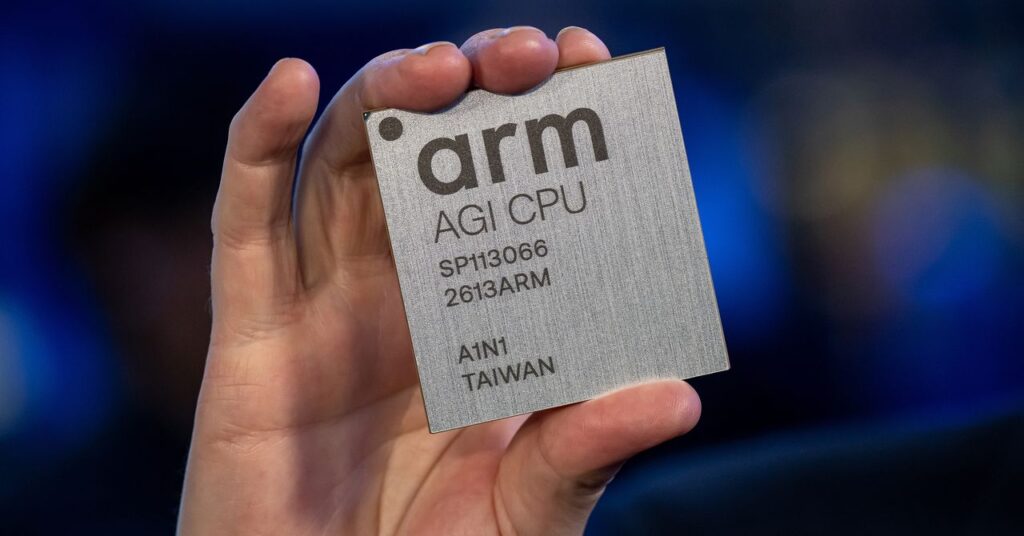
While the UK is home to industry giants like ARM, whose chip architectures are ubiquitous globally, semiconductor manufacturing remains dominated by American and Asian corporations. By acting as a massive customer for domestic chip startups, the government aims to provide a stable revenue stream that incentivises these companies to remain based in the UK long-term.
“Historically, the UK government has just been impenetrable … the willingness to back UK businesses with innovative technologies with hard contracts is a really important milestone,” said Ed Bussey, CEO at Oxford Science Enterprises. “If we can build out a procurement pipeline of revenues for these companies, it helps to anchor them here.”
Carving a Strategic Niche
The industry is moving away from homogenous fleets of generic chips toward mixed architectures of specialist hardware. This shift offers the UK a chance to define a strategically important niche. Keegan McBride, director of science and technology at the Tony Blair Institute, noted that while no nation can do everything alone, the UK must be militant about its specialisations.
“The UK is playing a very smart game … If they get it right, there’s a massive opportunity. If other companies begin to depend on British chips, that gives you leverage,” McBride said.
Key takeaways
- The UK has committed over £1 billion to a national AI supercomputer, with £200 million dedicated to domestic inference chip development.
- Procurement will prioritise British startups like Olix and Fractile, aiming to anchor them in the UK through guaranteed government contracts.
- The initiative is driven by a need for technological sovereignty amid rising geopolitical tensions between the US and Europe.
- The strategy seeks to shift the UK’s role from a consumer of US tech to a provider of specialist hardware, creating leverage for the future.