“`html
Simon Willison – simonwillison.net

I presented this lightning talk at PyCon US 2026, attempting to summarize the last six months of developments in LLMs in five minutes.

Six months is a pretty convenient time period to cover, because it captures what I’ve been calling the November 2025 inflection point. November was a critical month in LLMs, especially for coding.
For one thing, the supposedly “best” model (depending mostly on vibes) changed hands five times between the three big providers.

As always, I’m using my Generate an SVG of a pelican riding a bicycle test to help illustrate the differences between the models.
Why this test? Because pelicans are hard to draw, bicycles are hard to draw, pelicans can’t ride bicycles… and there’s zero chance any AI lab would train a model for such a ridiculous task.
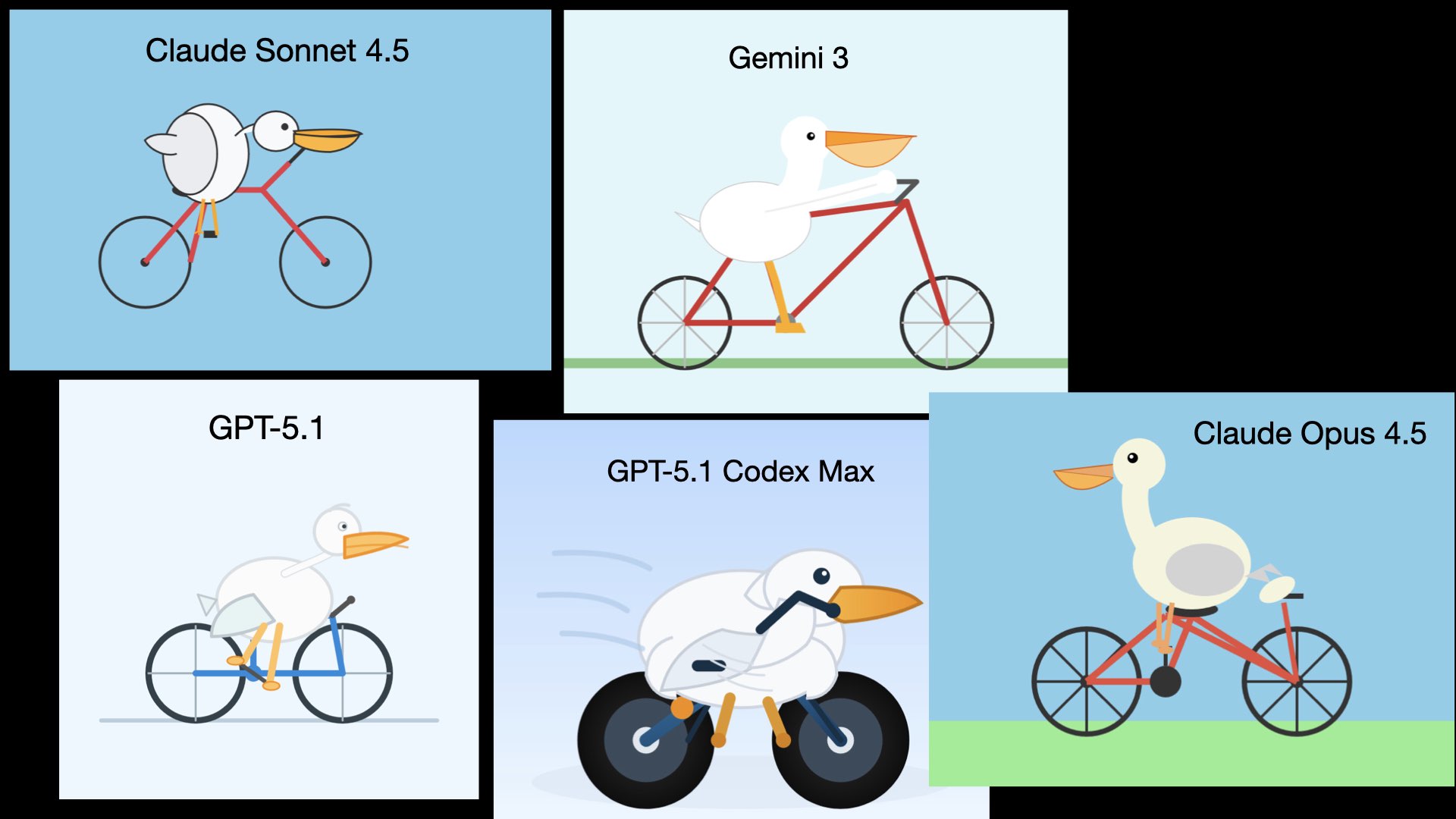
At the start of November the widely acknowledged “best” model was Claude Sonnet 4.5, released on 29th September. It drew me this pelican.
In November it was overtaken by GPT-5.1, then Gemini 3, then GPT-5.1 Codex Max, and then Anthropic took the crown back again with Claude Opus 4.5.
I think Gemini 3 drew the best pelican out of this lot, but pelicans aren’t everything. Most practitioners will agree that Opus 4.5 held the crown for the next couple of months.
It took a little while for this to become clear, but the real news from November was that the coding agents got good.
OpenAI and Anthropic had spent most of 2025 running Reinforcement Learning from Verifiable Rewards to increase the quality of code written by their models, especially when paired up with their Codex and Claude Code agent harnesses.
In November the results of this work became apparent. Coding agents went from often-work to mostly-work, crossing a quality barrier where you could use them as a daily-driver to get real work done, without needing to spend most of your time fixing their stupid mistakes.
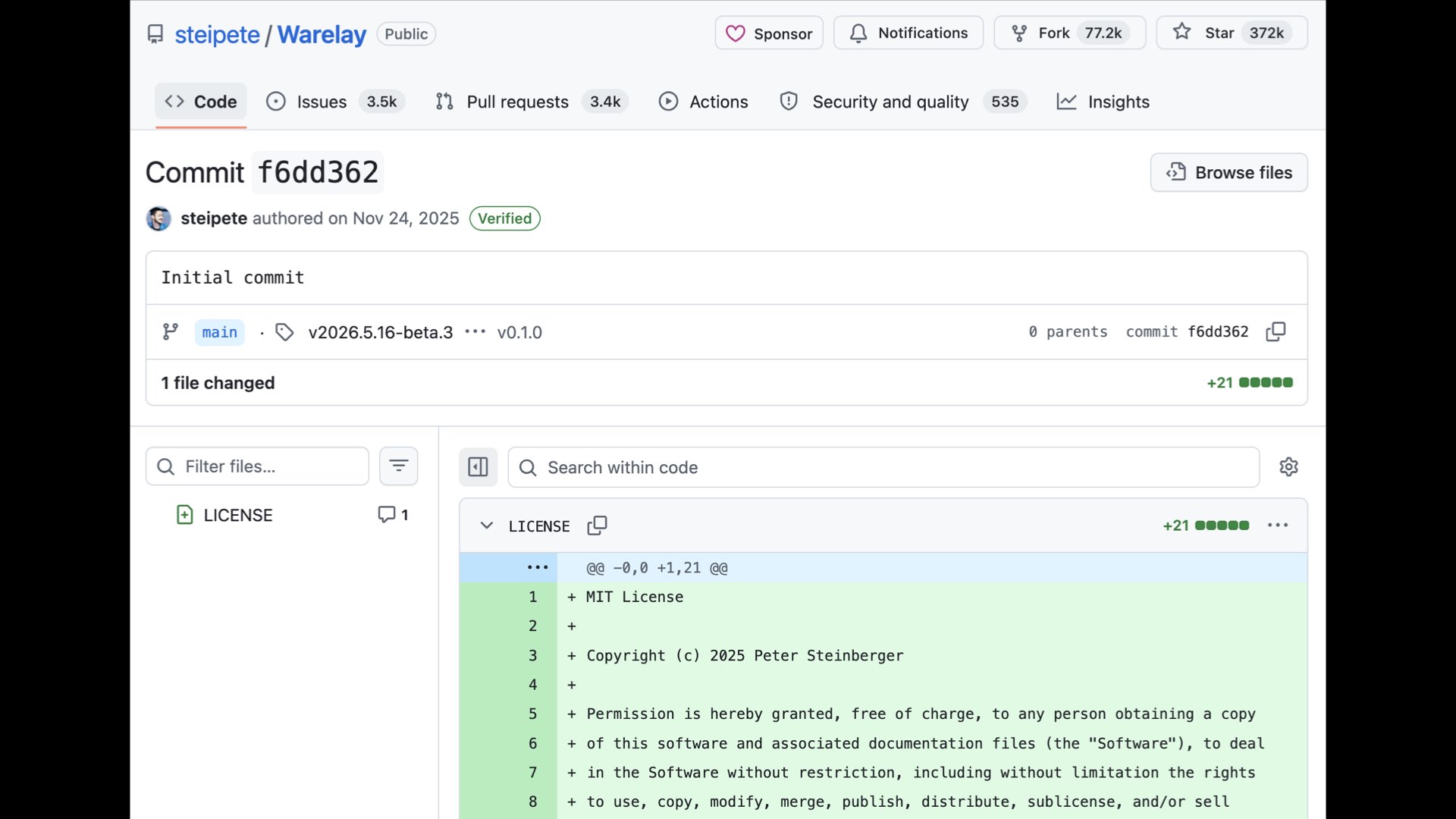
Also in November, this happened – the first commit to an obscure (back then) repo called “Warelay” by some guy called Pete.

Over the holiday period, from December to January, a whole lot of us took advantage of the break to have a poke at these new models and coding agents and see what they could do.
They could do a lot! Some of us got a little bit over-excited. I had my own short-lived bout of a form of LLM psychosis as I started spinning up wildly ambitious projects to see how far I could push them.
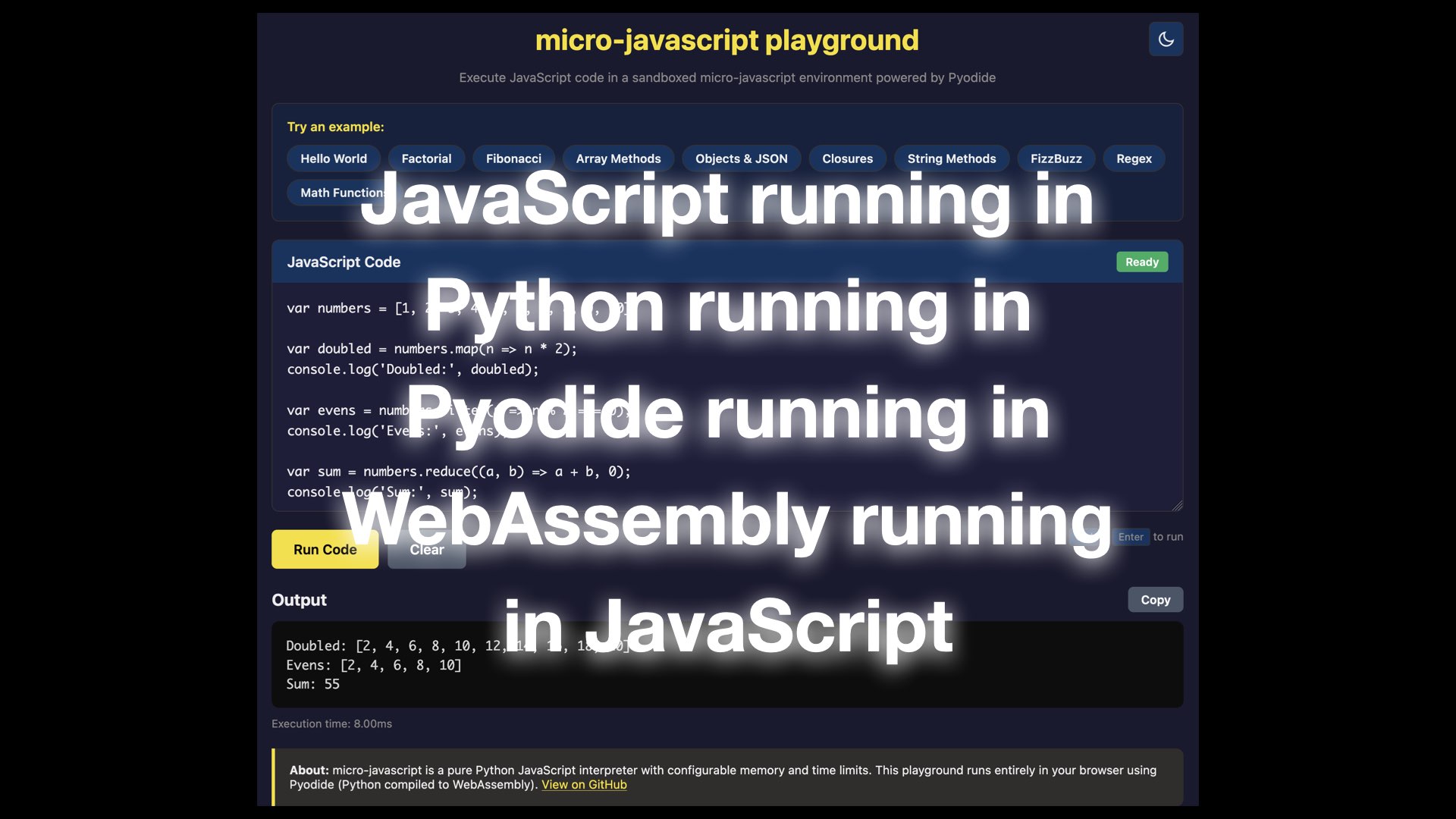
That playground demo shows JavaScript code run using my micro-javascript library, in Python, running inside Pyodide, running in WebAssembly, running in JavaScript, running in a browser!
It’s pretty cool! But did anyone out there need a buggy, slow, insecure half-baked implementation of JavaScript in Python?
They did not. I have quite a few other projects from that holiday period that I have since quietly retired!

On to February. Remember that Warelay project that had its first commit at the end of November?