
The Biggest Student Data Privacy Disaster in History: Canvas Hack Shows the Danger of Centralized EdTech
What We Know So Far
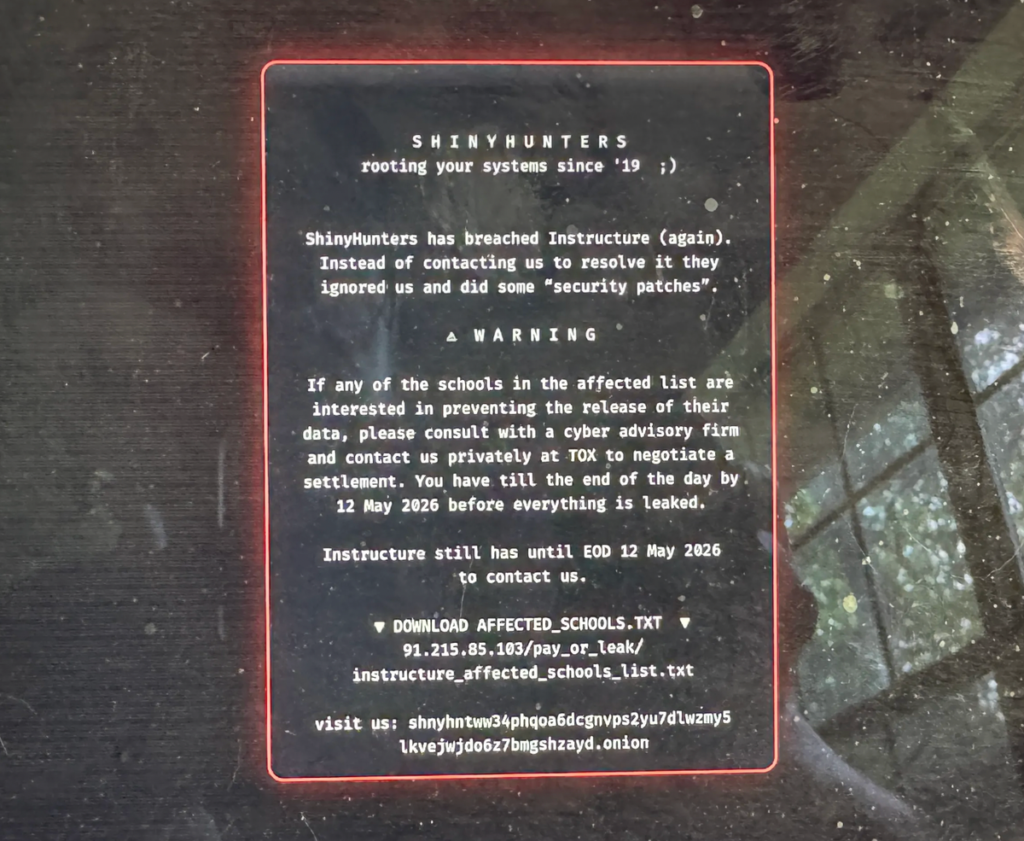
A hacking group called ShinyHunters claimed to have hacked Canvas, the de facto core of many classes. Millions of students at thousands of universities and K-12 schools were locked out of Canvas for millions of dollars in ransom.
The hack exposed billions of messages and more than 275 million individuals’ data. Instructure, which makes Canvas, has been able to mostly put Canvas back online but is not clear if the company paid a ransom or not. The breach demonstrates the danger in centralizing the educational and personal data of millions of students in a single service.
Implications for Makers and Artists
The hack is considered the biggest student data privacy disaster in history, according to Ian Linkletter, a digital librarian specializing in emerging education tech. Linkletter has worked in education tech for 20 years and over the last few years has become known for exposing privacy concerns in Proctorio, a remote test proctoring software.
Linkletter told me that the Canvas hack is “the biggest student data privacy disaster in history” because of its scale and the sensitive nature of what was stolen. The contents of messages got leaked, making it easier for phishing attacks to get customized. Because students and teachers often communicate about personal matters like medical conditions or academic accommodations through Canvas, the exposure could lead to harm.
Key Takeaways
- The Canvas hack is considered the biggest student data privacy disaster in history.
- Centralizing educational and personal data poses significant risks for students and institutions.
- Schools should have warned students about the breach sooner, as it led to panic and potential harm.
Originally published at 404media.co. Curated by AI Maestro.
Stay ahead of AI. Get the most important stories delivered to your inbox — no spam, no noise.