
The Biggest Student Data Privacy Disaster in History: Canvas Hack Shows the Danger of Centralized EdTech
Key Takeaways
- The Canvas hack exposed billions of messages and personal data for more than 275 million individuals.
- Instructure, the company behind Canvas, has struggled to fully restore access to the platform, with some users still experiencing issues as of Thursday evening.
- Experts like Ian Linkletter warn that such a breach is unprecedented in scale and could lead to severe privacy and safety concerns for students.
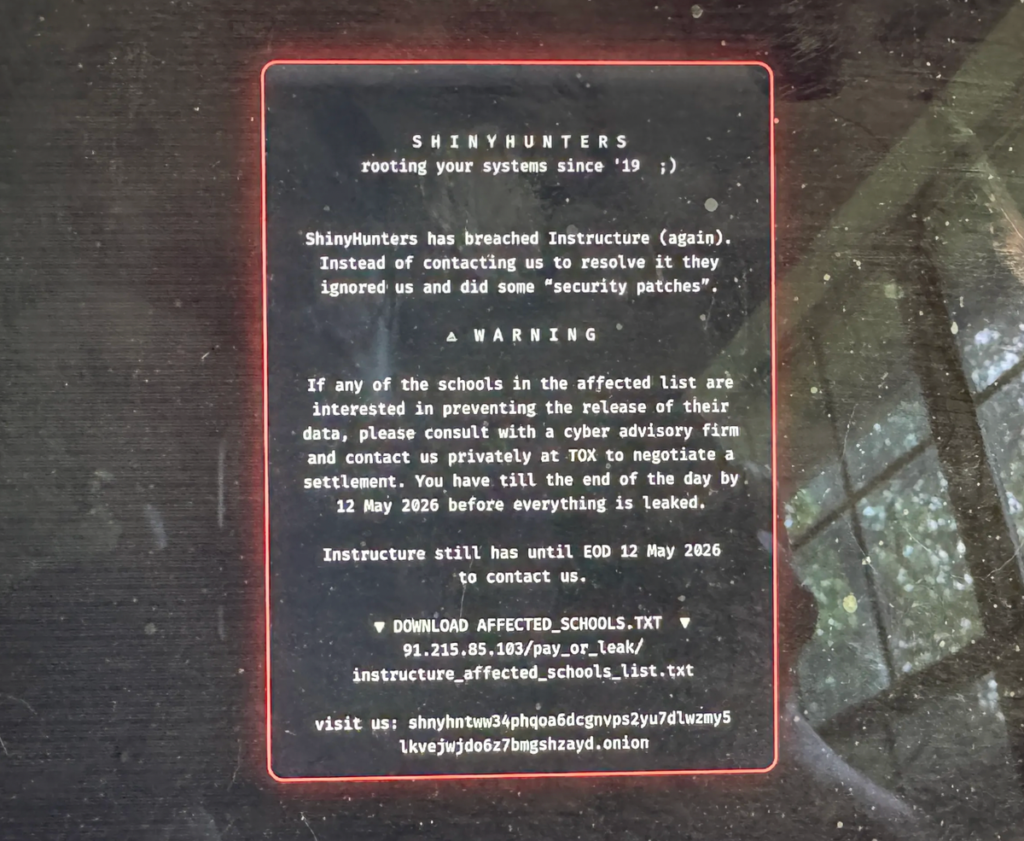
The Hack’s Impact on Education Technology: The hack demonstrates the dangers associated with centralizing educational data within a single platform. Canvas serves as a hub where teachers post assignments, lectures, and discussion boards, while students can communicate through various features. Instructure, the company behind Canvas, has acknowledged that stolen data includes personal information such as names, email addresses, student ID numbers, and messages between users.
Expert Insights: Ian Linkletter, a digital librarian specializing in education technology, describes this breach as “the biggest student data privacy disaster in history.” He emphasizes the scale of the hack and how sensitive personal information was exposed, including details about students’ medical conditions or academic accommodations. According to Linkletter, Canvas messages could be used for phishing attacks, posing significant risks to both students and institutions.
Concerns About Institutional Response: In response to the breach, schools have been slow to inform their student populations. This delay in communication has led to confusion among users regarding the status of their accounts and potential vulnerabilities in their personal data. Linkletter strongly advocates for greater transparency from educational institutions to mitigate risks associated with this type of security incident.
Implications for Makers and Artists: For developers, designers, and creators working within the education technology sector, this breach highlights the critical importance of robust privacy protections and secure data handling practices. It underscores the need for diverse and decentralized systems to safeguard sensitive information and prevent similar incidents from occurring in the future.
Background on Instructure: Instructure has faced regulatory scrutiny over previous security breaches involving Proctorio, a tool used during remote learning. The company’s history of handling data raises questions about its ability to manage and protect student personal information effectively. This latest incident further exacerbates concerns regarding the reliability of centralized educational technology platforms.
Conclusion: The Canvas hack underscores the vulnerabilities inherent in relying on single, centralized platforms for education-related data management. As a result, it is crucial for both academic institutions and tech companies to reassess their security protocols and consider more distributed solutions that prioritize user privacy and safety.
Key Takeaways
- The Canvas hack exposed billions of messages and personal data for over 275 million individuals.
- Instructure, the company behind Canvas, has struggled to fully restore access to the platform.
- Experts like Ian Linkletter warn that this breach could lead to severe privacy and safety concerns for students.
Originally published at 404media.co. Curated by AI Maestro.
Stay ahead of AI. Get the most important stories delivered to your inbox — no spam, no noise.