Abliteration.ai has launched a commercial service that strips safety refusals from the GLM-5.3 open-weight model for five dollars per million tokens.
The US startup modifies the model’s internal weights to suppress refusal triggers. This allows the system to generate code and run exploits without triggering standard safety blocks. The company markets the tool for cybersecurity testing, red teaming, and malware analysis.
How it works
The process, called abliteration, identifies specific activation patterns inside the model that cause it to reject sensitive requests. The company tweaks the weights to dampen those patterns. Abliteration.ai states this does not break the model’s coding or agentic capabilities.
Internal evaluations claim the modified GLM-5.3 scores 84.5 percent on CyberGym and solved 105 ExploitGym tasks in two hours. The company notes that GPT-5.5 and Fable 5 perform better on similar metrics. It adds that these scores come from different testing harnesses, which limits direct comparison.
Why GLM-5.3
The previous version, abliterated-model-large, was based on GLM-5.2. Abliteration.ai argues earlier versions were trained to be difficult to use for practical security work. Z.AI stated that GLM-5.3’s cyber capabilities grew faster than expected during post-training.
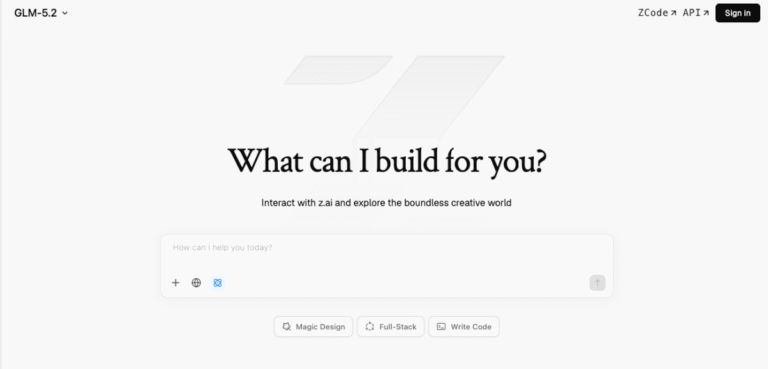
GLM-5.3 combines strong coding and cyber performance with open weights and a commercial license. The license permits modifications and Model as a Service offerings. This allows Abliteration.ai to modify the model, host it, and sell access.
A service, not a download
Developers have published modified models on Hugging Face for years. Abliteration.ai does not release the weights for public download. It handles hosting and operations. Customers access the model via API without needing their own GPU infrastructure.
This turnkey setup lowers the barrier to entry. It makes the modified model available to anyone with a credit card and an API key.
Who wants this?
The company markets the model for offensive security, AI red teaming, and trust and safety work. Use cases include reproducing vulnerabilities and simulated phishing attacks.
An anonymous founder told the ThursdAI podcast that early demand came from companies testing AI agents used by large organisations and banks. Those systems need checking to see if attackers can trigger unauthorised actions via jailbreaks.
How much abliteration is actually needed remains an open question. SaferAI found the unmodified GLM-5.2 refused zero tasks in its offensive security evals. Several red-team providers interviewed by TechCrunch say abliterated models are not part of their routine work. Fabraix relies more heavily on fine-tuning open models.
Risks and retention
TechCrunch reported the model produced code to extract saved Chrome passwords and a guide for cultivating a dangerous pathogen without difficulty. Safety mechanisms still blocked self-harm requests. The FAQ states the system also blocks sexual content involving children. Customers can optionally add more rules.
Prompts and responses are not stored. Operational metadata like token counts, timestamps, model IDs, and billing data are retained. For legitimate security teams, this keeps confidential source code out of the provider’s stored data.
If the service is abused, Abliteration.ai says it has no prompt or response logs to inspect afterward. The company does not require conventional identity or ID verification. This makes problematic use harder to investigate, even though account and payment metadata are kept.
An anonymous company representative argues identity checks would not reliably distinguish legitimate users from malicious ones. He also says tighter access controls could disadvantage smaller security firms compared to large enterprises.
Enterprise controls
Through an optional policy gateway, enterprise customers can define which requests are allowed, blocked, modified, or logged. The company also sells synthetic training and evaluation data. Standard model access remains largely unrestricted unless control rules are explicitly turned on.
The same philosophy applies to government customers. Abliteration.ai is registered for US government procurement on SAM.gov. It promotes versioned models, audit logs, and agency-specific rules, starting with pilot projects that do not involve Controlled Unclassified Information.
Modifying GLM-5.3 is allowed under its license. Whether any specific use is legal depends on the action and jurisdiction. For security testing, Abliteration.ai explicitly requires written authorisation for target systems and compliance with applicable laws.
Abliteration.ai is not the first to do this. Providers like Audn.AI with PenClaw and Silk Compute also host abliterated or largely unrestricted models for security use cases. Abliteration.ai combines GLM-5.3 with straightforward API access and an optional policy layer.
Side effects
A preliminary study suggests refusals can be sharply reduced in certain models without a comparable decline in code-generation performance. Other experiments find behavioural changes even on tasks where the base model did not refuse anything.
In other words, abliteration does not surgically remove a single trait but reaches deeper into how the model behaves. The company shifts much of the decision-making over model limits from the provider to the customer. Whether this arrangement serves legitimate security work without making harmful uses substantially easier remains unresolved.