Why this matters for makers and artists
For developers and creative technologists, the news that SpaceX is acquiring the maker of Cursor signals a massive shift in how code is written and how AI agents are built. This isn’t just a corporate merger; it is a direct injection of capital and compute into the tools that power modern software creation. By bringing the company behind Cursor under SpaceX’s umbrella, the deal ensures that the next generation of coding assistants will have access to unprecedented hardware resources and proprietary talent pipelines. For artists and engineers working with generative models, this means the underlying infrastructure supporting their workflows is about to become significantly more robust and competitive against giants like OpenAI and Anthropic.
The billion wager
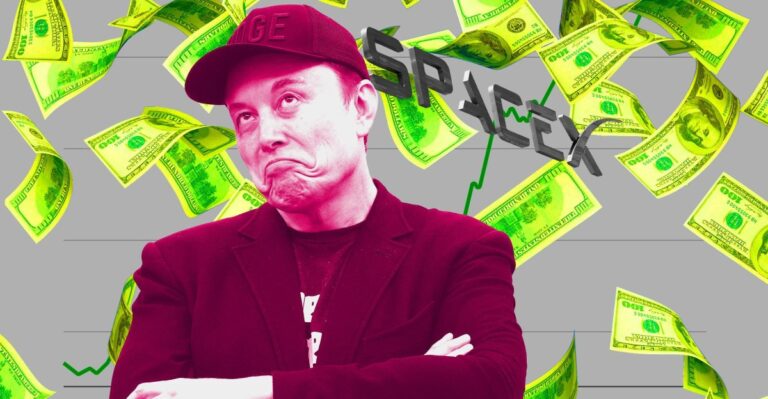
SpaceX has officially finalised its purchase of Anysphere, the parent company of the code editor Cursor, for a staggering $60 billion. In this transaction, existing investors in Anysphere will be compensated with shares of SpaceX stock. While the full integration is not expected until the third quarter of 2026, the decision was made with remarkable speed. Just two trading days after SpaceX’s initial public offering, the deal was confirmed by Reuters and Bloomberg. This rapid move capitalises on the company’s soaring valuation; following its Nasdaq listing, SpaceX’s market capitalisation surged past $2 trillion, with shares climbing another eight per cent in a single session to approach $2.7 trillion.
Catching up in the coding arena
For xAI, which merged with SpaceX in February, this acquisition is a strategic acknowledgement that it is currently trailing its rivals in the field of AI-assisted coding. This remains one of the few commercially viable sectors within generative AI. Reports indicate that Cursor developers were already embedded within xAI’s offices weeks ago, collaborating on a joint model. SpaceX subsequently confirmed on X that it is now training a new AI model leveraging Cursor’s technology. Cursor itself is a high-velocity startup, boasting over 3,000 enterprise customers, each paying at least $100,000 annually. By April, its annualised revenue had reached $3 billion, up from $2 billion just two months prior. The company has traditionally relied on models from OpenAI and Anthropic, but it is now developing its own proprietary models. The intense competition from these very providers likely made selling to a deep-pocketed owner like Musk more attractive than continued independent growth.
Hardware for talent, talent for hardware
The deal establishes a symbiotic relationship: Cursor gains access to SpaceX’s vast reserves of computing chips, while xAI acquires critical human capital. The AI division has recently suffered significant staff losses, shedding dozens of engineers and data training personnel. To fill these gaps, Musk has been reallocating personnel from Starlink and Tesla. Furthermore, Anysphere owns a recruitment firm that assists top-tier AI companies, including OpenAI, in hiring skilled staff. Musk’s broader AI strategy is capital intensive; SpaceX reported a net loss of $4.94 billion in 2025 after retroactively absorbing xAI’s debt. Capital expenditure doubled to $20.7 billion during this period, with the majority allocated to AI initiatives. Meanwhile, rivals are also moving; OpenAI recently announced the acquisition of the cloud platform Ona to enhance its AI agents, while Anthropic continues to expand its coding ecosystem around the Claude model.
Key takeaways
- SpaceX has closed a $60 billion acquisition of Anysphere, the company behind Cursor, with investors receiving SpaceX stock in exchange.
- The deal aims to accelerate xAI’s position in AI-assisted coding, a sector where it currently lags behind OpenAI and Anthropic.
- Cursor will gain access to SpaceX’s extensive chip inventory, while xAI secures vital engineering talent and recruiting capabilities.