Why the way we turn matters for designers and creators
Whether you are designing a virtual environment, mapping a physical flow, or simply observing the world, there is a hidden rule governing human movement that has only just been identified. People walking in groups spontaneously rotate counter-clockwise when changing direction. This is not a quirk of culture or a learned habit; it appears to be a deep biological principle known as symmetry breaking.
This discovery emerged not from a deliberate search for human behaviour, but from an accidental observation during the pandemic. Researchers led by Iñaki Echeverría Huarte, a professor at the University of Navarra in Spain, were analysing pedestrian data to advise on social distancing protocols. While reviewing footage of people moving through crowds, they noticed a consistent pattern: individuals who needed to pivot to a new path invariably turned to their left.
“The discovery was a serendipitous one (as sometimes happens in science),” Huarte noted in an email exchange with co-author Claudio Feliciani, a professor at the University of Tokyo. “Since then, we have completed a series of experiments in Spain to test several hypotheses.”
“Curiously, during a conference where I was presenting the first part of this story, Claudio and I got talking and thought together: why not run an experiment in Japan?” Huarte explained. “We were convinced the rotation would flip there, for several reasons (cultural ones, and the different type of avoidance behaviour that exists in Japan compared with Spain). However…it did not.”
The team tested this theory across multiple environments in both Spain and Japan. The counter-clockwise bias held true regardless of the setting. Crucially, the effect was present whether subjects were moving alone or in a group, indicating it originates from the individual rather than emerging solely from collective crowd dynamics.
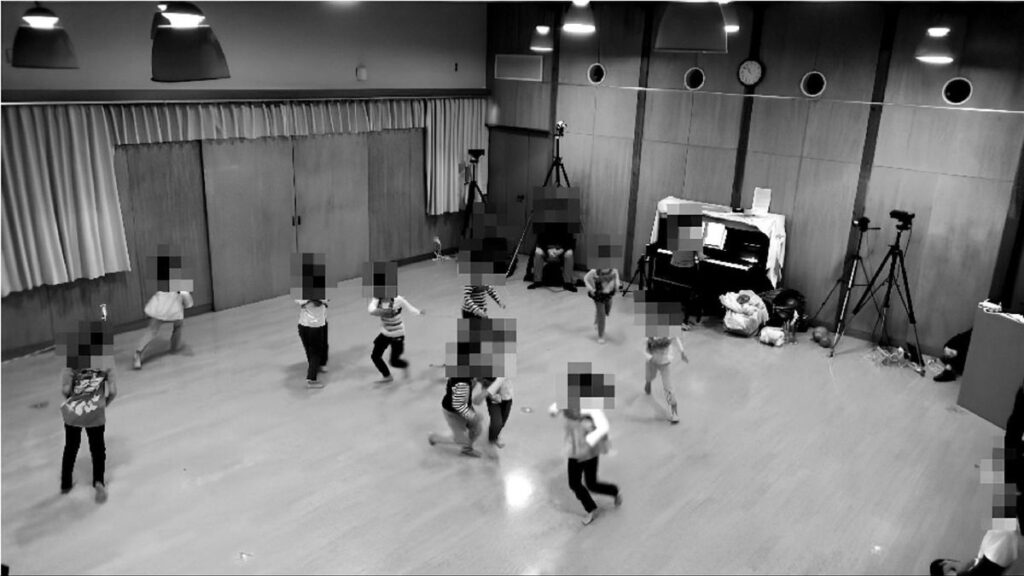
The experiments involved hundreds of participants, including adults moving freely, teenagers playing in a Spanish schoolyard, and children at a nursery school in Japan. The researchers carefully controlled for variables such as handedness, age, and local social etiquette. In every scenario, a clear preference for counter-clockwise turns emerged.
While a minority of participants turned clockwise or showed no rotational preference, they were outnumbered. Notably, the nursery school children displayed an even stronger bias than the adults, suggesting this is not a learned behaviour but something biologically rooted.
“We are now only sure that it is not a collective but an individual bias, and that is very, very robust,” Feliciani stated. However, the researchers stopped short of calling it a universal law pending further study in complex scenarios, such as emergency evacuations or extremely dense crowds.
The leading explanation is biomechanical. Feliciani pointed out that this symmetry-breaking motion is unusual in the animal kingdom; most species show no such bias, making humans a probable exception or a rare case. Exceptions do exist, however, such as temnothorax ants, which tend to turn left while exploring, and budgies, which show lateral preferences during flight.
While the precise mechanism remains unexplained, Huarte is currently conducting follow-up studies using virtual reality to isolate the variables. Understanding this pattern could prove vital for architects, urban planners, and game designers working on busy public spaces like airports, museums, and shopping centres.
“I believe the real value of our discoveries lies in the fact that it can lead to other discoveries on how we process locomotor information and use them to move,” Feliciani concluded. It stands as a reminder that unexpected rules of nature are often hiding in plain sight.
Key takeaways
- Humans exhibit a robust, individual bias to turn counter-clockwise when changing walking direction, a phenomenon observed across cultures and ages.
- This behaviour appears to be biomechanical rather than cultural, evidenced by its persistence in Japanese settings despite different social norms.
- While the exact cause is unknown, understanding this rule could improve the design of public spaces and digital environments.