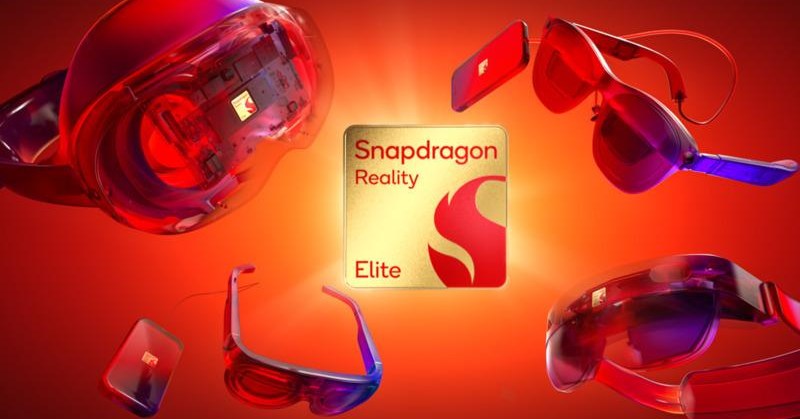
Qualcomm has unveiled the Snapdragon Reality Elite, a new system-on-chip designed to drive the next generation of augmented reality hardware. Although the processor was officially presented at the Augmented World Expo, developers and journalists already tested the silicon within Google’s Project Aura smart glasses during the recent Google I/O conference. The chip delivers significant improvements over its predecessor, with the graphics processing unit showing a sixty percent increase in performance. This upgrade is intended to handle more complex rendering tasks and support higher resolution displays without draining the battery excessively. While the specific technical specifications for the display and battery life remain partially redacted in initial reports, the focus is clearly on making wearable computing more viable for everyday use.
This development matters because it addresses the primary bottleneck preventing smart glasses from becoming mainstream consumer electronics. Previous attempts at AR wearables often suffered from poor battery life, low resolution, or excessive heat, limiting their utility to niche professional applications. By boosting computational power, Qualcomm aims to enable richer visual overlays and more responsive artificial intelligence features that do not rely on tethered phones. The release of the chip signals that the industry is moving past experimental prototypes toward functional devices capable of running sophisticated applications. If manufacturers can utilise this silicon to create comfortable, long-lasting glasses, the category could finally transition from a novelty to a practical tool for productivity and entertainment.
* The Snapdragon Reality Elite offers a sixty percent boost to GPU performance to support better graphics in AR glasses.
* Early testing confirmed the chip powers Google’s upcoming Project Aura smart glasses for the Android XR platform.
* Increased processing power aims to overcome previous limitations regarding battery life and visual fidelity in wearable devices.