For creators and analysts, the latest update to Perplexity’s Deep Research transforms how complex inquiries are handled. By integrating directly into Perplexity Computer, the system now orchestrates research across more than 20 frontier models, delivering finished reports, slide decks, and interactive dashboards. This shift moves away from simple Q&A toward a workflow where the AI breaks down difficult questions, routes subtasks to the appropriate engine, and compiles a work-ready output.
Deep Research inside Computer
Deep Research is no longer a standalone mode; it now lives within Perplexity Computer, a cloud-based orchestration platform launched in late February 2026. This system coordinates up to 20 different AI models simultaneously. While Opus 4.6 serves as the core reasoning engine, specific sub-agents-such as Gemini-are deployed for specialised tasks like deep research. The architecture relies on two core technologies: the Agent Search SDK and Search as Code. These tools allow the system to automatically construct a research plan from a single complex prompt, scouring hundreds of websites to find primary sources and attaching citations to every assertion.
Search as Code: The Mechanism
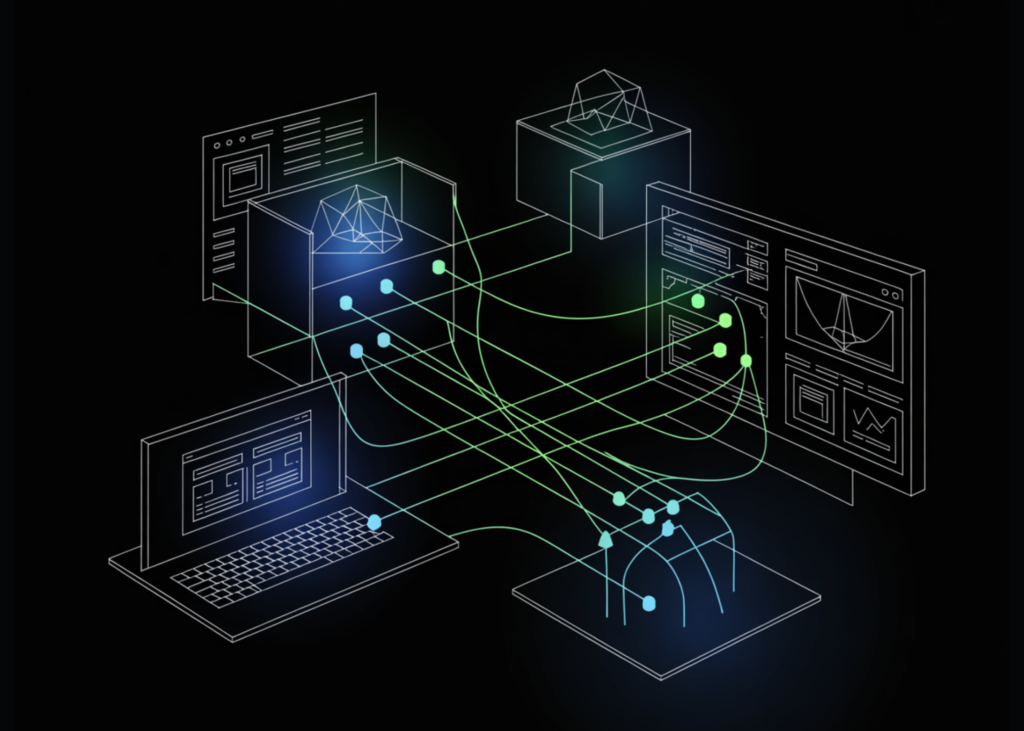
The core innovation is that the model generates code to execute the search itself. Rather than following a rigid, pre-set pipeline, the system writes a script that runs thousands of retrieval steps in parallel, adapting specifically to the query. This code executes in a sandbox environment, calling Perplexity’s Agentic Search SDK to utilise primitives like filtering, deduplication, and reranking. Because the process is code-driven, the system can branch, compare results, and refine its approach dynamically as it gathers data.
This capability is rolling out via both the Computer interface and the Agent API, allowing developers to access the same agentic search stack programmatically. Furthermore, Computer can ingest local files-such as PDFs or spreadsheets-to provide internal context, then cross-reference this data against live web sources like census records and Statista.
Developer Access
While the Computer interface is a premium feature for Perplexity Max users, the underlying technology is available to developers via the pay-as-you-go Agent API. The official SDK includes a `deep-research` preset, enabling quick integration. The endpoint accepts requests at `POST https://api.perplexity.ai/v1/agent` and also supports OpenAI SDK compatibility via `POST /v1/responses`.
Performance Benchmarks
Perplexity has released comparative data showing significant improvements over the legacy Deep Research version, with the most dramatic gains occurring in agentic browsing tasks.
| Benchmark | Source | Legacy Deep Research | Deep Research in Computer |
|---|---|---|---|
| Humanity’s Last Exam | Center for AI Safety & Scale AI | 36.4% | 50.5% |
| BrowseComp | OpenAI | 40.7% | 83.8% |
| DeepSearchQA | Google DeepMind | 81.9% | 85.0% |
The BrowseComp metric, which measures an agent’s ability to locate difficult information via browsing, saw the largest leap, rising from 40.7% to 83.8%. Humanity’s Last Exam, covering expert-level questions across academic subjects, improved from 36.4% to 50.5%. DeepSearchQA, which already performed strongly, saw a smaller but positive increase to 85.0%.
Practical Applications
The platform offers starter tasks designed to demonstrate its capabilities across various sectors:
- Finance: Comparing cash flow and profit margins of major AI chip manufacturers over a five-year period.
- Legal: Synthesising differences between US and European data-privacy laws into a single comparison table.
- Healthcare: Aggregating clinical trial evidence regarding the impact of weight-loss drugs on heart health.
- Technology: Benchmarking leading models against criteria such as reasoning ability, cost, and context window.
Each task concludes with a tangible deliverable. Users can convert the output into a brief, a presentation deck, or a live spreadsheet. The system reads and writes directly within these files, presenting a preview of changes before they are committed, ensuring user approval.
Model Routing Strategy
Computer dynamically assigns subtasks to the model best suited for the specific requirement. A legal reasoning model might handle contract review, while a data model manages spreadsheet variance checks, and a writing model finalises the draft. Answers are backed by premium data sources including PitchBook and CB Insights, with legal data currently available in preview.
Strengths and Limitations
Strengths
- Code-driven search enables thousands of parallel retrieval steps per question.
- Substantial accuracy improvements in agentic browsing, highlighted by the BrowseComp results.
- The system ingests internal files and the live web, citing every claim inline.
- It produces ready-to-use deliverables: reports, briefs, decks, dashboards, and live spreadsheets.
Limitations
- Benchmark figures are first-party data, meaning independent verification is still required.
- The in-Computer experience is centred on the Perplexity Max tier, rather than a free tier.
- Coverage of premium sources varies, and legal data remains in preview mode.
- Outputs still require human oversight, as cited information is not guaranteed to be factually correct.
Key takeaways
- Perplexity has integrated Deep Research into Computer, enabling the routing of research subtasks across more than 20 frontier models.
- “Search as Code” allows the model to write scripts that execute thousands of parallel retrieval steps tailored to the query.
- Accuracy on the BrowseComp benchmark jumped from 40.7% to 83.8%, while Humanity’s Last Exam rose from 36.4% to 50.5%.
- The tool reads local files and the live web to generate cited reports, decks, and dashboards, with developer access available via the Agent API.