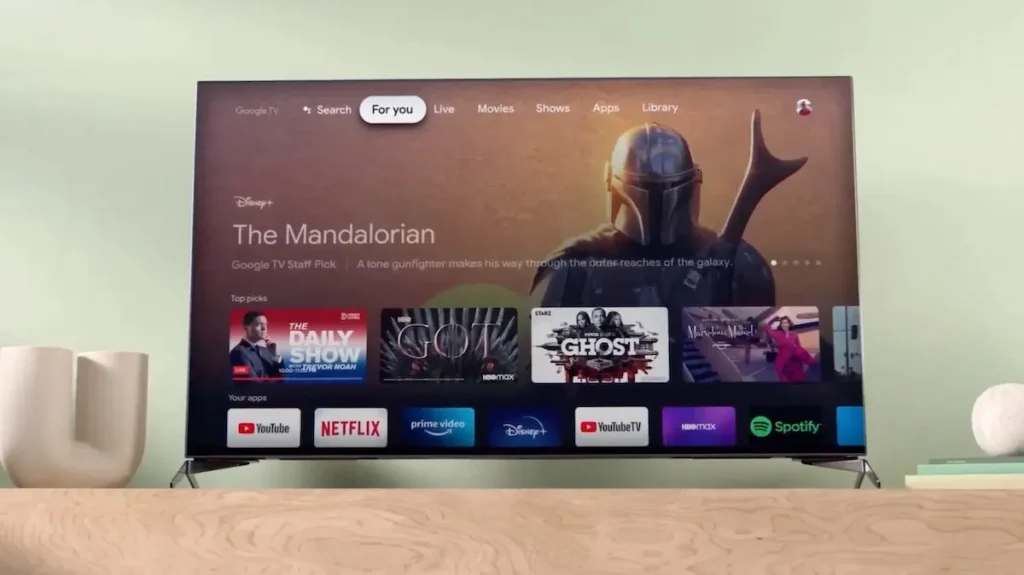
The latest use case for AI is removing the bloat from your smart TV. Developers and hobbyists are currently sharing methods to strip sponsored ads, speed up the app launcher, redesign the home screen, and disable tracking features.
One project, called “dumbtv,” states its goal on GitHub: “Your TV should do what you paid for: your apps, your HDMI inputs, and nothing else. No ads from the TV itself, no watch tracking, no update you did not ask for.”
Another tool, “cleanyourtv,” promises to remove bloatware from any Android TV or Google TV over Wi-Fi, replacing the default launcher with one that resembles Apple TV.
Hacking consumer electronics is not a new idea, but recent advances in AI have made these efforts accessible to anyone. This is particularly true for smart TVs, which have caused frustration among users forced to watch ads and endure devices that surveil their viewing habits.
Modern smart TVs ship with Automatic Content Recognition (ACR). This technology identifies what is playing on the screen using screenshots, audio clips, or other forms of digital fingerprinting.
If these “dumb TV” hacks become popular among everyday consumers, they could disrupt the smart TV ad industry. This sector profits from selling viewing data to advertisers or using it to display personalised ads on the interface.
Gathin T., the creator of cleanyourtv, started the project after getting tired of seeing ads on his parents’ television set.
“I had Claude Code clean it up over Wi-Fi and build a simple home screen with just their apps on it,” he wrote on a donation website linked from the project’s homepage. “I put the prompt on GitHub, tweeted the before and after, and a few thousand people did the same to their own TVs over the next two days. Xiaomi, TCL, Sony, Fire TV, LG, a projector or two.”
The solution does not require gaining root access to the TV, nor does it make it impossible to return to the factory default state if desired.
Meanwhile, the dumbtv solution has been tested end-to-end on a Fire TV Edition television set and Android/Google TV platforms on TVs from Sony, TCL, Philips, Hisense, Xiaomi, and Shield. To use this hack, the developer suggests pointing your preferred AI agent at the dumbtv repository on GitHub.
Fair warning: all these solutions are works in progress. Various users are now testing them across different TV platforms, suggesting updates and fixes.
However, individuals do not need to borrow someone else’s work from GitHub to get the job done.
In one newly viral X post, Ryan Doyle explained that he simply sent Claude Code the listing for his TV and asked “can you hack this?” The agent then talked him through the process, allowing him to remove the ads and bloatware from the TV set, speed up the lagging user interface, and customise his screensaver.
Doyle then demonstrated in a video how fast and responsive the new interface is after the AI made the requested changes.
Seeing posts about people “vibe-coding their TVs,” inspired one X user, Mihir Gupta, to try it himself.
“One afternoon with Claude Code: 25 bloat apps disabled, the 192 MB stock launcher replaced with a custom 83 MB one, plus rotating wallpapers,” he wrote.
The end result of these hacks may be mixed. Some people have found that Claude would not respond to simple suggestions to “hack my TV,” necessitating more complex prompts. Others warned that AI agents could make mistakes, possibly disabling important packages or breaking things in the process. One person even said they bricked their Android TV using Claude, and another got stuck halfway through hacking their Fire TV.
For those wary of using AI to fully hack their TVs, there are existing solutions for customising Android-based smart TVs, such as home screen replacement apps ATV Launcher, Projectivity Launcher, and FLauncher.
What it means
These tools shift control back to the user without requiring deep technical knowledge. A standard AI agent can now execute tasks previously reserved for advanced engineers, effectively turning a consumer device into a customised tool rather than a walled garden.