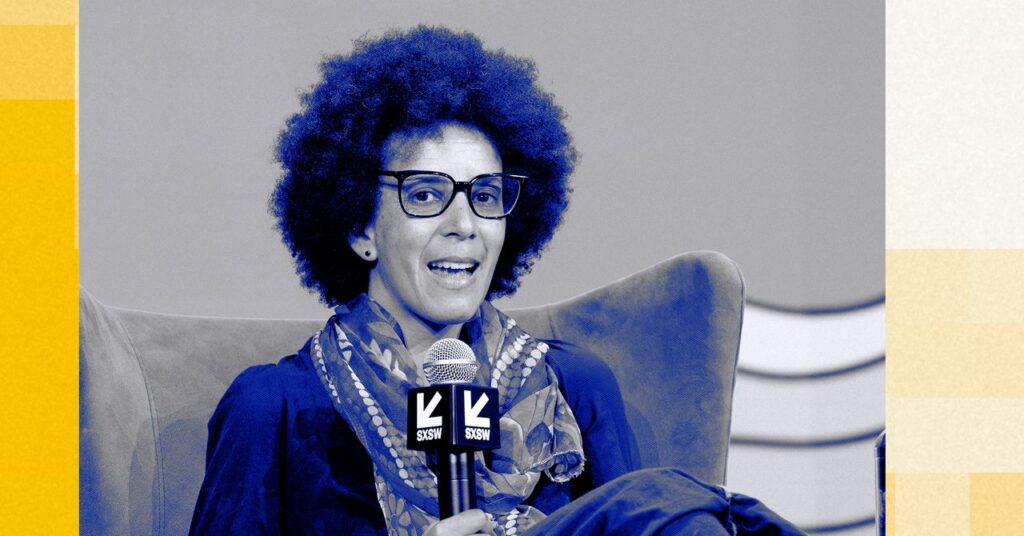
Timnit Gebru says the panic about AI ending the world is a distraction designed to hide real harms. She argues that the industry is using apocalyptic rhetoric to cover up issues like autonomous weapons, climate damage, and the replacement of workers. The tech giant Anthropic recently blocked scientists trying to build biological weapons using their systems. Gebru believes this kind of corporate secrecy is the actual danger, not a rogue algorithm.
The math fight and the resignation
Two events dominated the industry last week. First, a dispute arose over a million-dollar mathematics prize. OpenAI appeared to use other researchers’ work to solve the problem first. Then, an Anthropic engineer quit, stating that both companies were handling safety concerns poorly. A colleague at Anthropic noted that staff genuinely believe AI could kill everyone within ten years.
Gebru has long been critical of how the sector operates. She left Google in 2018 after the company rejected a paper she wrote on the risks of large language models. Her upcoming book, Deep Unlearning: The Rise of AI and the Radicalization of a Tech Idealist, will cover her experiences.
Why they focus on math
Gebru asks why the industry invests so heavily in solving math problems. She argues that subjects like programming and chess are elevated to prove intelligence. The narrative is that if an AI can solve a difficult equation, it has achieved true intelligence. If the math community had vetted the claim properly, the public would see if the breakthrough was accurately framed.
She points to the Leiden Declaration, which warns against corporations using mathematics in this way. Policymakers often rely on press releases instead of speaking directly to mathematicians. The time it takes for a company to claim a breakthrough and for politicians to propose a bill is too short. This rush happens as companies prepare for initial public offerings.
Researchers used to collaborate across firms like Microsoft and Amazon. Now, the pace is frantic because of upcoming IPOs. Gebru notes that researchers are supposed to work together, but the current environment is cutthroat.
What the resignation means
The engineer’s departure highlights a tension. He believes the companies are reckless with human lives, yet Gebru rejects the idea that AI will end civilization. She has made this point for years. In 2021, she and her team released the stochastic parrot paper to counter the hype around GPT-2.
She compares the fear of rogue AI to a collapsing bridge. When a bridge falls, you do not ask if the bridge was ethical or sentient. You ask who built it flimsy and ignored the permits. The industry focuses on the machine making decisions when it should focus on the humans building it.
Real threats versus machine gods
The existential danger lies in AI powering autonomous weapons used in warfare. Climate change is a real threat that could worsen through these technologies. Employers use AI to dismiss workers. This narrative of a machine god is meant to draw attention away from these practical issues.
The industry has become a mix of cults and true believers who claim the end times are near. The singularity has been a topic for decades. Gebru cannot envision a scenario where an angry GPU arrives at a house. Most scenarios involve a machine optimizing a task by killing everyone or hypnotising a user.
These fears often ignore existing threats like malware, floods, fires, and disruptions to the food supply. People can create and use chemical weapons. If you are not worried about police brutality or warfare, you may obsess over the machine god instead.
She notes that many claims about AI sound the same regardless of when they were made. The industry repeats warnings from the 1940s and 1950s without acknowledging the context. This repetition serves to maintain the narrative rather than address the actual risks facing society.