Data centres consume between 17 and 19 billion gallons of water annually to cool their chips, a figure the Water Foundation expects to triple within the next five years.
Investors pouring billions into scaling AI face a difficult proposition: finding water is becoming politically and financially harder. Reducing usage requires better monitoring of cooling fluids. Currently, operators send samples to laboratories where tests take several days. This delay prevents immediate action if a system is failing.
The acquisition
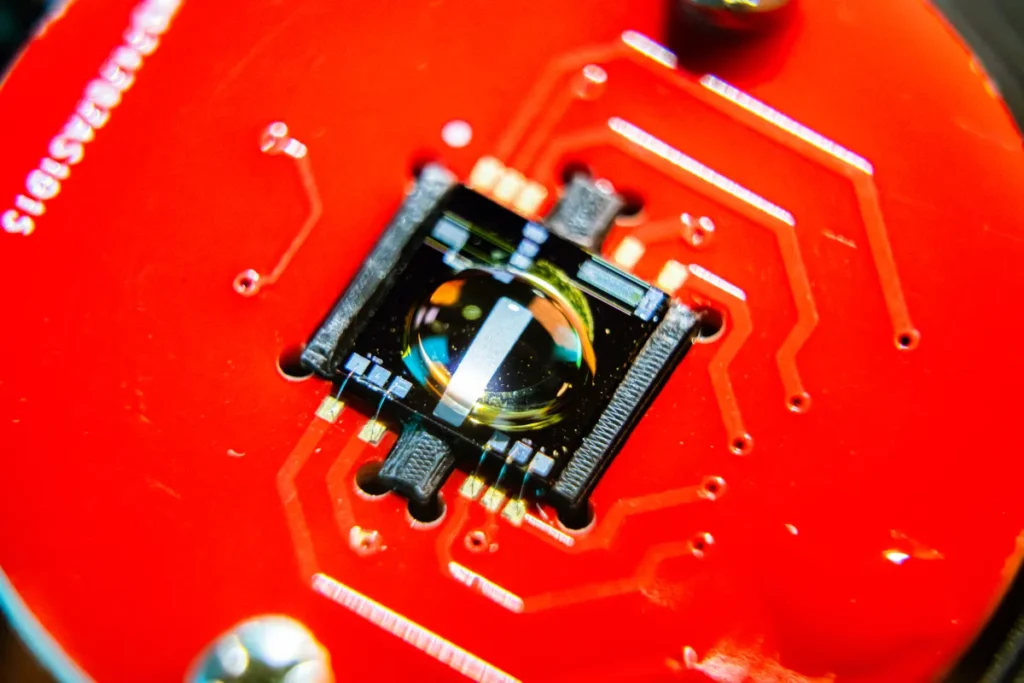
Omen AI was founded in 2024 to address this lag. The company builds real-time sensors to detect failing valves or bacterial growth that could choke water flow. After raising $31 million in a Series A round last June, Omen acquired competitor Aquatic Labs in a $16 million cash-and-stock deal.
The transaction followed an introduction between Omen founder Zach Laberge and Aquatic Labs CEO Allan Adams by an investor in the filtration sector. Both firms were building real-time water sensors with complementary capabilities. Omen’s devices detect elements in the water, while Aquatic Labs measures alkalinity.
Combining these technologies into a single unit provides a much richer picture of the fluid. It also unites the vision of automating a process that has historically been slow and manual, Adams told TechCrunch.
The partnership brings together two distinct founder profiles. Laberge left college to launch his first company, which performed similar fluid analysis for heavy construction machinery relying on hydraulics. Adams is an academic trained as a physicist. He spent much of his career developing advanced ocean sensing technology as an MIT professor and researcher at the Woods Hole Oceanographic Institute before starting his own firm.
With Adams serving as chief science officer, the merged teams are integrating both technologies into one sensor. They expect this device to reach the market by early next year. Omen’s initial sensors will monitor chips drawing 250 to 300 MW of power by year end, covering a market worth approximately $5 to $7 billion. The goal is to install sensors on the equivalent of 1 GW of chips by the end of 2027.
The primary value lies in uptime. If a fluid system malfunctions, operators typically dump the water to protect expensive equipment. This forces a shutdown until the system is restored, costing significant money. Continuous monitoring allows operators to keep using the same fluid longer and reduces the cost of cleanup.
Adams hopes the technology will extend beyond data centres. “Water goes into data centers, and then it comes out and gets dumped into municipal water, and you want that whole process to happen in a way that’s as safe and responsible as possible — and that means you got to measure stuff,” he said.
Market context
AI companies once projected $4 trillion in spending on infrastructure by 2030. Recent investor scepticism regarding that buildout has caused hyperscaler stocks to fall sharply. Omen’s team is not concerned by this shift in sentiment. Their work focuses on facilities that are already built or currently under construction.
“We’re working customers on stuff they’re building today or have already built, and so it doesn’t really affect us because all of those projects were financed 12 months ago,” Laberge said.
The company maintains that even if the market contracted by half, it would remain the largest in human history.