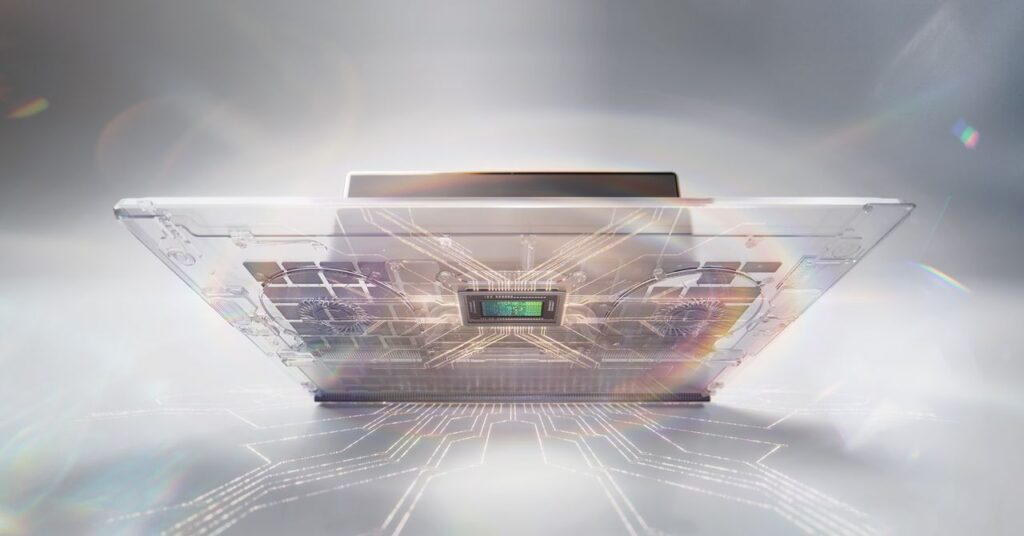
For creators and artists tired of waiting for cloud latency or paying premium subscription fees for local tools, the era of powerful, private AI on your own machine is finally here. Nvidia has dropped the RTX Spark laptop, a device designed to end the era of “fake” AI PCs and offer genuine on-device performance that rivals the Mac.
Unveiled at Computex in Taiwan, these new machines integrate Nvidia’s N1 CPU with its unified memory architecture and RTX graphics. While Nvidia already dominates data centre AI, this marks its first serious push into local inference. Unlike previous attempts, these are the first Windows devices that actually deliver on the promise of running large language models without relying on the cloud.
The end of the hollow promise
Microsoft has been pushing the “AI PC” narrative since 2024, yet the concept never felt tangible. Devices like the Copilot+ line featured neural processing units (NPUs) and 16 GB of RAM, but they lacked the raw power to run substantial models locally, offering performance no better than a smartphone.
By contrast, the RTX Spark laptops appear to be the real deal. With unified memory scaling up to 128 GB, an efficient Arm-based CPU, and RTX graphics, they offer a computing experience previously exclusive to the MacBook Pro. This is vital for enthusiasts who have long needed a non-Mac option for running foundation models locally.
Nvidia is partnering with major Windows hardware manufacturers, including HP, Asus, Dell, and Lenovo. Meanwhile, Microsoft’s own Surface Laptop Ultra aims to be the flagship of this new category. It features a 15-inch Mini-LED display and a port selection that competes directly with Apple’s offerings, arriving just ahead of a rumored “MacBook Pro Ultra” later this year.
Battery life has historically been the Achilles’ heel of Windows laptops trying to match the Mac, often suffering from fan noise and rapid drain due to discrete GPUs. Only recently, with Intel’s Core Ultra Series 3 chips, have devices like the Dell XPS 14 begun to balance performance and endurance closer to Apple’s standards. However, those models cap out at 64 GB of memory.
The RTX Spark goes further by offering graphics as powerful as a discrete RTX 5070. Crucially, it leverages CUDA, the software layer allowing developers to tap into GPU cores. Nvidia has built a massive AI ecosystem around CUDA for data centres, and bringing that to local PCs could extract significantly more performance from the hardware than current systems allow. While Mac development has accelerated, it still lags behind the potential scale Nvidia can achieve with the Spark architecture.
A revolution with a high price tag
Do not expect these to be budget-friendly. High-end configurations are estimated to cost over $4,000, a price point consistent with similarly specified MacBook Pros.
However, the future of local AI inference across diverse work projects is now plausible. As agentic models become more streamlined, users will increasingly prefer local execution for privacy. We are already seeing demand for the Mac Mini surge, with Apple citing surprisingly fast AI adoption as a cause for shipping delays. Nvidia is targeting this same market with several small-form-factor (SFF) desktop PCs on the horizon.
To broaden appeal beyond hardcore enthusiasts, these devices may launch with lower-tier configurations. Official statements highlight “up to” 128 GB of memory and a 20-core CPU, but entry models will likely suit gamers and general creators. Nvidia remains focused on gaming capabilities, and how deeply it penetrates these markets will determine the impact on rivals like Intel, AMD, and Qualcomm.
Ultimately, these devices introduce hardware previously unavailable in Windows, effectively creating a new class of computer. As an early sceptic of the “AI PC” label, I must admit I am now buying into the vision.
Key takeaways
- RTX Spark laptops finally deliver genuine local AI performance with up to 128 GB of unified memory, ending the era of underpowered “AI PCs.”
- Pricing will be premium, starting around $4,000 for high-end models, positioning them directly against the MacBook Pro and Mac Mini.
- By leveraging CUDA and RTX 5070-level graphics, these machines offer a performance ceiling for local inference that current Windows and Mac hardware cannot match.