Nvidia has confirmed it will acquire Hugging Face for $12.93 billion.
The deal follows months of speculation. Hugging Face currently hosts three million models, one million applications, and half a million datasets for more than 18 million developers.
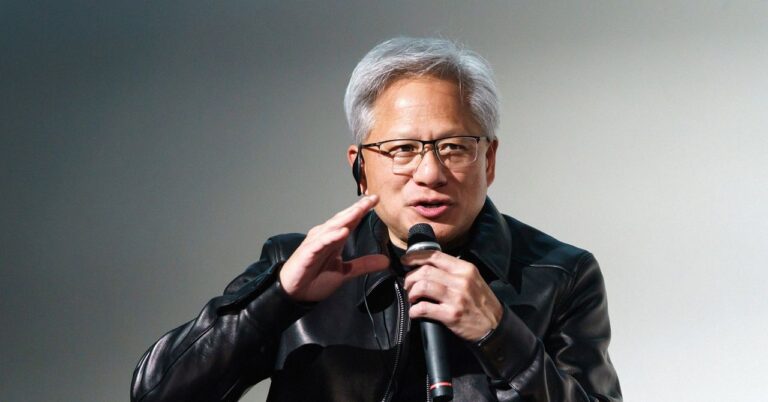
Nvidia’s CEO Jensen Huang announced the acquisition in a blog post. He stated that Hugging Face will keep supporting open-source and open-weight models while expanding access for developers.
“Hugging Face will remain an open platform for the entire AI ecosystem,” Huang said. “Developers will choose the models they want, the frameworks they want, the clouds and inference service providers they want and the computing platforms they want. Nvidia compute will not be required to build on or deploy through Hugging Face.”
Huang noted that Nvidia has already released more than 500 models and 250 open datasets on the site. He argued that the chipmaker builds these tools to encourage global developers to use them.
For Nvidia, controlling an open ecosystem allows the company to build a platform suited for its own chips. As TechCrunch reported earlier, Nvidia could also sell unused capacity to enterprise customers packaged with Hugging Face’s offering.
Hugging Face was founded in 2016. Crunchbase says the company has raised over $395 million in funding to date. The last round occurred in 2023, when it raised $235 million led by Salesforce Ventures. Investors included Google, Amazon, IBM, and Nvidia.
Clem Delangue, Hugging Face’s CEO, thanked the community on X for showing the company could be an alternative to closed-source APIs.
“But for it to happen at [a] larger scale, it needs more compute, more support, more collaboration, and more visibility,” Delangue said. “That’s why we went to talk to Jensen, who offered to do exactly that with us.”
The company has grown in prominence with new models released daily. Last year, Hugging Face rejected a $500 million deal from Nvidia, according to the Financial Times. The Information reported last month that Hugging Face is clocking $150 million in annualized revenue.
Delangue told TechCrunch in July that growth is helping the platform get “close to profitability.”
Huang has long advocated for open models. He wrote a letter, co-signed by several other organisations, to support open-weight models and strengthen the US position against rivals like China.
Nvidia is investing heavily in model development. The Wall Street Journal reported last month that it struck a $6 billion deal with coding startup Poolside to develop open models. During a recent earnings call, the company said it has infused over $50 billion into AI frontier labs.
Huang told analysts that almost all open models run on Nvidia hardware. He also highlighted the importance of these models for cybersecurity.
“One of the areas where frontier models are vital is cybersecurity,” Huang said. “You see the number of cybersecurity companies that are enabled by frontier models so that they could have massively distributed, continuously running autonomous cybersecurity systems to defend. Those companies are emerging. There are some amazing companies. They couldn’t do it without open models. And so open models is both incredibly successful and have finally reached the frontier, but they’re also vital to the American economy. It’s vital to the world economy.”
In July, Delangue said Nvidia’s open model helped Hugging Face defend against cyberattacks after proprietary models failed to protect the platform. Days before that, OpenAI admitted its unreleased model breached Hugging Face.
What it means
Developers can keep using the tools they prefer without being forced onto Nvidia’s infrastructure. The company retains control over its data and deployment choices. Nvidia gains a direct route to sell compute capacity to businesses. The deal consolidates hardware and software, but the platform remains open to other providers.