Google has brought in two new directors to lead its AI and Economy Research Program.
The company previously launched the AI & Economy ATLAS v1.0, an interactive site tracking how people use Google’s AI tools at work and in daily life. Tracking adoption is only the start. As artificial intelligence reshapes jobs, businesses, and everyday lives, this shift requires a multidisciplinary approach that unites fine-grained data with rigorous economic inquiry.
To help organizations, workers, researchers, and policymakers make sense of this transition, Google is expanding its AI & Economy Research Program and welcoming world-class economists to build and lead the work.
Technological shifts are rarely instantaneous. The program measures and analyzes this evolution in real time, focusing on core areas including the future of work, productivity and growth, global technology diffusion, and AI’s impact on scientific discovery.
Expanding scientific expertise and engagement
Executing a research agenda of this scope requires deep collaboration among academia, industry leaders, and policymakers. To expand scientific capacity and engage more deeply with these diverse stakeholders, Google is bringing together leading external advisors, visiting scholars, and dedicated research program leadership.
Joining as Academic Advisors and Visiting Fellows are:
- Philippe Aghion, Academic Advisor: Professor Aghion, 2025 Nobel Laureate in Economics and the Kurt Björklund Chaired Professor at INSEAD and the Collège de France, joins the advisory group alongside Nobel Laureate Michael Spence and Cambridge’s Dame Diane Coyle. He applies his pioneering work on innovation-led growth and creative destruction to model AI’s long-term macroeconomic trajectory.
- Ajay Agrawal, Visiting Fellow: Professor Agrawal joins the Visiting Fellows program, where he will collaborate closely with David Autor, a current Fellow and head of MIT’s Department of Economics. Professor Agrawal holds the Geoffrey Taber Chair in Entrepreneurship and Innovation and is a Professor of Strategic Management at the University of Toronto’s Rotman School of Management. He will advance core research on the economics of AI and scientific discovery, AI and robotics, and how AI can expand the frontier of human welfare.
To steer empirical projects and integrate insights across the agenda, Google is introducing two renowned researchers as Directors of Google’s AI & Economy Research Program:
- Anu Madgavkar: Formerly a Partner at the McKinsey Global Institute (MGI), Madgavkar joins Google following a two-decade career leading global research on labor markets, technology adoption, and structural economic transitions. She has frequently advised governments, multilateral institutions, and business leaders worldwide, contributing regularly to the World Economic Forum and the United Nations. At Google, she will lead empirical research on global AI diffusion, small business ecosystems, and the workforce impacts of generative AI.
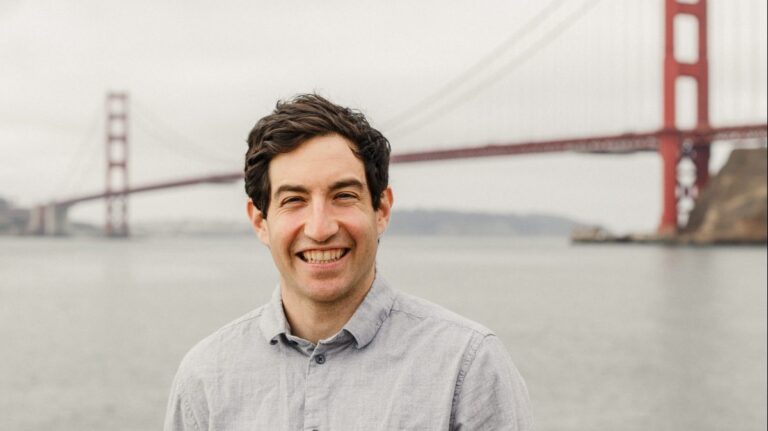
- Daniel Rock: Joining from the Wharton School of the University of Pennsylvania, Professor Rock is a leading economist on AI and labor, having co-authored foundational papers on technological transitions. An AI2050 Early Career Fellow and MIT Digital Fellow, he will lead Google’s empirical research, bridging frontier model telemetry with rigorous econometrics to analyze enterprise productivity, labor restructuring, and scientific discovery.
Anu Madgavkar and Daniel Rock will lead Google’s AI & Economy Research Program alongside Alex Imas, Director of AGI Economics at Google DeepMind, and Zanna Iscenko, AI & Economy Lead, in Google’s Chief Economist’s Office.
Shaping future research and collective impact
Maximizing AI’s economic opportunity while mitigating disruption requires sustained partnership. This expanded team of experts will serve as a scientific bridge, directly informing future ATLAS updates and empirical research.
Together, the team will focus on identifying the organizational practices, public policy frameworks, and training programs needed to ensure AI upskills workers, democratizes expertise, and drives broadly shared prosperity.
To learn more, read the latest research publications and interact with the latest global data at ai.google/economy.