Musk v. Altman week 2: OpenAI fires back, and Shivon Zilis reveals that Musk tried to poach Sam Altman
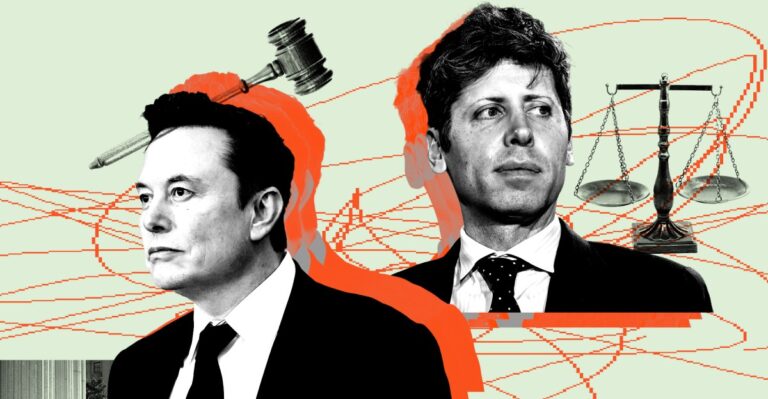
In the second week of the landmark trial between Elon Musk and OpenAI, Musk’s motivations for bringing the suit were under scrutiny.
Musk v. Altman Week 2: OpenAI Fires Back, and Shivon Zilis Reveals That Musk Tried to Poach Sam Altman
This week, Greg Brockman, president of OpenAI, fired back with his side of the story, arguing that Musk had actually pushed for the company to create a for-profit arm and fought a bitter battle to have “absolute control” over it. OpenAI has argued that Musk is suing because he didn’t get his way and is now trying to undermine a competitor to his own AI company, xAI.
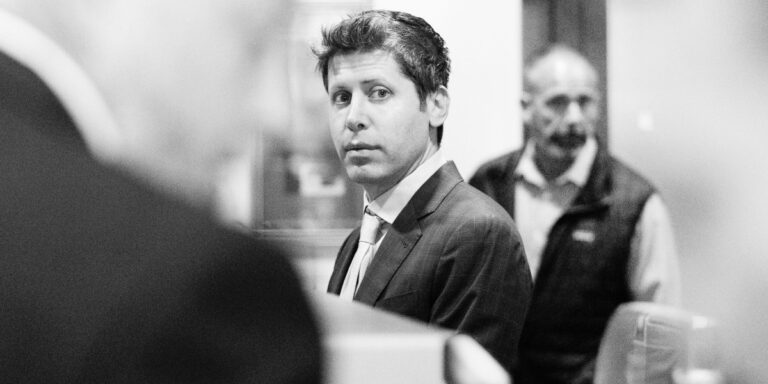
Shivon Zilis, a former board member of OpenAI who also happens to be the mother of four of Elon Musk’s children, testified in court. She revealed that Musk tried to recruit Sam Altman, the CEO of OpenAI, to lead a new AI lab at his electric-car company, Tesla.
OpenAI had been founded by Musk and Sam Altman in 2015 with Greg Brockman and others but left Musk in 2018. Now, he’s asking the court to remove Sam Altman and Greg Brockman from their roles and to unwind the restructuring that OpenAI undertook last year, which converted its for-profit subsidiary into a public benefit corporation.
He is also seeking as much as $134 billion in damages from OpenAI and Microsoft, OpenAI’s investor. The outcome of this trial could upend OpenAI’s race toward an IPO at a valuation approaching $1 trillion. Meanwhile, xAI, which Musk founded in 2023, is now part of his rocket company SpaceX; the combined companies are expected to go public as early as June, with a target valuation of $1.75 trillion.
Two days before trial began, according to Brockman, Musk had messaged him asking if he would be interested in settling. When Brockman suggested that both sides drop their claims, Musk texted back: “By the end of this week, you and Sam will be the most hated men in America. If you insist, so it will be.”
Musk Storms Out with a Tesla Painting
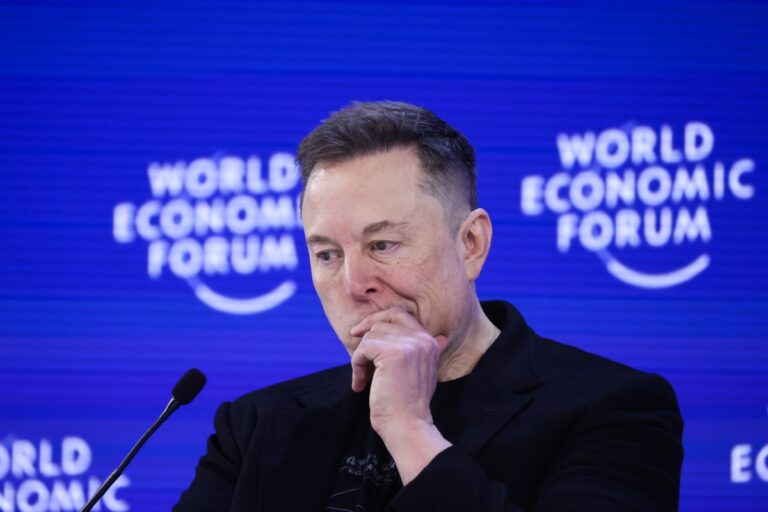
Last week, Musk testified that he’s suing to save OpenAI’s nonprofit mission to develop AI safely, but he said he was open to seeing OpenAI become a capped-profit company with moderate investments from Microsoft. This week, Brockman told the jury that Musk was never truly committed to keeping OpenAI as a nonprofit.
In August 2017, when an AI model that OpenAI built beat the world’s best players in a video game called Dota 2, Musk hosted a gathering at his “Haunted Mansion” near San Francisco. The house was splattered with confetti and cups, Brockman recalled, and the actress Amber Heard, who was Musk’s girlfriend at the time, served whiskey.
Musk wrote in an email that if OpenAI made a major public achievement, it would be “time to create a for-profit,” said Brockman. Over the next six weeks, they had intense discussions about creating a for-profit entity to raise enough capital to build artificial general intelligence-powerful AI that can compete with humans on most cognitive tasks.
Musk wanted to have majority equity in the entity and the right to choose a majority of the board members. He also wanted to be its CEO, said Brockman. When Brockman and Ilya Sutskever proposed that they all have equal shares of equity, Musk fell silent and finally said, “I decline.” Musk then stood up and “stormed around the table,” he said. “I actually thought he was going to hit me.”
Musk grabbed the painting and walked out. Afterward, Brockman struggled to decide whether to continue building OpenAI with Musk or break away. “There was a fork in the road,” he said: “Do we accept Elon’s terms? Or do we reject the terms, he quits to create his own, and then we create our own?”
“The one thing we could not accept was to hand him unilateral, absolute control, potentially, over the AGI,” Brockman told the jury.
Musk’s Motivations: What Was Brockman Thinking?
In his theatrical baritone, Steven Molo argued that Greg Brockman was motivated by greed rather than a commitment to OpenAI’s nonprofit mission to develop AI that benefits humanity. He noted that while Brockman never invested money in the company, he now owns a stake worth close to $30 billion.
Brockman countered, “Solving for the mission has always been my primary motivation,” Brockman said, pushing back on Molo’s characterization of him. “It remains so today.”
Molo pulled up Brockman’s electronic journal on a screen in the courtroom, trying to show the jury what Brockman was really thinking behind the scenes. In 2017, while negotiating with Musk about the future of OpenAI, Brockman wrote about wanting to become a billionaire: “Financially what will take me to $1B?”
“Why didn’t you take the $29 billion and donate it to the nonprofit that you had a fiduciary duty to, for the good of humanity?” Molo asked Brockman, raising his voice to dramatize moral indignation.
Molo then pulled up a journal entry Brockman had written in November 2017, while he was torn over whether to turn OpenAI into a for-profit without Musk: “It’d be wrong to steal the nonprofit from him. To convert to a b-corp without him. That’d be pretty morally bankrupt.”
Brockman explained, “I meant it would actually serve the mission, but it’d be hard to look at yourself in the mirror.”
Molo also tried to undermine Brockman’s credibility by revealing that he holds a stake in multiple companies with business ties to OpenAI, including the AI company Cerebras, the cloud provider CoreWeave, and the nuclear fusion startup Helion Energy. Sam Altman has tried to steer OpenAI into deals with companies that he invests in, including Helion and the rocket maker Stoke Space, drawing scrutiny over potential conflicts of interest.
Former OpenAI chief technology officer Mira Murati and former OpenAI board member Helen Toner both appeared in video depositions. They addressed the brief firing of Altman in 2023, saying that they could not trust him because of his alleged history of lying. Murati’s text messages with Altman from that time, which were introduced as evidence, revealed his desperate attempts to understand what was happening and regain control.
Musk Plotted a Rival AI Lab at Tesla
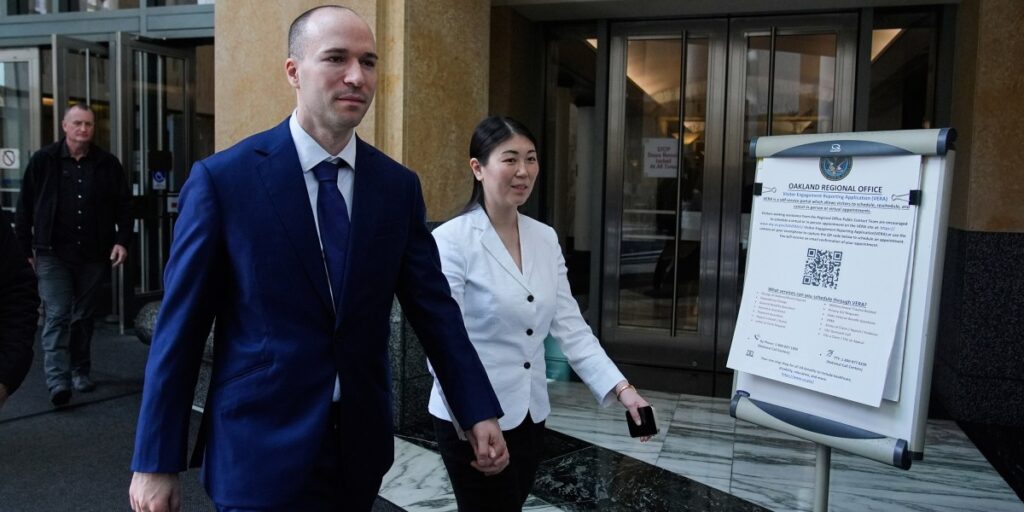
After Greg Brockman’s two days of testimony, Shivon Zilis, who left OpenAI’s board in 2023, took the stand. She appeared composed but with a flicker of nerves. OpenAI’s lawyer Sarah Eddy asked her in a deceptively soothing voice whether she acted as a conduit for Musk as he tried to poach OpenAI’s cofounders to work at a new AI lab within Tesla.
Eddy argued that Musk is suing OpenAI only to undermine a competitor in the AI race. Zilis said she met Musk while working at OpenAI as an informal advisor in 2016, and that they had a “one-off” romantic encounter. In 2017, she joined Tesla and Musk’s brain-implant company, Neuralink. In 2020, she joined OpenAI’s board of directors.
She became pregnant with Musk’s children through IVF but did not disclose her ties with Musk to OpenAI until Business Insider reported them in 2022. By late 2017, Musk had concluded that OpenAI was unlikely to build AGI and pivoted to building an AI lab at Tesla, according to an email sent to Zilis.
Eddy pulled up a draft of an FAQ document that Zilis emailed a colleague at Tesla in 2017 about an event the company was organizing at the NeurIPS AI conference: “The purpose of this event is to share that Tesla is building a world leading AI lab(?) which will rival the likes of Google/DeepMind and Facebook AI Research.”
Zilis told the jury that when Musk was still on OpenAI’s board, he tried to recruit Sam Altman to lead that prospective AI lab. Musk had asked Andrej Karpathy, an OpenAI research scientist he’d recruited to work at Tesla, “to send a list of top OpenAI people to poach,” according to a text message by Zilis.
“There is little chance of OpenAI being a serious force if I focus on TeslaAI,” Musk texted Zilis in 2018, just before he left OpenAI. Tesla’s AI lab never came to fruition.
Eddy pressed Zilis about whom she was loyal to when she was working for OpenAI and Musk at the same time. “I had an allegiance to the best outcome for AI for humanity,” Zilis told the jury.
What’s Going on Next Week?
Next week, Ilya Sutskever will testify, as will Microsoft CEO Satya Nadella. The lawyers for both Musk and OpenAI will deliver their closing arguments. The jury will begin deliberating the week after and deliver an advisory verdict guiding the judge to decide the case.
This story is part of MIT Technology Review‘s ongoing coverage of the Musk v. Altman trial. Follow @techreview or @michelletomkim on X for up-to-the-minute reporting.