Thinking Machines Lab’s Vision for Human-Driven AI
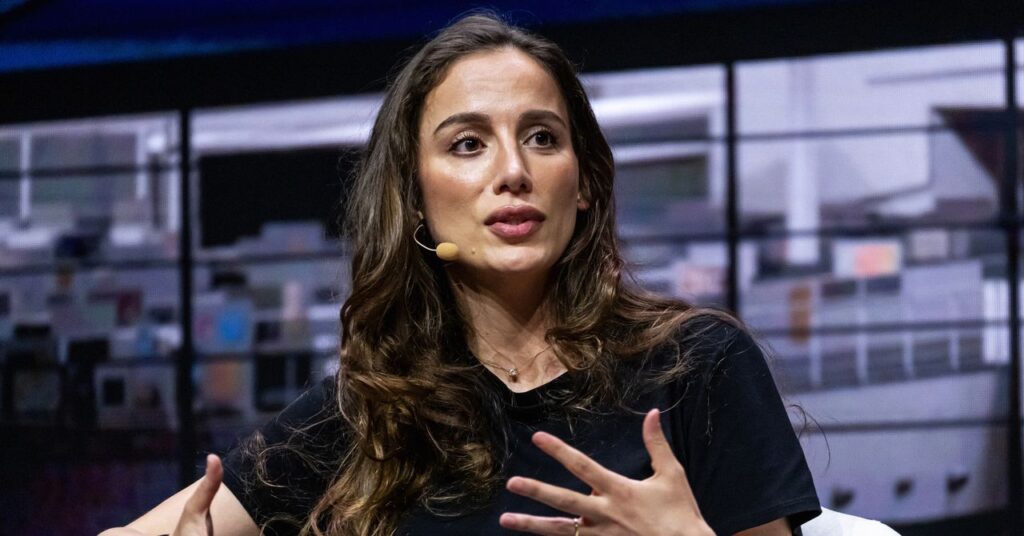
Mira Murati, who previously served as the chief technology officer at OpenAI, now leads Thinking Machines Lab. Unlike many other AI companies focusing on automating tasks without human oversight, she envisions a future where humans remain central to the interaction with artificial intelligence.
“At some point we will have super-intelligent machines,” Murati asserts. “But keeping humans in the loop for as long as possible is key to ensuring that these machines serve our goals and values.”
Murati’s approach diverges from mainstream AI development by emphasizing human involvement rather than automation. She proposes a model where individuals can customize their own frontier AI models, then collaborate with them to achieve specific objectives.
Thinking Machines recently previewed a new type of interaction model designed to communicate directly with humans via cameras and microphones. Unlike typical voice interfaces that merely transcribe spoken words into text for processing by language models, these new models understand continuous human communication natively. They can interpret pauses, changes in tone, and other nuances inherent in real-world conversations.
These interaction models have demonstrated their capability to adapt dynamically during a conversation, allowing them to respond appropriately when users clarify points or shift topics. The company has showcased several video examples of these capabilities but has not yet made the models publicly available.
Murati’s vision contrasts with the current trajectory of major AI companies like OpenAI, Anthropic, and Google, which are developing large language models capable of writing entire applications from textual prompts. These models require minimal human intervention.
Other labs such as Humans& also aim to develop systems that prioritize collaboration over replacement. Some economists have called for similar approaches, advocating for AI systems designed to empower rather than replace humans.
Current Products and Progress
- Tinker: Launched in October 2025, this allows researchers and engineers to refine open-source models by customizing them with their specific data. It is now available as an API.
- Interaction Models: These new interaction models are designed to communicate directly with humans using cameras and microphones. They understand continuous human communication and can adapt in real-time, distinguishing themselves from existing voice interfaces that merely transcribe speech.
Alexander Kirillov, a founding team member of Thinking Machines and an expert on multimodal AI, highlights the unique capabilities of these interaction models. He explains that they are constantly aware of their surroundings and can respond dynamically to user interactions, making them more intelligent than current voice assistants.
Broader Implications
- Murati’s approach could lead to a future where AI models better understand and respect human preferences and values, enabling them to work more effectively alongside humans.
- This model of collaboration might be particularly useful in sectors like healthcare or education, where nuanced interactions are crucial for success.
- The potential for customized interaction models could revolutionize how we interact with AI systems, making them more intuitive and responsive to individual needs.
Key Takeaways
- Mira Murati’s Thinking Machines Lab focuses on keeping humans in the loop for as long as possible, contrasting with other AI companies’ approaches.
- The company has developed interaction models that can understand and respond to continuous human communication, unlike typical voice interfaces.
- This model could have significant implications for various sectors where nuanced interactions are essential, such as healthcare or education.