
Meta is all-in on AI. There are two key drivers behind this strategy.
Meta’s core business revolves around gaining and maintaining user attention. That attention is then monetised through ads or commerce. If AI assistants begin to consume more of a user’s attention, Meta wants to maintain the dominance it accumulated in that metric during the recent mobile era.
Meta’s tech giant rivals are all investing heavily in AI. The company believes it is critical to make it hard for rivals to gain a foothold and expand into the consumer “attention economy” by using generative AI as a wedge. Thus, it offers its AI assistant features to consumers free of charge, and it also offers frontier-quality foundation models to developers at no cost. Both moves make it harder for rivals to generate revenue they can invest back into AI innovation.
AI Assistants for Consumers
Meta AI is the company’s answer to ChatGPT. When it arrived in September 2023, it was driven by the Llama 2 70B model and generally trailed OpenAI’s ChatGPT and Microsoft’s consumer-oriented Copilot in performance. The Gemini assistants from Google that arrived in early 2024 also had some performance advantages. None of this was a surprise. Meta’s 70B parameter large language model (LLM) was competing against foundation models with far higher parameter counts and training data.
With the introduction of Meta’s Llama 3 405B parameter LLM earlier this month, Meta AI is now facing more of a level playing field. The default solution remains the Llama 3 70B model, and it appears to be sufficient for many users around the world. However, there is also a new limited-use option that employs the 405B model. This is a significant step in bringing Meta AI closer to parity with rivals.
Most-Used AI in 2024?
Mark Zuckerberg commented on the progress and direction for Meta AI during the company’s quarterly earnings call this past week. Unsurprisingly, his aims are ambitious. According to Zuckerberg:
Last quarter we started broadly rolling out our assistant Meta AI and it is on track to achieve our goal of becoming the most used AI assistant by the end of the year. We have an exciting road map ahead of things that we want to add, but the bottom line here is that Meta AI feels like it is on track to be an important service and it’s improving quickly both in intelligence and features.
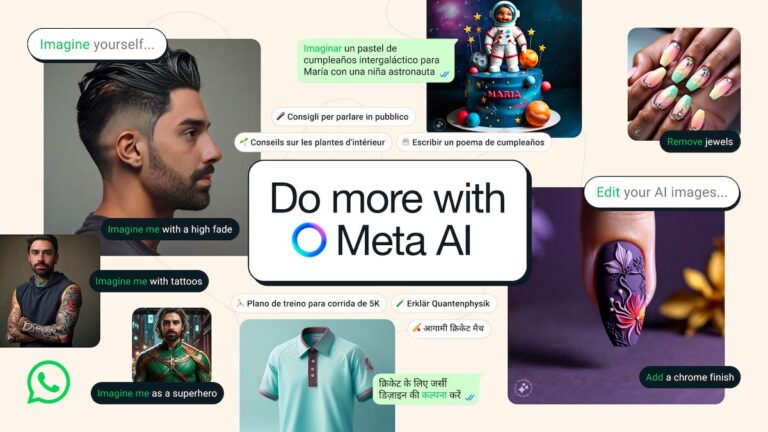
Some of the use cases are utilitarian like searching for information or role playing difficult conversations before you have them with another person and other uses are more creative like the new imagine yourself feature that lets you create images of yourself doing whatever you want in whatever style you want. And part of part of the beauty of AI is that it’s general so we’re still uncovering the wide range of use cases that it’s valuable for.
Note the goal to become the most-used AI assistant by year-end. That will not be easy with ChatGPT’s lead in the segment, indicators that suggest Google is likely to become more aggressive in its growth efforts in consumer segments, and the introduction of Apple Intelligence later this year. There are also rumblings of an upgraded Alexa.
I am skeptical that Meta can reach its goal by year-end. However, Meta has the most formidable application-based distribution in the market through Facebook, Instagram, and WhatsApp. In addition, it depends on what metrics you want to apply to “most used.” Will that be the most users, most usage time, highest average session length, or some metrics concatenation? A metric that includes total users or sessions would be the most likely to achieve the goal.
Meta CFO Susan Li also added some additional details regarding Meta AI adoption during the recent earnings call. WhatsApp is leading the adoption path for the company. However, it appears Zuckerberg is betting that Instagram will drive the next surge in growth.
People have used Meta AI for billions of queries since we first introduced it. We’re seeing particularly promising signs on WhatsApp in terms of retention and engagement which has coincided with India becoming our largest market for Meta AI usage. You can now use Meta AI in over 20 countries and eight languages. And in the US we’re rolling out new features like Imagine edit which allows people to edit images they generate with Meta AI.
Attention!
Facebook and Instagram became the front door to digital experiences for many consumers. They are often the first apps opened on a consumer’s mobile device and often lead to other digital activities ranging from browsing and shopping to messaging. If a user needs to execute a task that requires an AI assistant, the risk for Meta is that its users may start their digital journeys somewhere else or end an app session early to access generative AI features elsewhere. The result would likely be a declining average session time and maybe fewer total sessions.
Meta AI provides an opportunity to mitigate the risk of a more favoured AI assistant stealing user attention. If the company executes well, Meta AI could also lead to more and longer sessions. Raymond James, managing director of equity research, Josh Beck, commented after the earnings call that Meta AI may already be leading users to spend more time in Meta apps.
Meta AI…is a chatbot. They’re using Instagram and Facebook to distribute it. …There’s starting to be kind of a new conversation on Meta that you would have never really considered before. So, “Hey Meta, can you help me plan this trip with my friends?” [is] not something you really would have ever considered on your time on Instagram or Facebook but it is completely net new. It’s driving more time. It’s helping their users kind of find a new use case.
Zuckerberg commented along these same lines during the earnings call during the analyst questions period. However, he cautioned that monetisation through increased attention may not arrive soon.
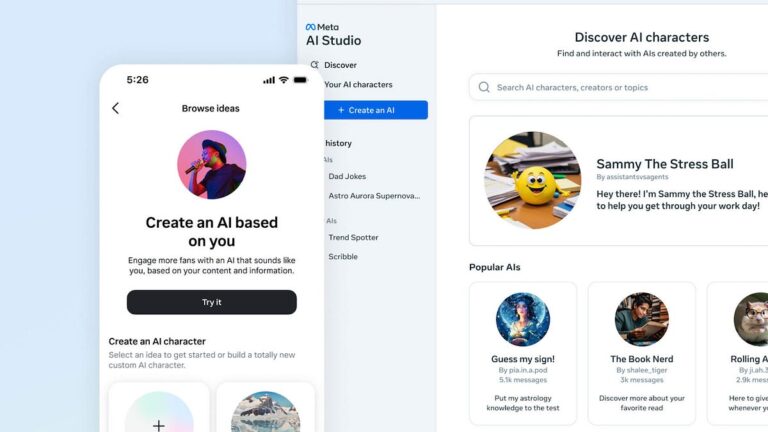
For things like Meta AI or AI Studio, I mean these are things that I think will increase engagement in our products and have other benefits that will improve the business and engagement in the near term. But before we’re really talking about monetization of any of those things by themselves, I mean I don’t think that anyone should be surprised that I would expect that that will be years…
I mean we obviously want to kind of grow that and grow the engagement on that to be a lot deeper, and then we’ll focus on monetizing it over time.
Zuckerberg commented to analysts in October 2023:
Source Read original →