Jack Dorsey launched Buzz on Tuesday, a new group chat app designed to mix human workers with their AI agents in the same conversations.
The basics
The app is model-agnostic, decentralized, self-sovereign, and open source. Dorsey posted this description on X. Block, the company behind Square, Cash App, Afterpay, and Tidal, built the platform.
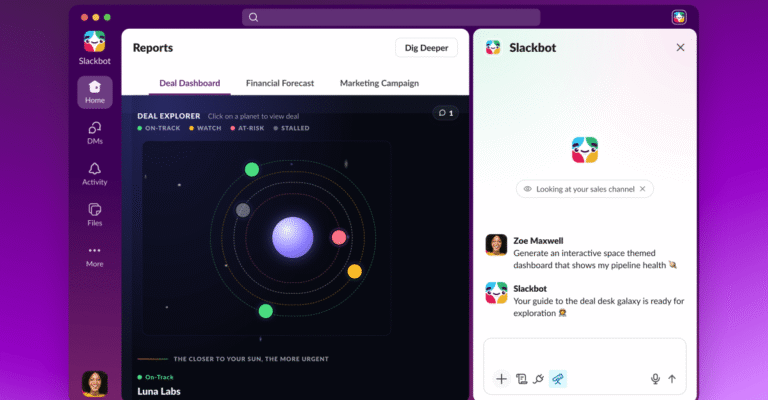
Startups increasingly depend on AI agents to handle tasks. Employees often struggle to collaborate when work spreads across different tools. Buzz merges several workflows into one workspace. It resembles Slack but includes native AI agents and the ability to manage GitHub projects within the same window.
Because the platform is open source, developers can create their own instance to suit their team’s specific needs. If a team requires a new feature, they can build it and deploy it themselves with full access to the source code.
Competitors are moving too
Georgios Konstantopoulos, a partner and CTO at Paradigm, recently introduced a similar open source product called Centaur. He describes it as a virtual employee that runs inside Slack or via an API.
“There’s a lot of room for improvement for agents that live in Slack and can do more work than just coding for teams,” Konstantopoulos wrote on X. “In the enterprise setting, this means that you’ll want to self-host for security and control, and you want people to use it in Slack.”
Startups using AI agents without an established Slack presence might find Buzz or its rivals worth investigating. Buzz admits it is in its early stages, so moving a team over right now is probably not a good idea.
Availability
The free desktop app is available for macOS, Windows, and Linux. The code is on GitHub.
What it means
Teams can now host their own version of the tool to keep data secure. Developers do not need to wait for a vendor to add features they require. The main drawback is that the software is still new, so large organisations should wait before switching completely.