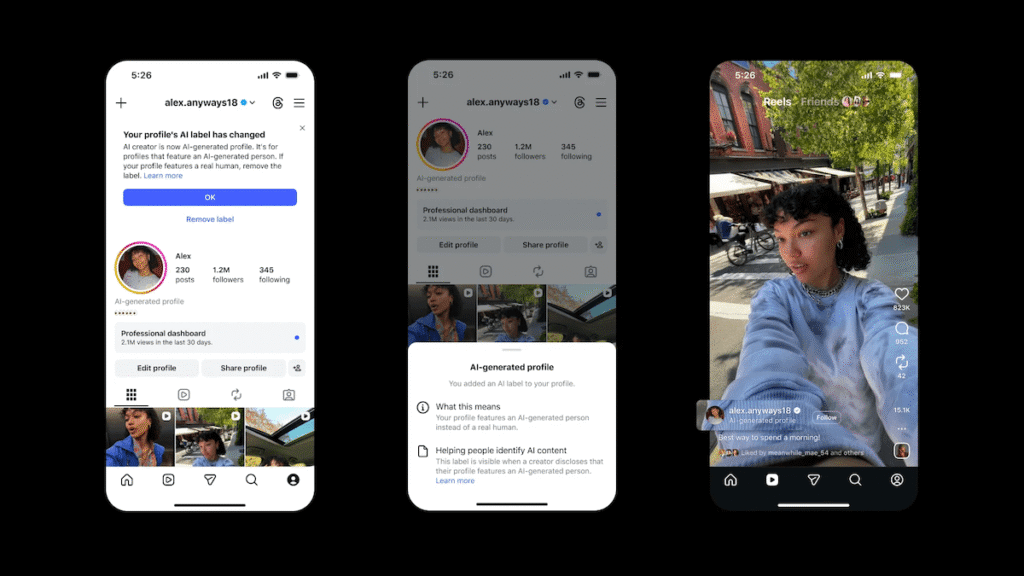
Instagram has announced it will reduce the reach of accounts featuring AI-generated people that fail to label them as such.
The platform is renaming the existing “AI creator” tag to “AI-generated profile” to improve clarity. This new label indicates the person shown on the profile was generated or substantially created using artificial intelligence.
Creators who omit this label on profiles featuring AI people may see their content distribution cut. Using the new tag removes this penalty for the profile subject itself.
The rule does not apply to every use of the technology. Instagram states that using AI to edit photos, polish captions, create graphics, or perform other creative tweaks does not require the profile label.
The change addresses complaints from users who encountered profiles appearing to belong to real individuals only to discover later the subject was entirely synthetic.
“As generative AI becomes a bigger part of how people create, we’ve heard that people don’t like seeing a profile that seems human, only to find out later that the person featured is AI-generated,” Instagram wrote. “They want to know when a profile features an AI-generated person.”
Friction over synthetic content is rising as AI influencers become more common across social media.
Earlier this year, the gay dating app Goose faced scrutiny after a Wired investigation revealed a network of apparently AI-generated male influencers promoting the service on Instagram. The report identified more than two dozen accounts appearing to feature these synthetic figures, some of which reportedly contacted potential users via direct messages to secure sign-ups.
Health and wellness content presents another concern. The New York Times reported in July it found hundreds of AI-generated doctors, healers, and wellness personalities on social media promoting supplements or making health claims to users.
The announcement follows backlash over an Instagram tool that allowed users to generate images using other people’s likenesses. Users objected to having their public content used without explicit consent, leading Meta to remove the feature.
Last week, Meta reached an $18 billion settlement with U.S. states over allegations concerning the effects of Facebook and Instagram on children and teenagers. As part of the agreement, Meta will introduce a default two-hour daily usage limit for teens across Facebook and Instagram, a “Night Mode” block, muted notifications during school hours, and other restrictions.