Inertia Enterprises has reduced the time required to manufacture its fusion fuel pellets from several days to just minutes.
This speed increase removes one of ten major hurdles standing between the startup and its goal of operating a commercial power plant. The company provided TechCrunch with an exclusive look at the new workflow.
The commercial reality
The breakthrough was not automatic. Investors provided Inertia with $450 million based on technology developed at the National Ignition Facility (NIF). That facility is a complex experiment requiring immense effort to maintain. At NIF, creating fuel pellets takes a week or more and costs a large sum. That approach does not suit a business model aiming for profit.
Jeff Lawson, co-founder and CEO of Inertia, explained the shift in perspective to TechCrunch.
“But when you really double-click on it, you’re like, wait a minute, they’re only making a handful of them a year.” Lawson continued. “I put on my commercial hat and was like, wait a minute, I know the word for this: Prototypes.”
At Inertia, the team focused on converting those prototypes into mass-manufacturable items. Lawson noted the company is hiring industrial engineers from firms like Apple to solve this problem.
“That’s why we’re hiring people from the likes of Apple,” he said. “There’s a bunch of industrial engineers who are like, ‘Alright, I guess I have to go figure out how to make that a billion times over in a factory.'”
Physics and manufacturing
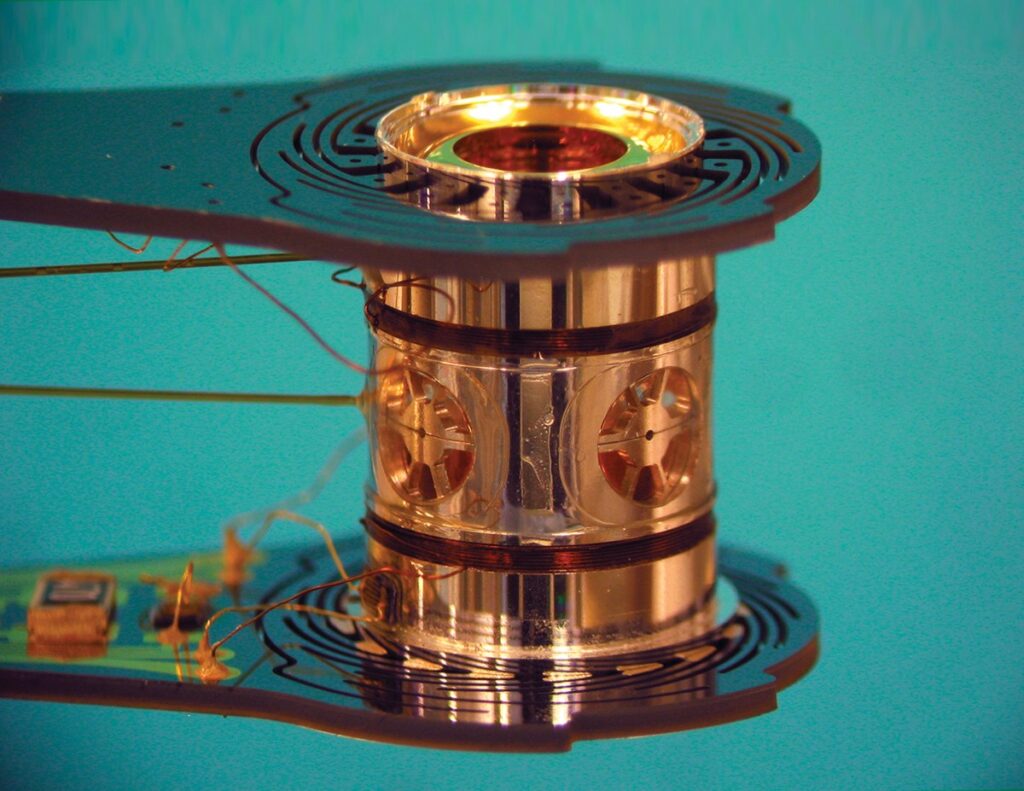
NIF’s fuel pellet is not like a smartphone. The outer layer is a spherical diamond shell. Just inside is a thin layer of frozen deuterium and tritium, isotopes of hydrogen used to fuel fusion reactors. Inside that crystalline layer lies a mix of gaseous deuterium and tritium. Each solid layer must be as close to perfectly spherical as possible.
These pellets are then wrapped in gold casings known as hohlraums. These convert laser energy into X-rays that compress the fuel pellet inside. If the process works as intended, that compression causes atoms to fuse and release energy. Small imperfections in the spherical shape can disrupt the ignition process, preventing a fusion reaction from reaching its full potential.
Inertia had to condense the process to the point where it makes commercial sense without straying too far from the physics discovered at NIF.
Lawson outlined the risks of moving faster.
“What happens if you try to do it faster?”
The team had a head start because Annie Kritcher, co-founder and chief scientist at Inertia, designed the first fusion experiment at NIF that released more power than it consumed.
After several rounds of development, the startup was able to grow the crystals in about 30 minutes, something that could take up to a week at NIF. Altogether, a single fuel pellet can be made in about two to three hours, and the process can be ramped to industrial scale. Inertia developed the process with help from the NIF at the Lawrence Livermore National Lab, with which the startup has formed a public-private partnership.
Margin for error
Inertia has an advantage that NIF does not. Because the startup plans to use a laser four times more powerful than the one currently at NIF, it can tolerate more imperfections in the fuel pellet. This also helped speed the manufacturing process.
“We actually have a lot of margin,” Lawson said. “That’s our strategy, to oversize our driver, our laser, to give us lots of margin to go play with in every other part of the system.”
Tritium inventory
Reducing fuel filling time has the knock-on effect of reducing the amount of tritium Inertia needs to hold at any given time. Tritium is radioactive, and handling it requires care. It is also extremely expensive at the moment, about $30,000 per gram, and only about 25 kilograms are stockpiled globally, according to the journal Science.
Inertia, like many fusion startups, plans to make its own tritium with help from the fusion reactions, but it still needs some inventory to get started. Reducing manufacturing time helps keep that inventory small. Inertia expects its full-scale commercial power plant will use ten fuel pellets every second.
“By reducing the latency of this step, you’ve made your facility smaller; you’ve made the whole thing faster, the whole thing more efficient,” Lawson said.
What it means
Faster pellet production means the factory floor can be smaller and the overall plant more efficient. For the people making things, this means less time spent on each batch and less radioactive material sitting in storage. It allows the operation to scale up without needing massive amounts of expensive tritium inventory.
Source Read original →