Implementing advanced AI technologies in finance
In the realm where precision and control are paramount, AI has emerged as a disruptive force. Rather than being embraced through well-defined strategies, it has infiltrated financial departments with a quiet momentum. Employees have already begun integrating AI into their workflows without the guidance of formal structures or policies.

This shift is not without its challenges. The rapid adoption of AI has outpaced the development of governance and strategy, leading to a situation where leadership must now reconcile these new capabilities with existing regulatory frameworks, risk management protocols, and accountability mechanisms.
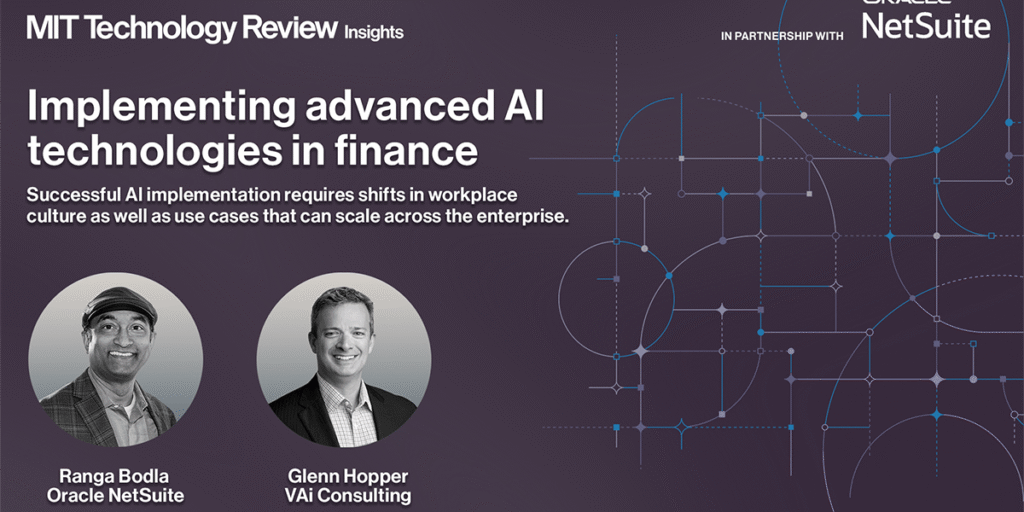
“The proliferation of AI happened kind of before governance and before a real plan came about,” says Glenn Hopper, head of AI and managing director at VAi Consulting. “It’s very much an experiment that is now playing out.”
To fully harness the benefits of AI in finance, it’s crucial to reframe its role. Rather than viewing AI as a standalone solution or a replacement for traditional methods, it should be embedded within existing processes and workflows. This approach allows for smoother integration and more seamless execution.
“AI as a means to an end, as opposed to AI being the end,” notes Ranga Bodla, VP of industry and field marketing at Oracle NetSuite. “The technology is most effective when it disappears into existing processes.”
The challenge now lies in ensuring that this integration does not lead to unintended consequences or over-reliance on AI. One key concern is the potential for employees to circumvent established oversight mechanisms, leading to a situation where they rely too heavily on AI tools.
“Talent is the actual root cause,” Hopper asserts. “There’s a widening gap between domain expertise and AI fluency.”
As AI continues to evolve, we can expect more sophisticated systems capable of handling complex tasks. However, the most transformative impact may come from enhancing human judgement with AI assistance. This shift could enable finance teams to allocate less time to manual data reconciliation and more time dedicated to strategic planning and innovation.
This webcast is produced in partnership with Oracle NetSuite.
Register to watch the webcast.
Key Takeaways:
- AI is increasingly embedded in financial workflows, often without formal governance structures.
- The role of AI should be seen as supporting existing processes rather than replacing them outright.
- Ensuring proper talent development and oversight is crucial to avoid unintended risks or over-reliance on AI tools.
This content was produced by Insights, the custom content arm of MIT Technology Review. It was not written by MIT Technology Review’s editorial staff. It was researched, designed, and written by human writers, editors, analysts, and illustrators. This includes the writing of surveys and collection of data for surveys. AI tools that may have been used were limited to secondary production processes that passed thorough human review.