
Immigration and Customs Enforcement intends to pay LexisNexis $6.7 million for access to data it will feed into a Palantir platform. The agency plans to use this information to support its Enforcement and Removal Operations division, the unit focused on deportations.
Procurement records released recently offer more detail on the information ICE expects to process. In January, 404 Media reported on the existence of ELITE, a system built by Palantir for ICE that combines data from private vendors and government bodies to identify neighbourhoods for raids.
These developments follow a record month of arrests. ICE detained more than 51,000 people in July, with a significant number of those stops occurring at airports.
The contract details
One of the documents states the data is to support all aspects of ICE screening, vetting, lead development, and criminal analysis. The scope includes identifying what ICE views as fraud before it occurs and detecting elements of crimes involving the exploitation of US immigration and customs laws.
ICE anticipates paying LexisNexis $6.7 million. The company has supplied data to the agency across multiple administrations. This new procurement record seeks continued access to LexID and Accurint Virtual Crime Center.
LexID and Accurint are tools that aggregate over 82 billion public and proprietary records from more than 10,000 sources. They link this information to help law enforcement locate individuals.
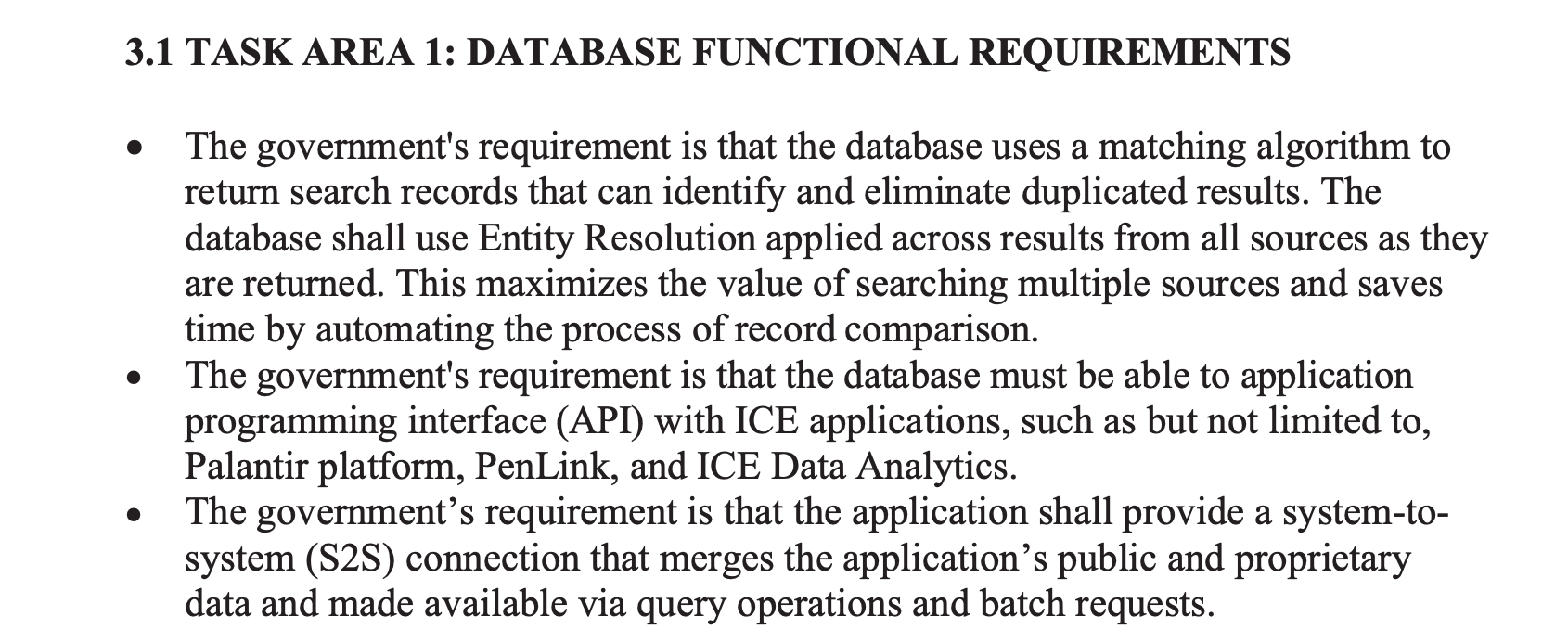
The document indicates ICE wants to pair these capabilities with Palantir systems. It notes the database must have an application programming interface (API) with ICE applications, including the Palantir platform, PenLink, and ICE Data Analytics.
PenLink is another contractor for ICE that sells social media monitoring tools. It also offers a product called Webloc for tracking the location of mobile phones across entire neighbourhoods.
How the technology works
Palantir has become a key provider of technical infrastructure for the current administration’s deportation mission. 404 Media previously reported that the Palantir-made ELITE, or Enhanced Leads Identification & Targeting for Enforcement, populates a map interface with potential deportation targets. It provides ICE officials with a confidence score regarding a person’s current address. Sources for that tool include the Department of Health and Human Services.
It is not clear if ICE intends to ingest LexisNexis’ data into ELITE specifically or some other Palantir platform.
The document lists several requirements around artificial intelligence. These include an AI-driven identification system that can use data to infer the identity of the end user. It also calls for a facial recognition system that can use large-scale image databases to perform high accuracy facial matching across diverse sources, including open-source media. The system must be able to perform these tasks in bulk.
LexisNexis, Palantir, and ICE did not immediately respond to requests for comment.
What it means
This contract connects three entities that already work closely together. LexisNexis provides the raw data, Palantir builds the software to process it, and ICE uses the results to execute enforcement actions. The inclusion of specific AI requirements suggests the agency wants automated systems to handle identity verification and facial matching at scale, reducing the need for manual review of the vast amount of data involved.