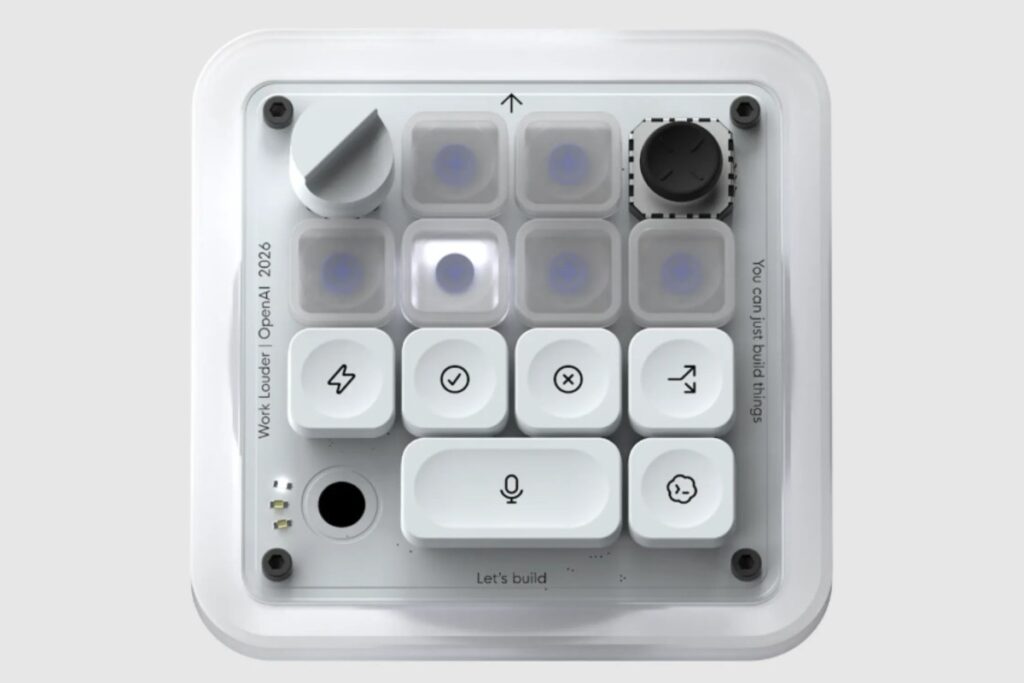
OpenAI released its first hardware product last week, a keypad designed to work with ChatGPT.
Developed in partnership with Work Louder, the device is an artisanal novelty that will appeal to tech enthusiasts while potentially confusing the rest of the public. The launch follows a period of legal trouble, as Apple sued the company over alleged trade theft several weeks prior. Rumours also circulated that former Apple engineers helped build another smart home device intended for the same ecosystem.
Until those legal matters are resolved and broader hardware plans materialise, the startup is offering Micro. It is a small keypad engineered to delight developers.
TechCrunch received a test unit. The device feels sturdy enough to serve as a paperweight should the software integration fail. The packaging is also notable, featuring an immaculate white box with a clean aesthetic that resembles Apple’s design language.
The layout places six frosted “agent” keys at the top, which can be customised to execute specific tasks within ChatGPT or its coding tool, Codex. Below these are six command keys to control the programs. Users can connect the Micro to a computer via Bluetooth or a USB cable.
A voice dictation button is the most convenient feature. Users hold the button to speak their requests, then tap the adjacent “send” button to submit them.
Customisation happens inside ChatGPT, where a dedicated Micro tab lets users adjust key brightness and assign specific commands to each key.
Hard-core coders have not embraced the device. Reddit reviews are largely negative, with one user calling it a prank and others stating serious developers will not touch it. An outlet named Aftermath was harsher, noting the $230 price tag is hard to justify against cheaper alternatives. One review titled “OpenAI’s expensive macropad feels engineered to piss me off specifically” summarised the sentiment.
New users will likely need time to understand how the device works.
Once programmed to personal preference, the experience proved enjoyable. Assigning ChatGPT sessions to specific keys allows users to toggle between projects easily. Combining this with the dictation feature makes the workflow more efficient.
A learning curve remains. The buttons use colour coding: white for an idle agent, blue for thinking, green for a completed task, and red for an error. Users must memorise these states alongside which projects are linked to each key.
The main question is whether the keypad is functionally easier than using a standard laptop. Most people already know how to use a mouse and keyboard, so spending a week learning this new interface seems unnecessary.
Your experience depends heavily on how much you use ChatGPT. Since I do not use AI daily, I am not the target audience.
However, if you are a power user, have $230 to spare, and prefer vintage hardware with clicky buttons, the Micro might be a worthwhile purchase that brightens your day.
What it means
The Micro is a niche tool. It offers speed for heavy users who live inside ChatGPT, but it adds friction for everyone else who already has a computer keyboard.