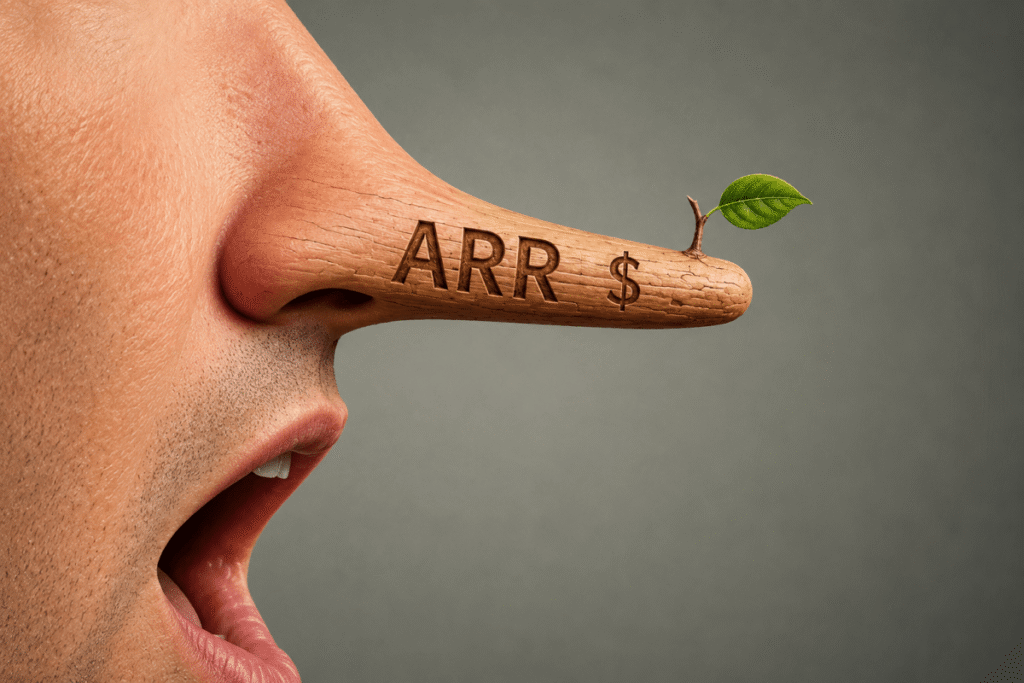
How VCs and Founders Use Inflated ‘ARR’ to Crown AI Startups
Last month, Scott Stevenson, co-founder and CEO of legal AI startup Spellbook, took to X in an effort to expose what he called a “huge scam” among AI startups: inflation of the revenue figures they announce publicly.
“The reason many AI startups are crushing revenue records is because they are using a dishonest metric. The biggest funds in the world are supporting this and misleading journalists for PR coverage,” Stevenson wrote in his tweet.
While claims like these aren’t new, Stevenson’s post seemed to have struck a particular nerve within the AI startup community, drawing over 200 reshares and comments from high-profile investors, many founders, and several headlines.
Jack Newton, co-founder and CEO of legal startup Clio, told TechCrunch that Stevenson’s tweet brought much-needed awareness to the topic. “Scott at Spellbook did a great job of highlighting some of what you might describe as bad behavior on the part of some companies,” Newton said.
TechCrunch spoke with over a dozen founders, investors, and startup finance professionals to assess whether inflated ARR is as pervasive as Stevenson suggests.
Our sources confirmed that fudged ARR in public declarations is indeed a common occurrence among startups. Many of these individuals also noted that investors are often aware of the exaggerations but choose not to speak out for various reasons, including the potential negative impact on their portfolio companies’ valuations and growth narratives.
Not Really Revenue Yet
The main obfuscation tactic is substituting “contracted ARR,” sometimes referred to as “committed ARR” (CARR), and simply calling it ARR. For example, one investor said: “For sure they are reporting CARR as ARR.” This practice becomes a self-maintaining norm when the startup is in good standing with its investors.
ARR was originally intended to show total sales of products under signed contracts over time. Accountants don’t formally audit or sign off on ARR primarily because GAAP focuses on historical, already-collected revenue rather than future revenue potential. CARR, on the other hand, is a more flexible metric that adds committed but not yet live contract values to total ARR.
However, CARR is much less reliable as a measure of actual revenue because it counts revenue from signed customers before they are onboarded. If implementation is lengthy or fails, clients might cancel during the trial period, rendering significant parts of the contracted revenue uncollectible.
One high-profile enterprise startup reported exceeding $100 million in ARR despite only a fraction of that coming from currently paying customers. The rest was attributed to contracts that hadn’t been deployed yet and could take years to implement.
The Other, More Problematic ‘ARR’
There’s another issue surrounding all those public ARR declarations: the use of a different measurement with the same “ARR” acronym but a different name altogether. This is annualized run-rate revenue, which extrapolates current revenue over the next 12 months based on a given period’s haul (e.g., a quarter, month, week, or even a day).
This method of calculating ARR can be misleading because many AI companies charge based on usage or outcomes. Revenue is no longer locked into predictable contracts, making this metric unreliable for assessing true growth.
Most people interviewed for this story said that inflated ARR figures are hardly a novel phenomenon but have become more aggressive amid the AI hype. Investors often overlook these misrepresentations because of the incentives to create a narrative of runaway winners and the positive impact on their portfolio companies’ valuations.
What VCs Really Think
In the age of AI, startups are expected to grow much faster than ever before. Investors can’t call out these misrepresentations because everyone is doing it. By turning a blind eye, investors effectively help their portfolio companies by making them look like runaway winners.
However, anyone intimately familiar with the industry’s intricacies knows that such high ARR figures are often exaggerated for short-term gains and can come back to bite these startups in the long run. Some founders prefer transparency over hiding behind inflated numbers, understanding that public markets measure software companies on ARR rather than CARR.
Key Takeaways
- Inflated ARR is a common practice among AI startups to attract investors and media attention.
- CARR (contracted ARR) is often used as a substitute for actual ARR, leading to significant misrepresentations of revenue figures.
- Annualized run-rate revenue can also be inflated by companies that charge based on usage or outcomes rather than traditional contracts.