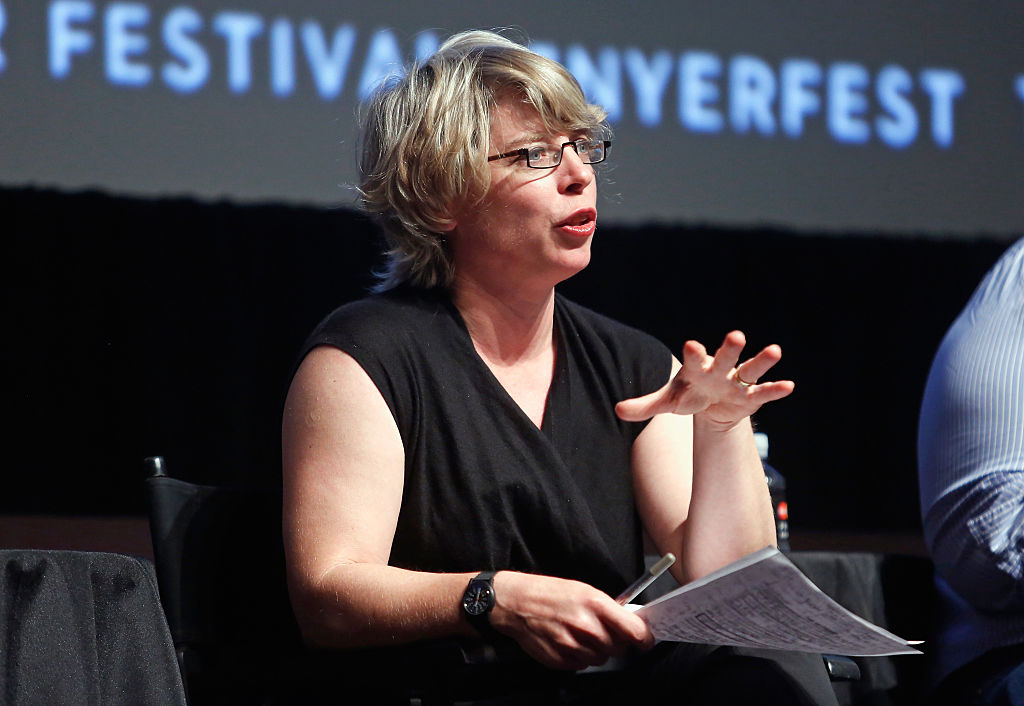
Jill Lepore tells TechCrunch that Silicon Valley leaders misunderstand science fiction and are actively undermining democracy. The historian, a Pulitzer Prize winner and staff writer at The New Yorker, argues that tech companies are replacing democratic functions with rule by algorithms. She says this shift represents a return to tyranny and mystification. This view appears in her upcoming book, The Rise and Fall of the Artificial State.
Lepore joins the Equity podcast to discuss the concept of living under an artificial state or government by machines. She insists she is not anti-technologist. Her concern focuses on how private corporations have increasingly taken on the functions of the state without consent. This transformation began in the United States.
The artificial state
She defines the artificial state as a construct that is replacing the liberal democratic nation-state. It is both a real thing and an idea. The book traces the rise of the notion that we should live under machine rule. She also tracks the idea that this system is an inevitable failure.
Lepore explains she has a negative view of this outcome. She distinguishes between the artificial state and technology itself. She is excited about intellectual revolutions in science. Her beef is with the ways private corporations usurp the role of the nation-state.
Innovations in government operations often started with a desire for efficiency and speed. Only in the last 20 or 25 years have these decisions become purposeful and deliberate. She notes prominent tech entrepreneurs talk about moving beyond the nation-state. Futurists in the 1990s were libertarians who wanted to use the internet to eradicate the nation-state.
Alternatives and mistakes
Lepore says she is a historian, not a tech writer or computer scientist. She wants to unravel the what-ifs and alternatives that were not taken. She points to the 1996 Telecommunications Act as a product of a specific political moment.
She says the act was deeply influenced by Newt Gingrich and his Contract with America. She believes revisiting it is difficult. She thinks it is worth considering the alternatives that existed at the time.
Apple and the 1984 ad
She traces the promise that better computer technology would make for better democracies back to January 1984. Apple ran a Super Bowl ad for the Macintosh with a George Orwell theme. The campaign suggested mainframe computers represented totalitarianism.
Apple tried to dismantle the giant gray IBM machines. The ad showed the lithe, beautiful, quick, adorable personal Macintosh as an ax that would destroy that machine. The goal was to usher in an era where 1984 would not be 1984.
Lepore calls it clever advertising. She doubts anyone at Apple believed the personal computer would be an instrument of personal liberation. She recalls getting her first Macintosh and finding it cool and fun. She never considered it improved her capacity for citizenship. It was just a cool tool.
Corporations as government
By 2026, the situation has changed. In 2016, Facebook News established a Supreme Court in response to critics. Last year, Anthropic hired a moral philosopher to write a constitution. Recently, Sam Altman told Joe Rogan that an AI president would be a great idea.
Lepore says these are silly examples. But they show how tech companies are taking on the trappings of the nation-state. These leaders are not people with sophisticated political philosophy. They treat the idea like a cartoon version of the 1984 Macintosh ad that takes itself too seriously.
She notes the book does not begin in 1984. She uses that example to illustrate the modern era and how a fun advertising campaign turns into a delusional fantasy for people like Sam Altman.
The Twitter revolution
Lepore discusses the promise of the Twitter revolution to bring democracy everywhere. She finds it amusing when AI CEOs claim their technology brings incredible gifts and that standing in the way is opposing progress.
When Jack Dorsey launched Twitter, it did not announce it would save humanity. It was kind of a goof. Early users found it fun. They posted about things like what they had for lunch. The company did not launch on a stage saying it was there to save democracy.
Politicians began using Twitter to enhance their power and amplify their messages. They reached younger audiences and maintained constant connections. Twitter eventually came around to the idea that it was a town hall. This started around 2012.
The company published a guide for political candidates on how to use the platform effectively. It began rolling out the idea that it was a town hall in your pocket. Lepore calls this bananas.
Objectively, nothing could be further from the truth. At the time, one in five Americans had a Twitter account. Most people with accounts had never used them. Above 90% of all tweets about politics came from fewer than 10% of the people who used Twitter all the time.
Twitter was not a representation of the electorate. It was a representation of the most extreme, politically active, hyper-partisan Americans. If politicians used it to gauge the electorate, they got bad information. It was a distortion machine.
Lepore says Twitter was trying to do business and get more users. But it had unintended consequences that it settled into and became comfortable with.
Science fiction parables
The book starts with the history of technology and ideas. The second half addresses science fiction. Lepore became interested in how often science fiction stories predict the arrival of the artificial state.
She identifies a literary tradition where machines get more sophisticated and take over more human functions, including government. Eventually, they rule humans or destroy them because they do not need them. Some stories suggest enslavement. It depends on whether we are in The Terminator or Battlestar Galactica.
These stories go way back to the 1850s and the early decades of rumination about the consequences of industrialism. She says she is interested in this tradition for her students as well.