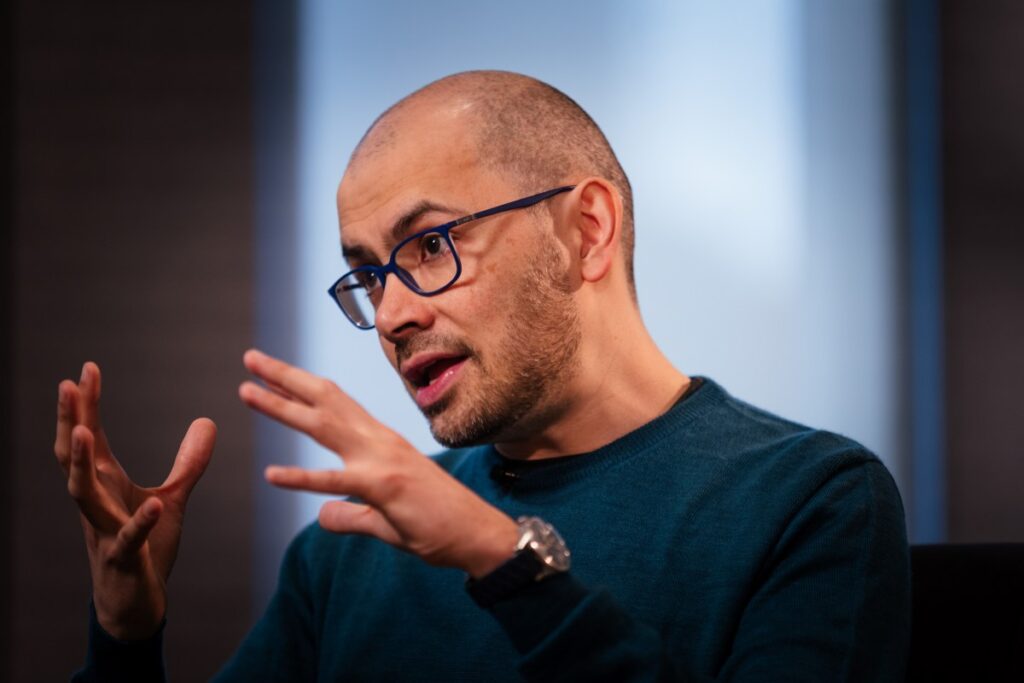
Demis Hassabis, CEO of Google DeepMind, called for an independent standards body to regulate frontier AI on Tuesday. The proposal, shared on X under the title “A Framework for Frontier AI and the Dawning of a New Age,” suggests a model similar to the Financial Industry Regulatory Authority (FINRA). This new entity would test frontier models and create best practices for their release.
Hassabis writes that Frontier Labs would initially share models with the Standards Body for review up to 30 days before release. Once the assessment protocol is shown to be effective, formalisation could quickly follow. In that scenario, Frontier Models would be required to pass the test to be deployed in the US market. Labs would also work with the Standards Body to address any critical post-release vulnerabilities.
The proposed system builds on the ad hoc reviews performed by the US government on Anthropic‘s Mythos and OpenAI’s Sol. Those reviews drew significant criticism for a lack of technical expertise and opaque decision-making regarding when a model could be released. Under Hassabis’s proposed regulator, those decisions could be handed off to a new organisation backed by the US government but funded by the AI industry and operated independently.
The prospect of AI regulation remains controversial for both the tech industry and the Trump Administration. Most recently, White House AI advisor and a16z general partner Sriram Krishnan discounted the possibility of an AI regulator within the executive branch, saying “there will not be an FDA for AI.”
Establishing the standards body as a self-regulatory organisation like FINRA could be a way to address those concerns. Hassabis envisions the regulator being staffed by open-source representatives and technical experts from within the industry, along with the financial backing from AI labs that would be necessary to retain them. They could even outsource some evaluations to the growing pool of AI safety groups who would be able to specialise in specific risks.
“The strength of this approach is it would be technically focused, while at the same time supporting innovation and incentivising responsible behaviour,” Hassabis argues. “It is designed to keep up with the field’s acceleration and adapt to the biggest risks as they are identified, and could be ratcheted up if the seriousness of the situation demands.”
What it means
For developers releasing large models, this plan shifts the burden of safety checks from government bureaucrats to a body funded by the companies themselves. It attempts to solve the problem of regulators lacking the technical skills to judge a model’s risk while avoiding a direct government mandate. The industry would pay for the oversight, theoretically ensuring the experts reviewing the code are both qualified and motivated.