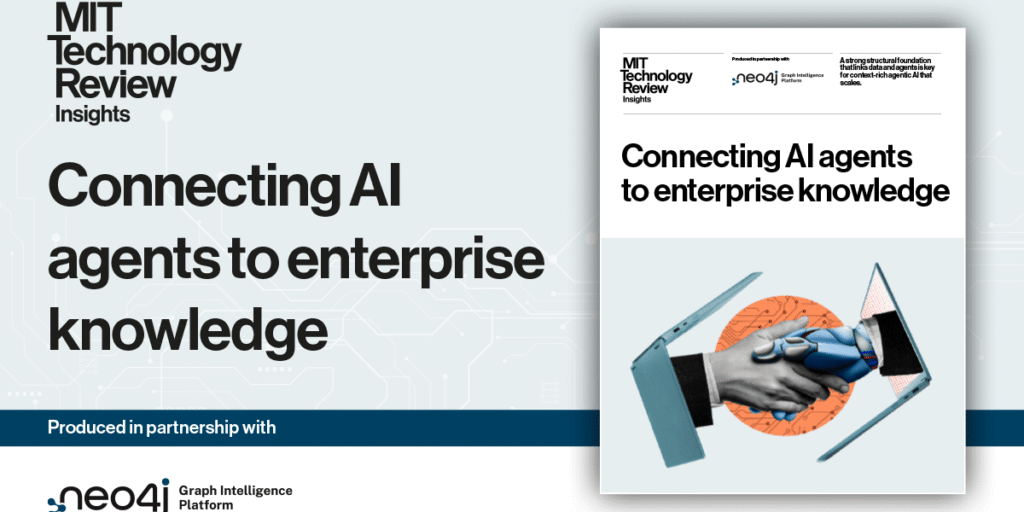
A survey of 300 technology executives reveals that roughly a third (34%) of enterprise AI agent projects never reach production. The primary cause is not a lack of raw data, but a failure to provide agents with the specific knowledge required to understand that data within an organisation’s unique context.
Without this understanding, agents cannot reason correctly or make safe decisions. This gap is the main reason agentic AI remains stuck in pilot phases. Companies face pressure to deploy these systems to capture efficiency gains. Failure to do so risks wasting sunk investment and allows rivals to move ahead.
The gap between data and knowledge
The report defines knowledge as the ability to explain what data means for a specific business. AI agents require this to act effectively. The study measured three areas: semantic knowledge (meaning), episodic memory (history), and procedural knowledge (how to do things).
The findings highlight three main obstacles. First, legacy data systems, security fears, and a lack of context stop progress. Second, only a small group of leaders sees more than 61% of their projects advance beyond the pilot stage. These firms possess stronger knowledge capabilities, particularly in semantics. Third, fragmented data is the top challenge cited by 55% of respondents. Production leaders are more likely to worry about security and privacy, with 72% of this group naming it a major concern.
How companies are responding
Executives believe the biggest improvements will come from strengthening the link between data and AI agents. The report suggests building a knowledge layer is a prime method for this. It acts as a structural foundation to ensure agents ingest information correctly.
Organisations plan to invest in several areas to expand agent access. These include retrieval technologies like ingestion pipelines and AI-ready APIs. They also plan to use retrieval-augmented generation (RAG) and build knowledge graphs. Some firms will deploy AI evaluation agents to check the quality of decisions.
For people building these systems, the change is practical. You must move beyond feeding raw numbers into a model. You need to ensure the system understands the internal rules, history, and meaning of the information it processes. This prevents agents from acting on flawed assumptions.
This content was produced by Insights, MIT Technology Review’s custom content arm, not its editorial staff. It was researched and written by humans, with any AI tools that may have been used limited to production processes under human oversight.