Can OpenAI’s ‘Master of Disaster’ Fix AI’s Reputation Crisis?
Three months ago, Greg Brockman, co-founder of OpenAI, told me about his concerns regarding a growing public relations crisis faced by artificial intelligence companies. Despite the popularity of tools like ChatGPT, an increasing number of people viewed AI negatively. Since then, this backlash has only intensified.
College commencement speakers are now being booed for discussing AI in optimistic terms. Last month, someone threw a Molotov cocktail at Sam Altman’s San Francisco home and wrote a manifesto calling for crimes against AI executives. No one is more vulnerable to this reputation crisis than OpenAI.
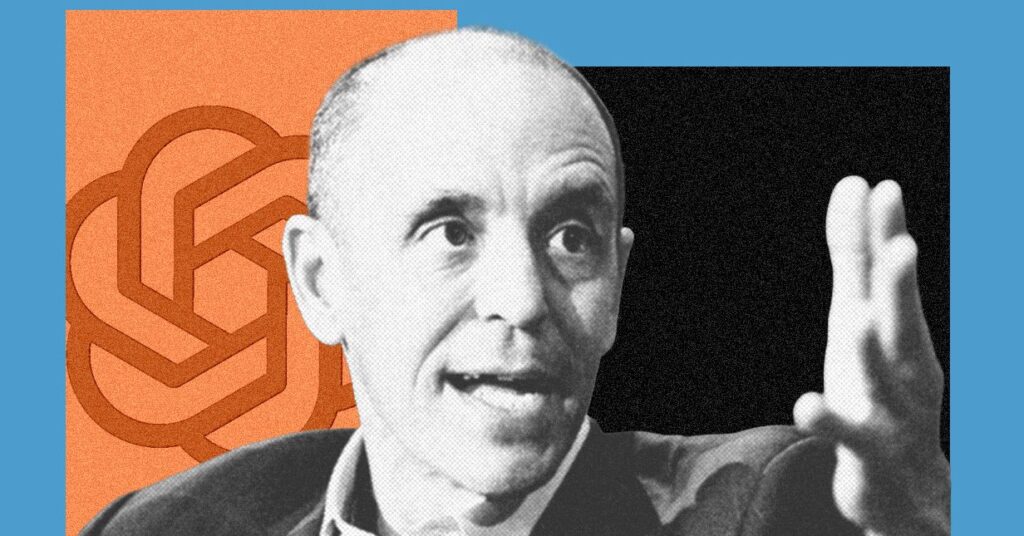
The individual tasked with addressing it is Chris Lehane, the company’s chief of global affairs and a seasoned political operative. I sat down with him recently to discuss his two main challenges: convincing people to embrace OpenAI’s technology while also persuading lawmakers to adopt regulations that won’t hinder the company’s growth. For Lehane, these goals are intrinsically linked.
“In my time in the White House, we always talked about how good policy equals good politics,” says Lehane. “You have to think about both of these things moving in concert.”
After working on crisis communications during Bill Clinton’s presidency and helping Airbnb navigate legal challenges in cities where short-term rentals were seen as operating outside the law, Lehane later played a crucial role in establishing Fairshake-a powerful crypto industry super PAC aimed at legitimizing digital currencies. Since joining OpenAI in 2024, he has quickly become one of the company’s most influential executives and now oversees its communications and policy teams.
Lehane argues that public narratives about how AI will transform society are often overly simplistic. On one side is a “Bob Ross view” where everyone lives in beachside homes painting watercolors all day, while on the other is a dystopian future where only elites control powerful AI. Neither scenario, he believes, accurately reflects reality.
OpenAI has previously promoted this kind of polarizing discourse. CEO Sam Altman warned last year that “whole classes of jobs” would be lost when the singularity arrives. More recently, he has softened his tone by declaring that “jobs doomerism is likely long-term wrong.”
To address these concerns, Lehane wants OpenAI to communicate a more balanced message about the potential benefits and challenges of AI. He points to a list of policy proposals that the company recently published, which includes measures like creating a four-day work week, expanding health care access, and taxing AI-powered labor.
“If you’re going to go out and say there are challenges here,” Lehane says, “you also have an obligation-to actually come up with ideas on how to solve those things.”
Some former OpenAI employees have accused the company of downplaying potential downsides. In July, members of the company’s economic research unit quit in protest over what they saw as misleading statements about AI impacts. These researchers argued that their warnings may have been inconvenient for OpenAI but still reflected its findings.
Packing Punches
With public skepticism toward AI growing, politicians are under pressure to prove they can control tech companies. To combat this, the AI industry has formed a new group of super PACs that support pro-AI candidates and shape public opinion about technology. Critics argue that these efforts have backfired.
Lehane helped establish one such pro-AI super PAC called Leading the Future, which launched with more than $100 million in funding commitments from tech industry figures, including Brockman. The group has opposed Alex Bores, who wrote New York’s strongest AI safety law and is running for Congress in the state’s 12th district.
Brockman previously told Wired that his political donations to Leading the Future and President Trump’s Super PAC were inspired by OpenAI’s mission to ensure AGI benefits all of humanity. While he made these donations personally, he believed they could help put pro-AI candidates in office who share similar goals.
Lehane says he consulted Brockman on his recent political spending but only “in a very general way.” He has not shared feedback with Leading the Future since it launched and prefers to let them operate independently. When asked if OpenAI was involved in drafting Illinois’s AI liability bill, Lehane said that they simply wanted to advocate for similar AI laws to those already established in California and New York.
Policy Battles
As there is no meaningful federal AI legislation yet, OpenAI has adopted a strategy of “reverse federalism”-lobbying states to pass laws that mirror existing ones. The goal is to harmonize these new bills with California and New York’s laws to prevent lawmakers from creating conflicting rules across the country.
In practice, OpenAI has also pushed for policies that further protect the AI industry. Recently, they supported a bill in Illinois that would allow AI labs to avoid liability if their models cause catastrophic harm, as long as they publish safety frameworks on public websites. Tech industry groups have lobbied for such provisions for years.
When the Illinois bill initially attracted attention, its sponsor attributed it to OpenAI’s initiative. However, after criticism from the governor and other officials, OpenAI issued a statement claiming it had never supported the liability safe harbor provision. They did share their thoughts on the legislation but wanted similar AI laws as California and New York.
OpenAI has more recently come out in support of another Illinois bill that would require leading AI companies to have their safety practices audited by independent third parties. This is one of the strongest AI laws in the nation, endorsed by both OpenAI and its rival Anthropic, and passed through the state Senate on Thursday.
When reading this article, remember that it’s an edition of Maxwell Zeff’s Model Behavior newsletter. You can find previous issues here.
Key Takeaways
- Chris Lehane is tasked with addressing the public relations crisis facing OpenAI due to growing negative perceptions of AI.
- OpenAI has launched a pro-AI super PAC called Leading the Future, which has opposed some candidates like Alex Bores in New York.
- To combat the reputation crisis, Lehane advocates for more balanced messaging about AI’s potential benefits and challenges.
- OpenAI is pushing for state-level AI legislation that mirrors existing laws to harmonize them across different states.