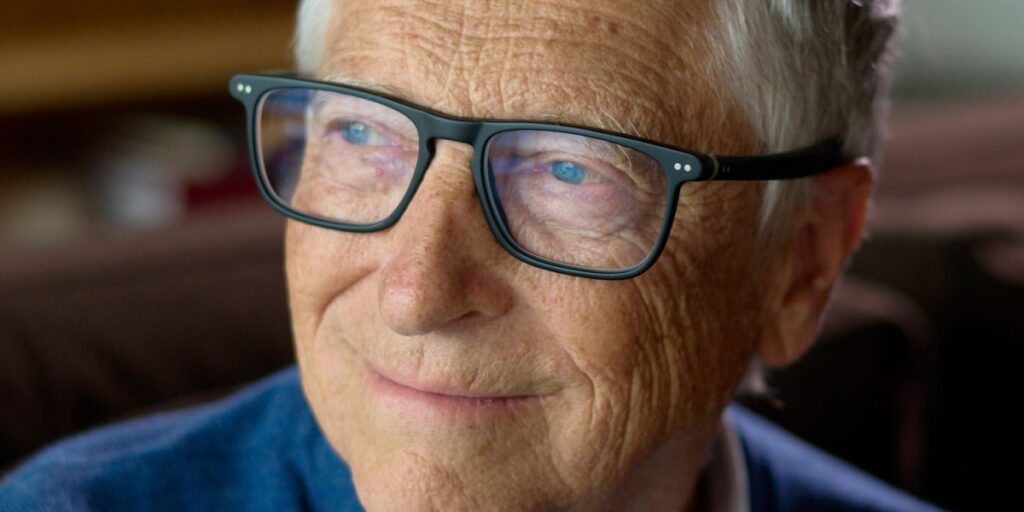
Bill Gates is in Kirkland, Washington, on a day the sky cannot be any bluer, warning that humanity has already crossed the danger thresholds for artificial intelligence.
The former Microsoft CEO sits across from a reporter at a conference table overlooking Lake Washington. He rocks back and forth, animated and agitated. The philanthropist argues that guardrails are failing to keep pace with the speed of change. In a new essay released today, he states that we have passed the points where multiple potential dangers should have been checked.
“We’ve crossed the threshold in terms of [AI’s] bio-capabilities, cyber-capabilities, psychosocial capabilities, job-market-destruction capabilities, and even the lack of control,” Gates told MIT Technology Review. “I’m just stunned at the lack of concern and discussion outside of the industry.”
The warning
Gates has started sounding the alarm publicly and privately with industry and government leaders. He calls himself a “shrill voice” trying to wake the world up to a societal disrupter growing rapidly.
His warnings about bio-capabilities are especially chilling. He says any model capable of making novel molecules must be monitored. “I view bioterrorism risk, versus a natural pandemic, as about 50 times more scary, more likely than a natural pandemic risk,” he said.
The economy and jobs
Gates proposes human-reserved jobs and taxes on robots and tokens. A robot tax would set aside money earned from AI usage that replaces human work. Human-reserved jobs would preserve certain roles for people, varying by nation.
The tech titan argues the past is misleading. Previous revolutions did not result in a net reduction in jobs. This time is different because AI can replace human cognition for a high percentage of jobs across every industry at modest cost. Error rates will likely be lower than human rates.
For a substantial part of the white-collar market, substitution is low cost. Robotics progress is happening, slightly more in China than the US, but in both places. Gates notes that entry-level workers are being hired in fewer numbers.
“If you’re worried about AI, going to a data center protest is not the most effective way to start the debate about how we minimize these bad things.”
— Bill Gates
Gates compares protesting data centers to yelling at an oil company executive about climate change. He says stopping every data center in the United States will not change the issues he describes. Data centers will be built globally.
What it means
This means people making things face a landscape where the AI is cheaper and better for any well-defined job. Tasks like telesales, telesupport, and accounting are achievable by paying an AI a fraction of the cost. Gates expects it will take a couple of years for people to realise this shift.
He notes that 50% of the job market consists of roles not requiring a lifetime of experience. These are the jobs where AI is already winning. Gates says we have crossed the job market threshold for a swath of white-collar roles, including almost every entry-level job.
There is a hint of optimism. Gates is bullish on how AI will transform agriculture, health care, and education. He sees potential for helping people navigate bureaucracy. The Gates Foundation spun off a group called NextLadder to help low-income families with complex regulatory issues like evictions or bankruptcy.
Eventually, Gates argues, we do get to abundance. But first, there will be turbulence. And lots of it.