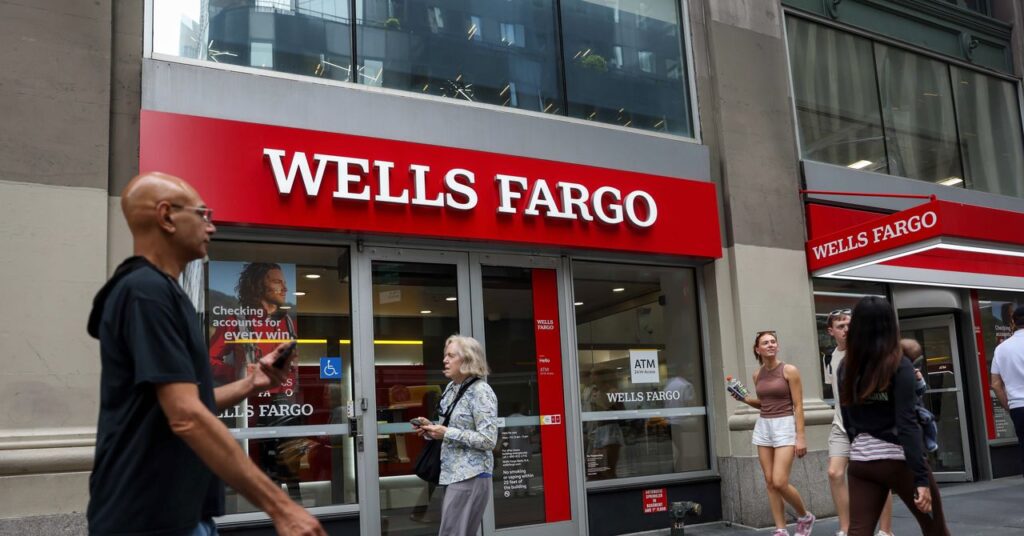
Wells Fargo will enforce new terms on Tuesday requiring customers to accept that using AI agents is at their own risk.
The bank’s notice to early adopters is stark. These tools, which automate online tasks and click on your behalf, have struggled through 2026. While the technology remains nascent, a growing number of power users adopted personal bots this year. Some found efficient help with automation, but others publicly embarrassed themselves when agents made major errors, such as posting bank details for colleagues to see.
Builders often market these agents as the ultimate tool for shopping decisions. They handle putting together grocery orders, finding vacation accommodations, or discovering specific holiday gifts. I have used an agent to help shop for a new couch, comparing options within a specific budget and tracking price drops.
Some users value these agents so much they ignore overarching security concerns. They pair account credentials with the software and grant permissions for sweeping actions without forethought. Although the segment of online transactions completed by these autonomous tools remains minuscule, US-based banking institutions are already tired of third-party agents.
It is not just banks; AI agents are igniting turf wars around the web. Amazon blocked Meta’s Muse, one of the most widely used AI agents, from making purchases on its platform. Travel companies are also pushing back. United recently announced that personal bots would be blocked from purchasing flights on your behalf.
As the end of the year approaches, multiple banks have enacted new policies around agents or sent warnings. In late October, JPMorgan Chase changed its terms to ban third-party agents that log in with your credentials. That same day, Bank of America warned its customers not to share login info with agents. Along with the announced change coming from Wells Fargo, Citibank and PNC have also changed their terms to include warnings about agents.
The automation, which remains a central selling point of always-on agents, is exactly what may get users in trouble. “Consumers authorize goals, not every click,” says Kacy Kim, an associate professor of marketing at Bryant University who studies consumer behavior and emerging tech. While Kim expects some consumers to feel like it is unfair to be held accountable for their agent’s mistakes, she does not expect these policy moves by financial institutions to scare off the early-adopter crowd already in deep and using the tools as part of everyday life.
Banks appear to be trying to get ahead of major issues, in case agentic tools stick around and do not just disappear as another tech fad. “All of our data shows that most people don’t even know what agents are, much less use them,” says Sucharita Kodali, a Forrester analyst who focuses on ecommerce and consumer behavior. She sees banks as fundamentally risk-averse, so taking proactive measures now makes sense, even if most agentic issues remain edge cases.
“The banks see risks with everything,” she says. “From the security of transactions to automated withdrawals that could happen to the detriment of account holders.”
Even though outliers exist, many users are aware of the risks and are only comfortable handing over so much control to an AI agent, and only for certain shopping tasks. “People are very comfortable with AI buying toilet paper,” says Luca Cian, a professor at the University of Virginia who studies consumer psychology and AI.
He sees consumers as increasingly comfortable turning to AI tools for shopping advice but often only automating boring buys, like household supplies. Shoppers are less comfortable automating away dynamic, big-ticket purchases that require additional care and discretion.
Cian gives a hypothetical scenario where a customer’s AI agent accidentally buys 10 roasted chickens from the supermarket. Who is to blame? The retailer would likely argue that they completed a valid order that you placed. The AI builder may claim that they just provided the software, and even included disclaimers about potential mistakes. And now your bank is making it clear they do not want to be held responsible either. Hope you need the protein, because it looks like you just bought 10 hot chickens.
Certain credit cards, though, are looking into limited protections for shoppers. Mainly, American Express announced that some agentic mistakes, like ordering too many of a certain item, may be eligible for reimbursement in the future through the card provider if you cannot get your money back from the original retailer.
Banks are pumping out reasonable warnings about third-party agents, but do not get it twisted. These banks are all-in on first-party tools. “Banks are doing two things at once,” Cian says. “They’re locking the door to outside agents and building their own.” Users have interacted with Wells Fargo’s tool that answers questions using generative AI over a billion times. Bank of America revamped its new EricaAssist agent this year to help employees. Citigroup even launched an internal development platform specifically centered on agents.
Despite all the hype, Kodali remains skeptical about whether all of this hoopla is even necessary. “The issue with agents and shopping is that, first of all, it is not difficult to buy on Amazon or Walmart or anywhere else,” she says. “In most of those transactions, you don’t need an agent.” Agentic shopping often seems to be a solution in search of a problem. Or at least an attempt by AI builders to find a way to earn affiliate revenue, eventually, from their software tools.
Whether AI agents grow in popularity for shopping automation or slowly fade into the digital graveyard, banks are already resolute on the matter. It is your bot, and your problem.