What It Means for Makers and Artists: AWS User Hit with $30,000 Bill After Claude Runaway on Bedrock
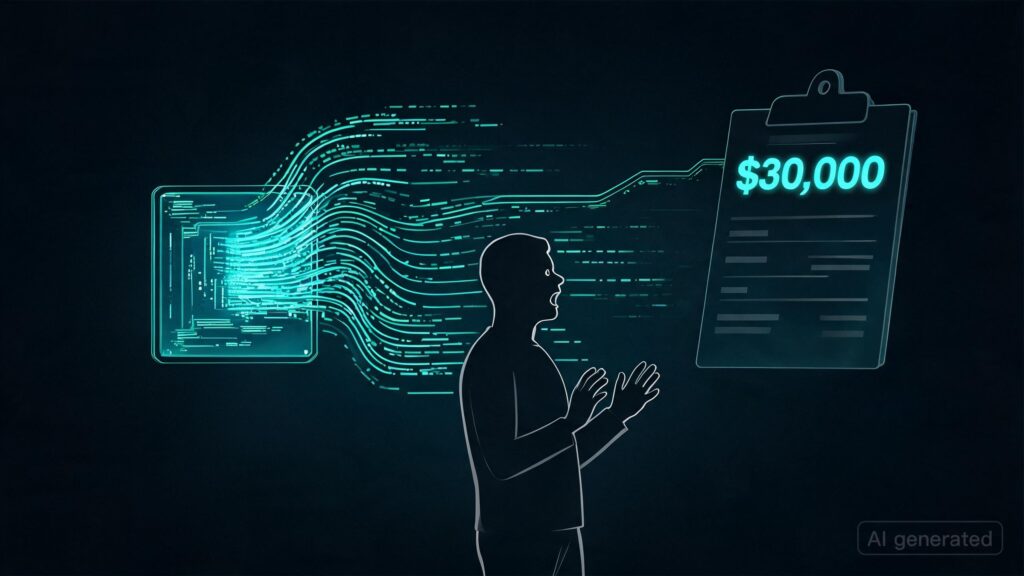
An AWS user recently faced a $30,000 invoice, which is no small sum in any context. This occurred after an incident involving the Claude model running amok on Amazon’s Bedrock platform without any guardrails to prevent such runaway costs.
Cost Anomaly Detection failed entirely, a tool that AWS markets as the safety net for runaway spend. This failure underscores the challenges in managing and controlling AI-generated costs, especially when models like Claude operate without explicit constraints.
Anthropic is now metering and throttling programmatic Claude usage, a response at the API layer to prevent such incidents in the future. This move indicates that managing AI costs, particularly those associated with generative models like Claude, is becoming a critical concern for both platform providers and users.
Meanwhile, TikTok has replaced human media buyers with autonomous agents, highlighting the accelerating trend of deploying AI-driven solutions across various industries. This shift is occurring without slowing down, leading to a cost crisis that extends beyond just Claude and its associated models.
Notion, for instance, has turned its workspace into an agent orchestration hub, competing directly with middleware solutions like LangChain. This move underscores the growing importance of managing and integrating AI agents within existing workflows.
Apple is also considering whether autonomous agent submissions belong in the App Store at all, given that no review framework exists for non-deterministic software. This decision reflects the growing debate around how to manage and regulate AI-driven applications within consumer-facing environments.
The security landscape is also evolving, with LLMs closing the skill gap on specific cybersecurity tasks faster than defenders anticipated. For instance, a company lost root access simply because an intruder asked nicely-no exploit required. This highlights the increasing vulnerability of systems to deceptive or convincing AI-generated interactions.
Despite these challenges, some positive developments are also emerging. For example, Clio has reached a $500M ARR milestone for AI-native legal features, validating the feasibility of vertical SaaS built on foundation models at enterprise scale. This success is in stark contrast to peers who are cutting headcount, suggesting that Anthropic and similar companies may be consolidating their market position.
On a technical front, a new model has displaced conventional voice activity detection for real-time voice applications, while a graduate student’s cryptographic primitive based on proof complexity could help harden systems against LLM-assisted cryptanalysis. These innovations reflect the ongoing efforts to secure and enhance AI infrastructure.
The situation is compounded by mandatory spending caps or circuit-breakers specifically for LLM API calls within 60 days, driven by recent publicized runaway-cost incidents that existing anomaly detection failed to catch. This reflects a growing awareness of the need for more robust safeguards in managing AI-generated costs and ensuring they do not spiral out of control.
At least one major cloud provider is now mandating such spending caps or circuit-breakers, indicating a shift towards proactive measures rather than reactive ones in addressing these issues. This move underscores the increasing importance of early intervention and prevention mechanisms to manage the burgeoning risks associated with AI-generated costs.
Key Takeaways
- Cost Anomaly Detection Failed: AWS’s tool, marketed as a safety net for runaway spend, failed entirely in detecting Claude’s runaway cost on Bedrock.
- Metering and Throttling: Anthropic is now metering and throttling programmatic Claude usage at the API layer to prevent such incidents in the future.
- TikTok’s Autonomous Agents: TikTok has replaced human media buyers with autonomous agents, highlighting an accelerating trend of deploying AI-driven solutions across various industries without slowing down.
- Apple’s Concerns: Apple is considering whether autonomous agent submissions should belong in the App Store at all due to the lack of a review framework for non-deterministic software.
- Crypto Primitive: A graduate student’s cryptographic primitive based on proof complexity could help harden systems against LLM-assisted cryptanalysis, reflecting ongoing efforts to secure AI infrastructure.
- Mandatory Spending Caps: Major cloud providers are now mandating spending caps or circuit-breakers specifically for LLM API calls within 60 days, driven by recent publicized runaway-cost incidents that existing anomaly detection failed to catch.