Superblocks, a vibe-coding startup, has signed a multi-year joint marketing deal with Amazon Web Services to embed its tool inside the private clouds of AWS customers.
The deal in detail
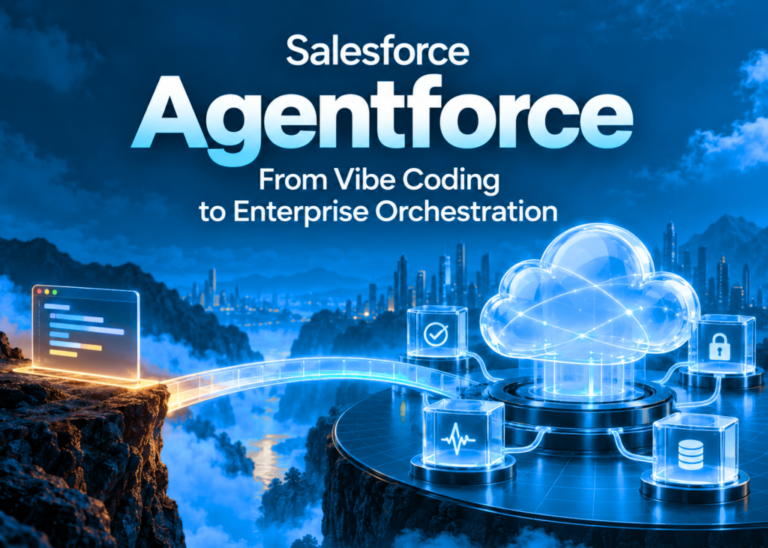
Any enterprise on AWS that subscribes to Superblocks can now offer vibe coding to internal business users. Those applications will not send data or information externally to model providers or databases.
The apps will spin up Amazon Aurora databases within the company’s private cloud. This avoids creating external Supabase databases, which remain the popular choice for vibe coding.
The applications will also integrate with Amazon Bedrock, the cloud giant’s AI app development and inference platform. Essentially, these apps will automatically fall under IT’s management and security, rather than becoming rogue applications.
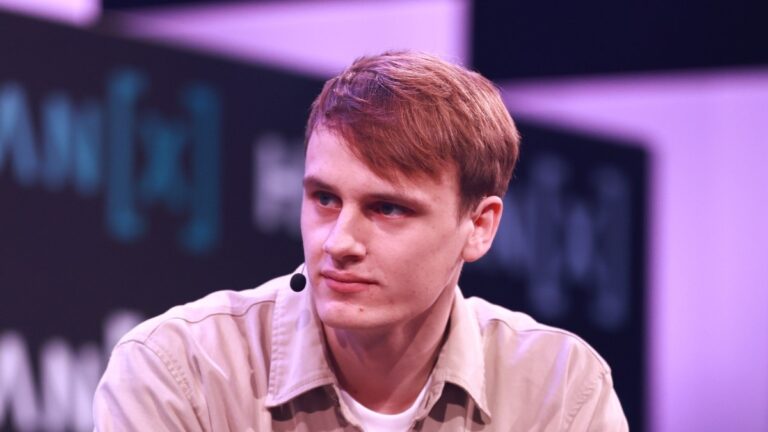
“We’re going to bring it to your data inside your private cloud,” Superblocks co-founder and CEO Brad Menezes tells TechCrunch of vibe coding. “The big thing about that is data never leaves. … It’s their AWS account and basically secure with all of the auditing, all of the encryption, all of the network controls.”
AWS will also help sell Superblocks to enterprises as it does for many of its Marketplace partners. “We support partners where we see strong customer demand and alignment with how customers want to build,” an AWS spokesperson tells TechCrunch.
Still, AWS does not yet have its own vibe-coding agent aimed at business users. It has Kiro, an AI coding agent aimed at developers, but it is not a vibe coder. Amazon also has an AI assistant, Quick, for business users. But again, that is more like a Claude Cowork or Microsoft Copilot, rather than a Lovable or Replit.
So this should be a nice boost for early-stage Superblocks, which has 50 employees and raised a total of $60 million as of its Series A, announced in May 2025, backed by Spark Capital, Kleiner Perkins, Meritech Capital, and Greenoaks.
What it means
Yet, it is actually a more significant symbol than that. It is part of a growing trend where the hyperscaler cloud providers urge their enterprise customers to separate their AI models from all the other scaffolding needed to run enterprise AI and do so on their clouds. They want enterprises to buy AI harnesses, AI orchestration, security tools, and the like from them, and not from the frontier providers.
In the past few weeks, Microsoft CEO Satya Nadella has been banging the drum with exactly that message. He has been telling his many enterprise customers to use multiple models to reduce costs and avoid lock-in. He has also been preaching that the AI labs are not trustworthy enough to turn to for agent orchestration or app-level harnesses because they may use that data to study a business and later compete with it.
Enterprises perhaps do not need such warnings. They have already decided to adopt multiple models, particularly frontier Chinese open-weight options. “That is flipped because 60 days ago they were like, I want a specific model. It’s called Anthropic,” Menezes adds.
Open models, for instance, accounted for 29% of all traffic routed through Vercel’s AI gateway last month, a popular tool among enterprises to manage multi-model AI use.
Then, by necessity, all of their AI scaffolding cannot be tied to one provider.
“Having a multi-model strategy across big frontier labs, OpenAI, Anthropic, and open source — and I’d say Chinese open source right now, but also U.S. open source is now starting to come up. It’s a must-have for the CIO,” he says. They want model choice for coding as well as customer service, HR, and sales automation, he adds.
Menezes says the movement is so strong, he predicts that “any enterprise that is betting on a single model provider, that executive will be fired.”
So now, we are seeing the cloud providers bring vibe coding for business users into private, secure clouds, too. That is like a potential second wave after bringing AI coding agents for enterprise developers. “It’s an emerging category with real momentum, and exactly the kind of innovation we support,” AWS tells TechCrunch.