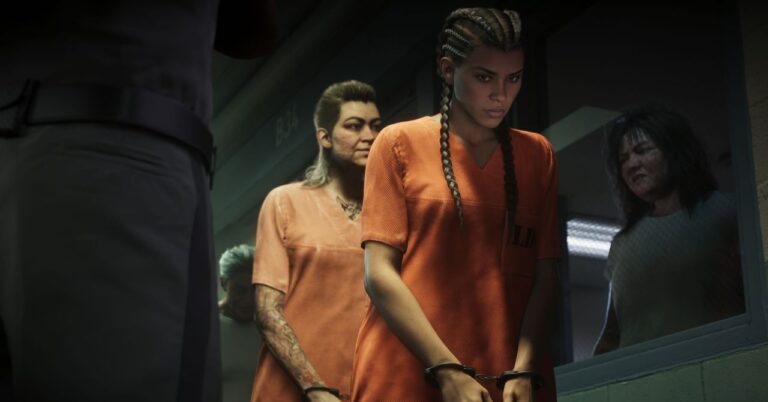
Grand Theft Auto VI generated $3.79 billion on its first day of release, surpassing the box office of Avengers: Endgame and the revenue of Taylor Swift’s Eras tour.
That figure makes it the highest-grossing entertainment launch in history. The game also holds the top spot on Metacritic. It arrived last week after a thirteen-year gap between the previous title and this one.
While the long wait drove the sales frenzy, the game represents a specific counterpoint to the current artificial intelligence boom. It stands as a monument to a development style that may soon vanish.
Ben Feder, managing partner at TIRTA Ventures and former chief executive of Rockstar parent company Take-Two Interactive, told TechCrunch that GTA VI is likely the final game of its kind created this way.
That is because the title was built entirely without generative AI.
Feder noted that the current method of game development has reached its natural limit. He does not believe such titles will remain the standard forever.
While millions explored Vice City, the technology sector marked its own milestone. Anthropic became the first major artificial intelligence laboratory to list publicly. Executives gathered at Nasdaq HQ to celebrate the Claude maker’s $81.3 billion initial public offering.
At the exact moment Anthropic broke the record for the largest IPO, GTA VI set records for the best-selling and highest-rated game launch ever.
However, the bell ringing on Thursday also signaled the end of an era in video game development, and perhaps in the arts generally.
The artificial intelligence industry prioritises efficiency above all else. The promise of this technology is to automate work and expand human capabilities by avoiding time spent on fruitless ideas. A prompt enters a large language model and a response emerges.
This technological shift brought soul-crushing side effects. Children are flooded with mind-numbing content on YouTube. Lawyers cite cases that do not exist in court. Tech companies like Meta laid off tens of thousands of staff under a corporate-branded “Year of Efficiency.”
Against that backdrop, Rockstar unveiled a game about 5,000 people laboured over for more than a decade.
The final product is breathtaking. Gameplay footage is so lifelike that it is difficult to distinguish from reality. These sprawling open-world titles usually rely on procedurally generating new landscapes and objects. Rockstar instead took the time to craft every detail of the world. The team developed 30,000 different nonplayable characters with unique appearances and personalities.
The video game industry is already grappling with the threat of AI. Google’s Project Genie, which launched earlier this year, allows users to create and wander through 3D worlds generated from prompts to an LLM. Several video game companies saw their stock prices falter around the time of Project Genie’s release, perhaps due to investor uncertainty about the future relevance of human developers.
Strauss Zelnick, chief executive of Take-Two Interactive, dismissed the idea that new tools would allow an individual to push a button and generate a hit for millions of consumers.
“It’s a laughable notion,” Zelnick said at the time. “It’s just never been the case with entertainment.”
Other technology CEOs see a different future. On a Meta earnings call this year, chief executive Mark Zuckerberg promised that soon users would have an AI that understands them and can generate great personalised content.
Elon Musk went further, proposing that a game like GTA VI could be made with AI.
“You won’t even have to ask,” Musk wrote on X. “AI will figure what video game you’d like best.”
This is the paradox of “Grandthropic” week. GTA VI is so vast and captivating because its developers could make mistakes, experiment, and rework ideas, even if that meant delaying the game twice. The title was incubated with the exact inefficiencies that investors hope AI companies like Anthropic can help eradicate.
“Plenty of fantastic art — video games and elsewhere — almost by definition has to be created slowly,” Feder said. “There’s something to having that kind of inefficiency around it.”
Feder added that creative output requires deletion. Getting to a masterpiece often requires an enormous amount of it. When discussing a game of this complexity, that deletion ends up being very expensive and is by definition not efficient.
GTA VI reeks of its own humanity. Every small detail is loaded with intention. This precision keeps the world abuzz, triggering a monocultural moment that has become increasingly rare in a media landscape revolving around highly personalised social media algorithms.
The game forces the player to slow down. This is either frustrating or genius, depending on your sense of humor. People waited more than three presidential terms for the next installment in a high-octane action franchise. They then downloaded a 212 GB behemoth where early missions involved driving around doing errands and putting up drywall to make a girlfriend happy. Car chases and shootouts remain, but in a moment when AI feels suffocating, GTA VI is such an artistic achievement that it is reaching audiences that do not even like violent video games.
The ultimate fantasy of GTA VI is no longer to role-play as a criminal. The fantasy is simply taking your time to relish the mundane and explore an expansive world that developers were given the time and space to perfect.