Enterprise AI agents are harder to build than companies expected. Arga raised $10 million in seed funding to fix this. General Catalyst led the round, with Box Group, Emergence, Gradient and SV Angel participating.
The problem with testing
Most testing environments provide a stateless API endpoint. Arga builds a full-scale digital twin of the program instead. It clones the entire software with permission systems and web hooks intact. This allows for a better way to train agents across multiple systems.
Philip Li, the startup’s CEO and co-founder, used a specific example. A prospective client creates a lead in Salesforce while a colleague reaches out separately through Hubspot.
“Can the agent correctly identify that these two are the same company?” Li says. “Are they able to check whether or not they’ve only sent the email once? Are they able to identify who to send the email to out of the two opportunities?”
Agentic systems still struggle with this kind of ambiguity. Li sees Arga’s tools as critical to helping them improve.
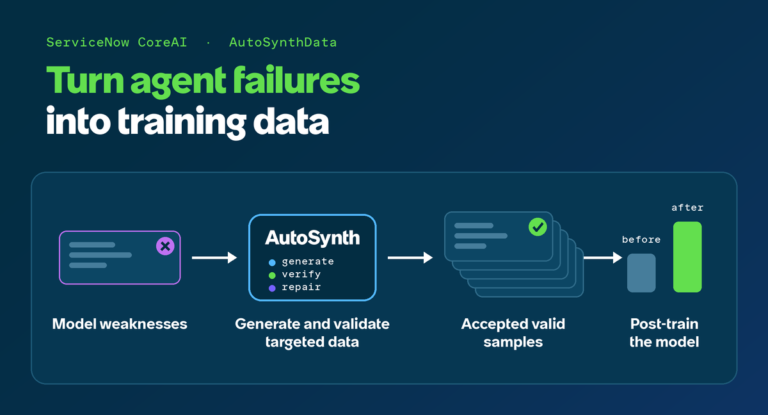
Normally, an AI agent could be trained for a task like this through reinforcement learning. You run the scenario tens of thousands of times and let only the successful strategies through. But the nature of enterprise software makes that scale of testing nearly impossible. There is no easy way to reset a system like Salesforce or Outlook when you need to run the same scenario again, much less clone it.
Arga’s solution is to digitally recreate that software by replicating its structure. It stands in for a person like a crash test dummy. Because Arga has complete control over the environment, the resulting recreation is simple to reset or modify. The company can also run many environments at once to train agents on the complex interactions between different programs. The idea is to replicate a person’s full work environment, with specific tasks overlapping across different programs and knowledge systems.
What it means
Think of it as closing the reinforcement gap between coding and other applications. AI coding tools have advanced quickly because we already have sophisticated tools for deploying, reversing and analyzing new code. Those tools make it much easier to set up RL environments for coding, which lets us test and train AI systems on increasingly complex coding tasks.
Those tools do not exist for most business software yet. Once they do, AI systems are likely to get much better at using those programs. They could revolutionize other industries the same way they have revolutionized coding.
General Catalyst’s managing director Yuri Sagalov, who also runs the firm’s seed investing program, sees a growing need for agentic testing tools like Arga.
“I think that a lot of the economic value from agents is from using business applications,” Sagalov told TechCrunch. “Having a repeatable sandbox environment is very important, and much more important with agents than it was with humans.”