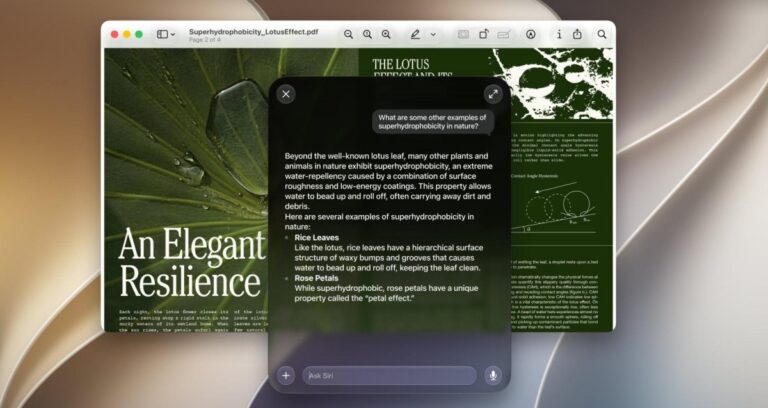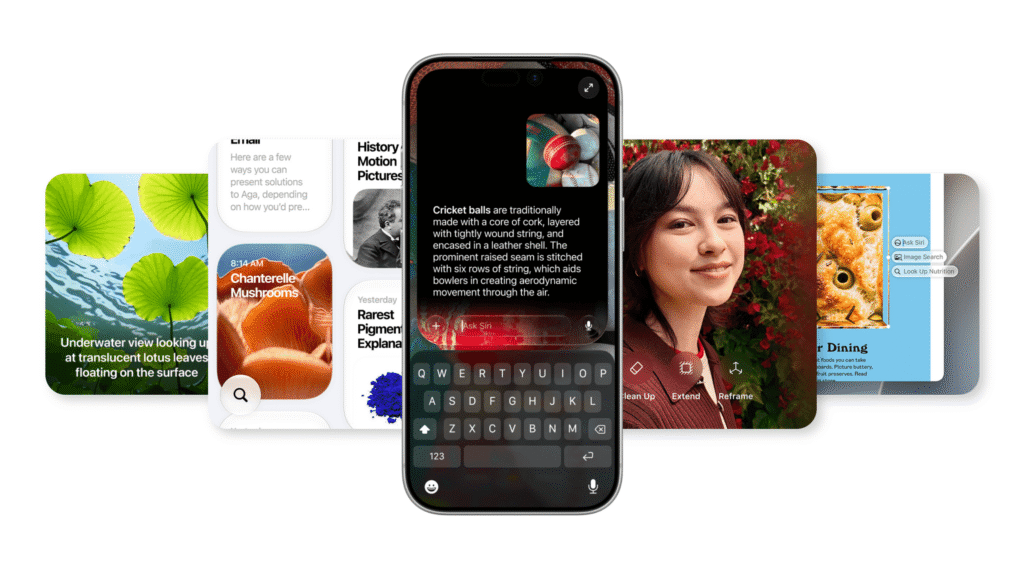
For creators and artists, the latest update to Apple’s AI suite means a more capable assistant that can finally act across your entire device ecosystem. Powered by a new partnership with Google and infrastructure from Nvidia, the rebuilt “Siri AI” can now execute system-wide commands, read content on your screen, and pull personal context from your messages and photos to help you manage projects and workflows. However, accessing these advanced capabilities requires specific hardware, and European users face significant restrictions on mobile devices.
Collaboration with Google and Nvidia
At the Worldwide Developers Conference in 2026, Apple unveiled a ground-up rework of its virtual assistant. Marketed as “Siri AI,” this version runs on foundation models co-developed with Google. While the assistant can perform complex tasks, it relies on Nvidia GPUs in the cloud for heavy lifting when on-device processing isn’t sufficient.
Crucially, Apple clarified the nature of this partnership during a post-keynote session. Craig Federighi stated explicitly that the amount of Google Assistant technology used is zero. The new system does not utilise the Gemini app, Google’s customer-facing models, or Google Search as a knowledge base. Instead, Apple relies on its own “World Knowledge Service,” a proprietary layer built over several years.
The third generation of Apple Foundation Models (AFM) comprises five distinct models: AFM Core, AFM Core Advanced, AFM Cloud, AFM Cloud Image, and the top-tier AFM Cloud Pro. The first four were trained specifically for Apple Silicon, refined using outputs from Gemini frontier models. Only AFM Cloud Pro runs on Nvidia GPUs within Apple’s Private Cloud Compute infrastructure, which has been expanded into Google Cloud for this specific purpose. Amar Subramanya, Apple’s AI lead, told CNBC that AFM Cloud Pro matches the quality of Google’s frontier models, though no independent benchmarks have been released.
A “System Orchestrator” determines whether a query is processed locally or routed to the cloud. Federighi described this router as central to the system’s privacy architecture.
New capabilities for makers and creators
The update introduces a new Siri mode for the camera. Users can point the device at a restaurant receipt to split bills via Apple Cash or aim at a plate to retrieve nutritional information. This “Visual Intelligence” feature is also arriving on visionOS.
Security is another focus, with the agent now able to automatically change compromised passwords. It navigates to the relevant website, logs in, and saves the new credential to the Passwords app, though Apple has not specified the reliability of this process in practice.
Further integrations include “Notify Me” and tab organisation in Safari, a new Image Playground app, Spatial Reframing for Photos, AI-generated video descriptions for HomeKit Secure Video clips, and summarised notifications in the Home app.
For developers, the Foundation Models Framework is opening up to support image inputs, custom skills, and server-side model execution. Xcode is receiving an expanded coding assistant designed for agentic workflows.
Hardware limits and EU restrictions
Access to the most capable on-device models is strictly limited to devices with at least 12 GB of RAM. This includes the iPhone 17 Pro, the iPhone Air, iPads with the M4 chip, and Macs with the M3 chip and 12 GB of RAM. The standard iPhone 17 with 8 GB and the iPhone 16 Pro Max do not qualify. Without the correct hardware, many features are relegated to the Private Cloud Compute, resulting in higher latency.
Geographically, the rollout is uneven. In the European Union, Siri AI will not launch on iPhones or iPads. Apple attributes this to the Digital Markets Act (DMA). The company argues that the regulation would force it to grant third-party assistants the same deep access to system functions-reading messages, making purchases, and triggering actions across all apps-that it currently reserves for Siri. Security researchers have noted that such broad access could allow AI systems to hijack accounts or alter settings without consent.
Apple proposed a compromise involving a “Trusted System Agent” middleware layer to securely provide these capabilities to competitors, paired with an 18-month phased rollout. The European Commission rejected this proposal alongside all others. Consequently, there is no timeline for bringing the full feature set to iOS and iPadOS in the EU.
macOS 27 and visionOS 27 will receive Siri AI in Europe. This is because the DMA only designates iOS and iPadOS as core platform services of a gatekeeper; macOS and visionOS are not subject to the same interoperability rules. The Apple Watch is affected as collateral damage: watchOS 27 requires a paired iPhone with active Siri AI, a feature EU users will not have. Similarly, EU developers cannot test or integrate these new features on iOS, iPadOS, or watchOS.
A delayed promise
This launch arrives nearly two years after Apple announced a personalised Siri with screen context and app actions at WWDC 2024, originally scheduled for iOS 18. The capabilities demonstrated today largely mirror those demoed in 2024, arriving late and following significant internal shifts. Tim Cook, who is stepping down as CEO in September to be succeeded by John Ternus, opened the keynote one final time.
Executives emphasised a divergence from competitors, with Federighi noting that some appear to pursue AI for its own sake without clear regard for the user. Apple is positioning itself as an alternative to OpenAI, Anthropic, and Google. Rather than pouring capital into building its own frontier models and massive data centres, the company is betting on a mix of licensed expertise, silicon optimisation, and a strong privacy narrative around Private Cloud Compute.
Federighi highlighted that, unlike web-based assistants, Apple collects minimal user data, preferring to utilise locally stored information like calendars and messages for personalisation.
Key takeaways
- Siri AI now executes system-wide actions and reads on-screen content, powered by foundation models developed with Google and cloud infrastructure from Nvidia.
- Access to the most advanced on-device features requires specific hardware, specifically devices with at least 12 GB of RAM, excluding the standard iPhone 17 and iPhone 16 Pro Max.
- Due to the Digital Markets Act, Siri AI will not launch on iOS or iPadOS in the EU, though it will arrive on macOS 27 and visionOS 27.
- Apple is leveraging licensed model expertise and its own silicon rather than building proprietary frontier models, focusing on privacy and local data usage.