Siri AI launched in the consumer beta build of iOS 27 this July after years of delays.
It performs the duties Apple promised: understanding your personal context, accessing broad world knowledge, and surfacing information stored on your iPhone. Yet the arrival feels anticlimactic.
Apple has a functional and fairly impressive assistant, but the launch has passed the point where such a release feels novel.
The AI race has surged ahead while Apple dawdled. Today, tools are coding software, agents complete multi-step tasks, and AI works alongside you to reason, create media, and manage systems. Being a functional chatbot is no longer the breakthrough it once was.
Siri AI is valuable, however. Apple delivered on its promises and then some.
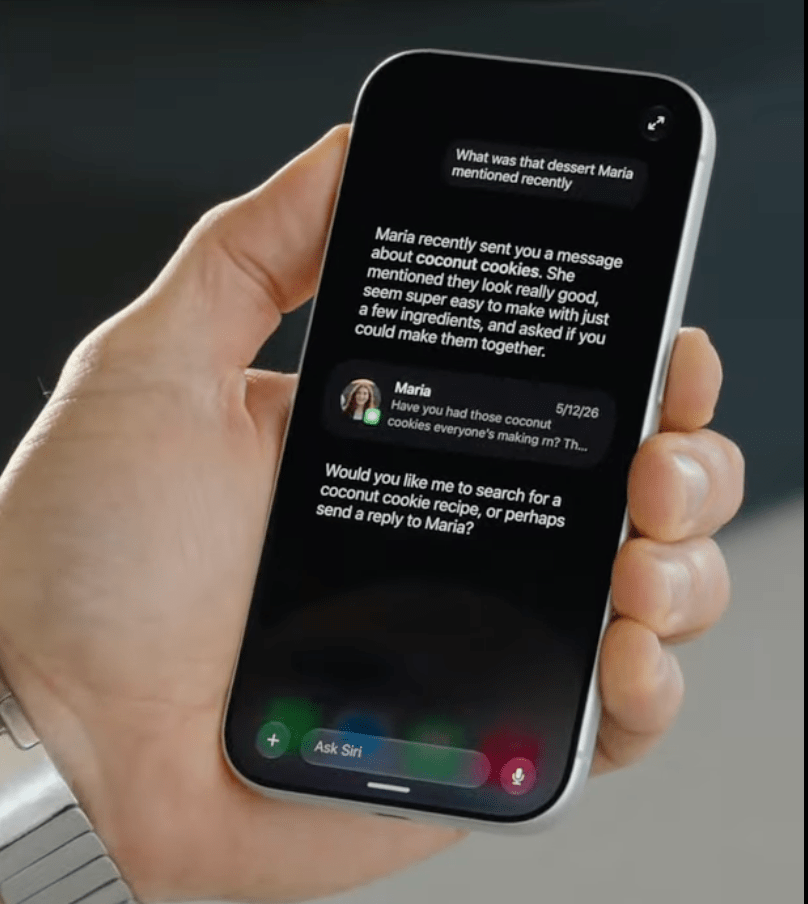
Users can now have natural, back-and-forth conversations. Settings allow you to tweak the expressivity and pacing of voice responses. You may type to the assistant or use a dedicated app for the first time to reference past conversations.
The assistant understands your personal context to help find photos, emails, contacts, texts, or calendar appointments even when you are unsure what you want. For example, asking for the last receipt saved on your iPhone retrieves it without needing to specify where it was stored.
You can ask about information saved as a photo, such as a Driver’s License number or a screenshotted QR code. Siri can launch websites and apps to get directions, play music, edit photos, draft emails, or play audiobooks.
Requests for songs, podcasts, and audiobooks now play consistently and accurately on your preferred app. This was a low bar to be sure, but one where Siri stumbled before.
Siri can brainstorm with you to refine ideas, learn about new topics, or explore a recipe using ingredients in your fridge. You can ask when a favourite band is playing or when an event is happening, and Siri answers correctly based on your location.
You can use Siri in the Camera’s viewfinder to learn about things in the real world or to split a restaurant bill with friends.
It is exactly what you always hoped Siri would be: a useful assistant that lets you use your iPhone easily by talking and answers questions instead of shuffling you off to the web.
These improvements rely on Apple’s partnership with Google for the use of its Gemini AI models. Apple did not just slap its name on Gemini AI; it used Google’s technology to train and refine its own proprietary Apple Foundation Models. The result is AI models designed to run on Apple’s own Silicon and on its Private Cloud Compute infrastructure.
Despite finally delivering a functional, helpful version, it feels like Apple fixed a longstanding bug rather than doing something revolutionary. This is how Siri was meant to work all along. The only marvel is that, after so many years of failing to perform tasks correctly, it actually works.
The general public will gain access to the new Siri when Apple officially releases iOS 27 in September.