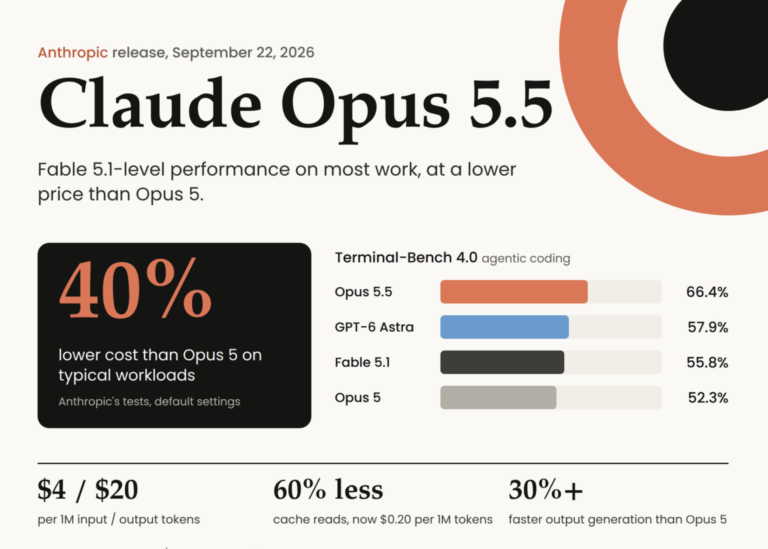
For makers and artists, the release of Anthropic’s Fable 5 signals a shift where complex creative projects can spring from a single idea rather than months of development. This is the first public iteration of the company’s Mythos model, and early hands-on testing suggests it handles multi-step tasks with remarkable persistence.
Ethan Mollick, a researcher at the University of Pennsylvania, has been experimenting with the tool and reports that it consistently outperforms other publicly available models by a considerable margin. In his recent update on his Substack, Mollick noted that the system is capable across many problems and produced startling results, remaining active for up to a dozen hours while executing specifications spanning multiple pages.
The most striking demonstration of this capability was Mollick’s ability to generate a variety of video games using just one initial prompt fed into Claude Code. These creations range from standard arcade mechanics to atmospheric literary experiences.
Instant games from a single prompt
One example is Snake, a straightforward implementation of the classic arcade staple. You control a Pac-Man-like serpent roaming around eating apples. The snake never stops moving, and the moment you run off the screen, the game ends. It feels very much like 1980s arcade fare, and like many of those old titles, it is weirdly addicting. Mollick noted he played it longer than he’d like to admit before remembering he is a gainfully employed writer and not, in fact, a serpent who likes fruit.
Then there is Strata, where you roam through a seemingly endless network of subterranean tunnels with the goal of lighting as many lanterns as possible. The graphics resemble a degraded version of Myst; they aren’t great. However, the fact that the game exists at all, generated from a single prompt, is impressive.
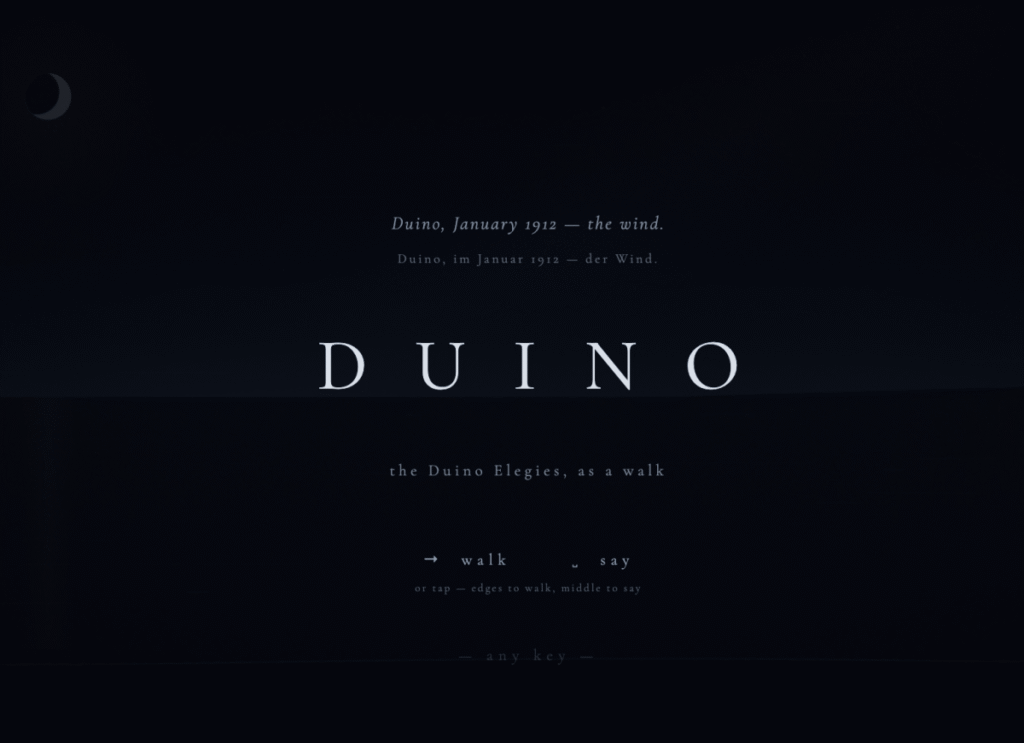
Mollick also created Duino, a game based on the Duino Elegies, the celebrated cycle of poems by German poet Rainer Maria Rilke. The animation here is arguably the best; the player appears as a lone figure in a nocturnal landscape. There isn’t much to the gameplay other than walking around while Rilke passages materialize on the screen.
Beyond gaming: Mapping the world
Aside from these instant games, Mollick used Fable to create an isochronic map-a visualization showing how long it takes to travel between any two locations. The accuracy and detail are arresting.
The implications are clear. Software projects that once required entire teams-ranging from games and mapping tools to highly complex specifications-are now being spun up from a single prompt. It is reason for vibe coders to rejoice. For founders and operators watching AI capability curves, it serves as a useful data point about how quickly the floor is rising.
Key takeaways
- Fable 5 represents the first public release of Anthropic’s Mythos model, demonstrating the ability to execute complex, multi-hour tasks from a single prompt.
- Researcher Ethan Mollick found the model capable of generating functional video games and detailed maps, outperforming other public models by a considerable margin.
- The tool allows for the rapid creation of software projects that traditionally required large teams, effectively raising the baseline capability of AI-assisted development.